SpaceX buys Cursor to control AI's future
- SpaceX’s $60B acquisition of Cursor secures control over AI development tools and orbital compute.
- Elon Musk bypasses terrestrial AI constraints by integrating coding, models, and infrastructure.
- Startups now face a stark choice: build on open stacks or risk being copied by platform giants.
SpaceX didn’t just buy a coding startup. It seized the last proprietary layer of AI - the interface between human developers and machine intelligence.
Six weeks after Anthropic launched Claude Code, a direct competitor to Cursor, the startup found itself cornered. Once responsible for 40-50% of Anthropic’s revenue, Cursor suddenly faced existential risk from its own partner. Jason Calacanis called it a 'shiv in the middle of the night' - a repeat of Microsoft’s playbook, where platforms absorb successful third-party apps.
Elon Musk saw the opening. With SpaceX’s $2.88 trillion market cap post-IPO, the company could offer Cursor something no VC could: independence. The $60 billion stock deal, valued at 15x revenue, wasn’t just financial. It was strategic - giving Musk full control over a vertically integrated AI stack from orbital compute to the developer’s IDE.
Ali Ansari argues this marks a shift: the real moat isn’t in models, but in proprietary feedback loops. SpaceX can now train frontier models on its own hardware, fine-tune agents on real-world workflows, and lock in talent - all without relying on OpenAI or Anthropic.
"Don't trust the platforms. They’ll study your token usage and build it themselves."
- Jason Calacanis, This Week in Startups
That betrayal narrative is now a catalyst. Startups are fleeing closed ecosystems. Turner Novak notes firms like Spellbook are sticking with foundational models, not custom training - but only because they can afford to. For most, the only path is to go 'headless,' using model routers to switch between GPT, Claude, and open-source alternatives like DeepSeek.
The workstation is the new frontier. AMD’s $4,000 developer rig with 128GB RAM signals a shift toward local compute. By 2028, Calacanis predicts these machines will dominate, letting firms bypass the 'Sam Altman tax' and run fine-tuned models in-house. Tokens become bandwidth - cheap, abundant, and no longer controlled by a few.
"The future isn’t model vs. model. It’s loop vs. loop."
- Ali Ansari, This Week in AI
Musk isn’t just building rockets. He’s building an AI-native empire - one that answers to no regulator, no cloud provider, and no foundation model cartel. The consolidation has begun.
Source Intelligence
- Deep dive into what was said in the episodes
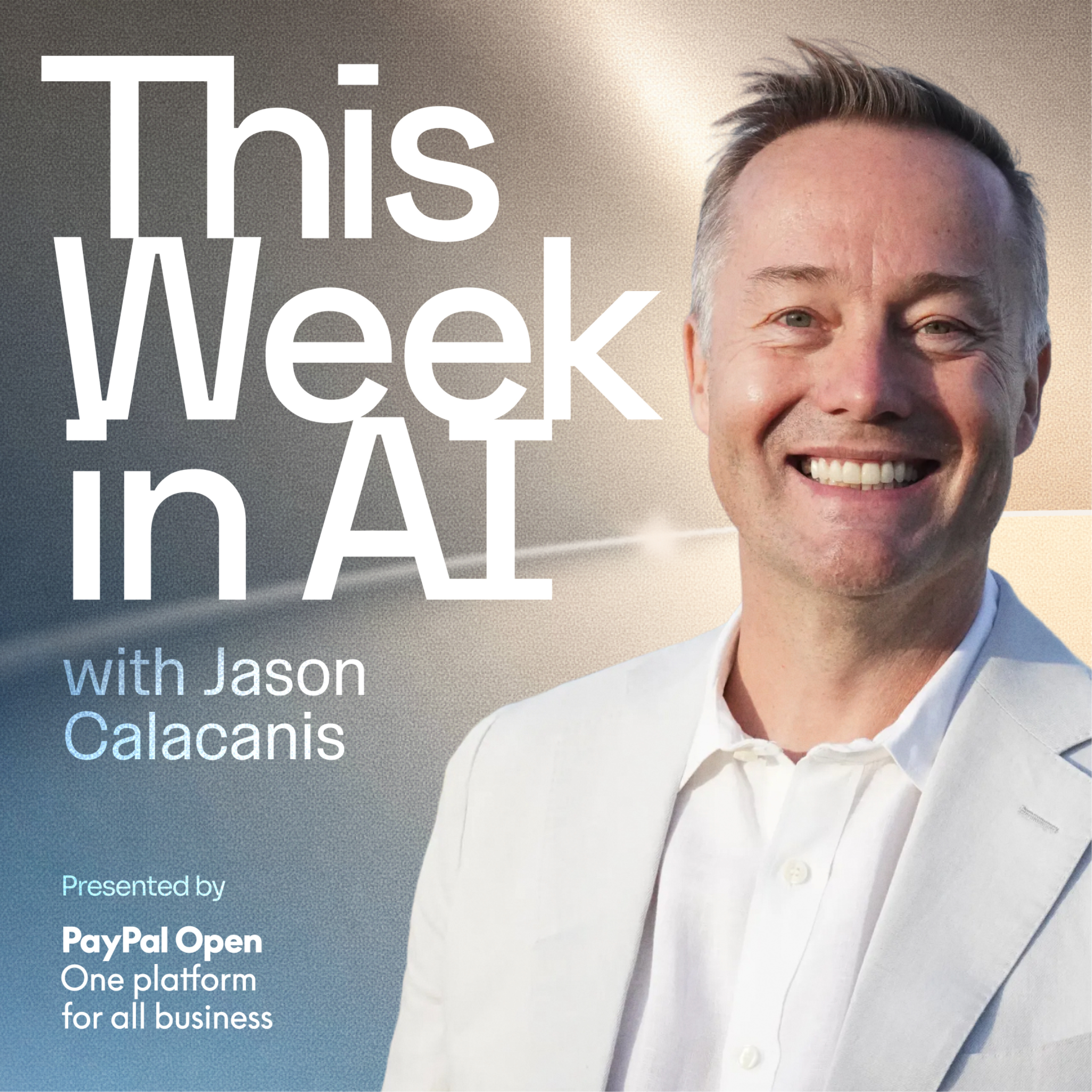
Why AI Models Aren’t the Product Any More | TWiAI Ep 18 • Jun 18
- Jason Calacanis says SpaceX plans to acquire Cursor for $60 billion in stock, giving Cursor access to SpaceX’s massive compute resources for model development.
- Ali Ansari argues the real product in AI is not the model but the agent layer, evaluations, harness, and UI built atop it. The frontier of intelligence will be defined by application companies owning their proprietary workflows.
- Jason Calacanis warns that platform companies like OpenAI or Anthropic will study and eventually compete with their most successful application-layer customers, citing historical examples from Microsoft, Facebook, and Apple.
- Ryan Daniels describes Crosby Legal as an AI-first law firm that uses AI internally to provide scalable legal services at flat rates, aligning incentives by eliminating billable hours.
- Ali Ansari says Micro One pivoted from an AI recruiter tool to a marketplace providing pre-vetted human experts who train AI models, achieving about $300 million in ARR by April 2026.
- Jason Calacanis notes SpaceX’s market cap hit $2.88 trillion after its IPO, making it the fourth most valuable US company. He calculates the Cursor acquisition at a 20x revenue multiple.
- Ryan Daniels explains that Cursor once accounted for 40-50% of Anthropic’s total revenue, but Anthropic’s launch of Claude Code forced Cursor to build its own model, leading to the SpaceX deal.
- Ali Ansari defines model distillation as using an open-source baseline model and conducting massive post-training that changes most weights, creating a distinct model without reinventing core reasoning.
- Ryan Daniels argues only a handful of companies can build frontier models due to capital and compute constraints, creating a binary divide between model-makers and everyone else.
- Jason Calacanis cites Claude Code’s rumored $2.5 billion revenue run rate and Cursor’s $4 billion run rate, predicting the AI coding market will reach $100 billion soon.
- Ryan Daniels says Crosby’s vertically integrated law firm creates a proprietary feedback loop where lawyers train AI on subjective legal judgment, making human expertise more valuable as models improve.
- Ali Ansari predicts nearly 100% of future AI data spend will focus on the agent and application layer, with orders of magnitude more agents built than base models.
- Jason Calacanis describes his vision for an internal venture AI trained on Slack and Notion data to analyze investment history and missed opportunities, calling Slack’s corpus the ultimate dark data pool.
- Ryan Daniels forecasts AI lawyers could match the average practicing attorney by late 2027, forcing courts to consider ethical access to AI counsel for self-representation.
- Ali Ansari and Ryan Daniels collaborated on a multi-turn contract redlining benchmark using real lawyer negotiations to evaluate AI models, finding current models perform at only 10-20% of human capability.
- Ali Ansari proposes an industry-led AI safety consortium where competing model companies create adversarial benchmarks for self-regulation, similar to the MPAA for movies.

Why SpaceX Buying Cursor Changes Everything • Jun 18
- Jason Calacanis warns founders not to accept OpenAI's free credits-for-equity deal, stating it gives Sam Altman a roadmap to identify and clone successful applications, echoing how platforms like Anthropic and Microsoft historically have 'cursored' apps.
- Turner Novak observes that many startups are not building proprietary models, citing Spellbook's approach of using foundational models for legal AI as more effective and economical than custom training.
- Jason Calacanis advocates for startups to use headless 'model routers' to switch between open-source and frontier models based on task cost and fidelity, citing Perplexity's Model Council as a tool for this.
Also discussed on this episode: (11)
Startups (1)
- Jason Calacanis believes SpaceX's acquisition of Cursor is cheap at a 15x revenue multiple, citing Cursor's $4 billion run rate and solving its compute and model dependency problems.
Big Tech (2)
- Jason Calacanis argues that M&A is back due to a regulatory shift, predicting Elon Musk will use SpaceX's market cap for acquisitions like Uber and that venture capital's revival hinges on this.
- Jason Calacanis claims Apple is the most generous platform in not competing with its app developers, unlike Facebook and Microsoft, and advises founders to keep their token usage and roadmap secrets from all platforms.
Models (2)
- Jason Calacanis predicts a shift to local AI models running on high-power desktop workstations, citing AMD's $1,500 developer kit as a sign that cost-free, private processing will reduce reliance on frontier model tokens.
- Jason Calacanis and Ben Ling debate OpenAI's financial trajectory, with Ling noting its improved gross margins, while Calacanis argues tokens will commoditize like bandwidth and frontier labs won't recoup their trillion-dollar investments.
Business (2)
- Jason Calacanis analyzes venture capital trends, stating seed-stage 'pull-through' rates to Series A fell from ~50% to ~25% post-2021, attributing it to a funding contraction and AI-only focus.
- Jason Calacanis argues the 'alicorn' trend - AI-first startups raising less capital and skipping rounds - will make Series A entry more expensive, forcing VCs to focus on distributions and liquidation over paper gains.
VC (4)
- Jason Calacanis blames the 'trapped TVPI' of zombie SaaS companies and the Lena Khan-era antitrust chill for depressing venture LP returns, saying revived M&A is crucial for recycling capital.
- Ben Ling defines 'undiscovered gems' as either first-time founders with high potential or 'damaged' founders with mixed reputations, arguing these are the only companies still available at reasonable seed valuations.
- Jason Calacanis says founder-VC tension is unspoken but real, advocating for candid feedback over coddling, and describes his firm's 'Whisper Network' software to systematically connect founders with investors.
- Ben Ling advises framing founder disagreements as a decision tree, stating his firm's position clearly but letting founders choose and committing fully to their chosen path.