McCormack warns AI psychosis threatens societal collapse
- AI hyper-targets users to trigger anger, pushing society toward permanent psychological warfare.
- Centralized AI models risk becoming state-controlled tools of censorship and manipulation.
- Escaping the 'fake world' requires self-sovereign systems, like decentralized AI and Bitcoin.
Thomas Pacchia warned listeners of a coming 'AI psychosis.' Algorithms already prioritize engagement through anger, but the next generation will weaponize this by pinpointing exactly what triggers each individual. He argues this psychological friction acts as a precursor to societal collapse or open conflict.
Peter McCormack built a site called 'Show Us Receipts' to audit political promises with AI. Grading the last 50 tweets of every politician cost him $5,000. The tool demonstrates AI's dual nature: it can be the ultimate audit tool or the ultimate surveillance trap.
"The 'fake world' of team-sport politics is cracking because it can no longer deliver basic prosperity. When the state consumes more wealth than it facilitates, the system becomes a zero-sum game of resentment."
Peter McCormack, The Peter McCormack Show
Both men see centralized platforms as unreliable. McCormack argues that Anthropic, OpenAI, Facebook, and X are vulnerable to state capture. The same technology that could expose corruption might expand the surveillance panopticon.
The only escape, according to Pacchia, is building parallel systems. This means moving beyond Bitcoin as a price-driven asset and returning to its roots of self-custody. He advocates for decentralized AI models that run locally to prevent corporate data harvesting.
Nathaniel Whittemore's reporting shows the corporate landscape is already hardening. Meta banned engineers from using Claude to prevent training data contamination. Amazon will shift from wholesale compute hours to token-based pricing for Anthropic next year. The biggest players are realizing reliance on a competitor's infrastructure is a long-term liability.
Rick Rubin offered a contrasting perspective on the a16z Podcast. He views AI as a punk rock democratizer of craft, akin to a sophisticated sampler. The machine has no inherent perspective. Its value depends on the human artist's ability to recognize which iteration carries the magic.
"We are handicapping AI by forcing it to act like us. Restricting AI to human-centric responses creates a ceiling on its intelligence."
Rick Rubin, The a16z Show
The core disagreement is about AI's fundamental role. Rubin sees it as a tool for individual creative expression. McCormack and Pacchia see it as a societal solvent that will either automate accountability or weaponize our psychology. The path forward depends on who controls the models.
Source Intelligence
- Deep dive into what was said in the episodes
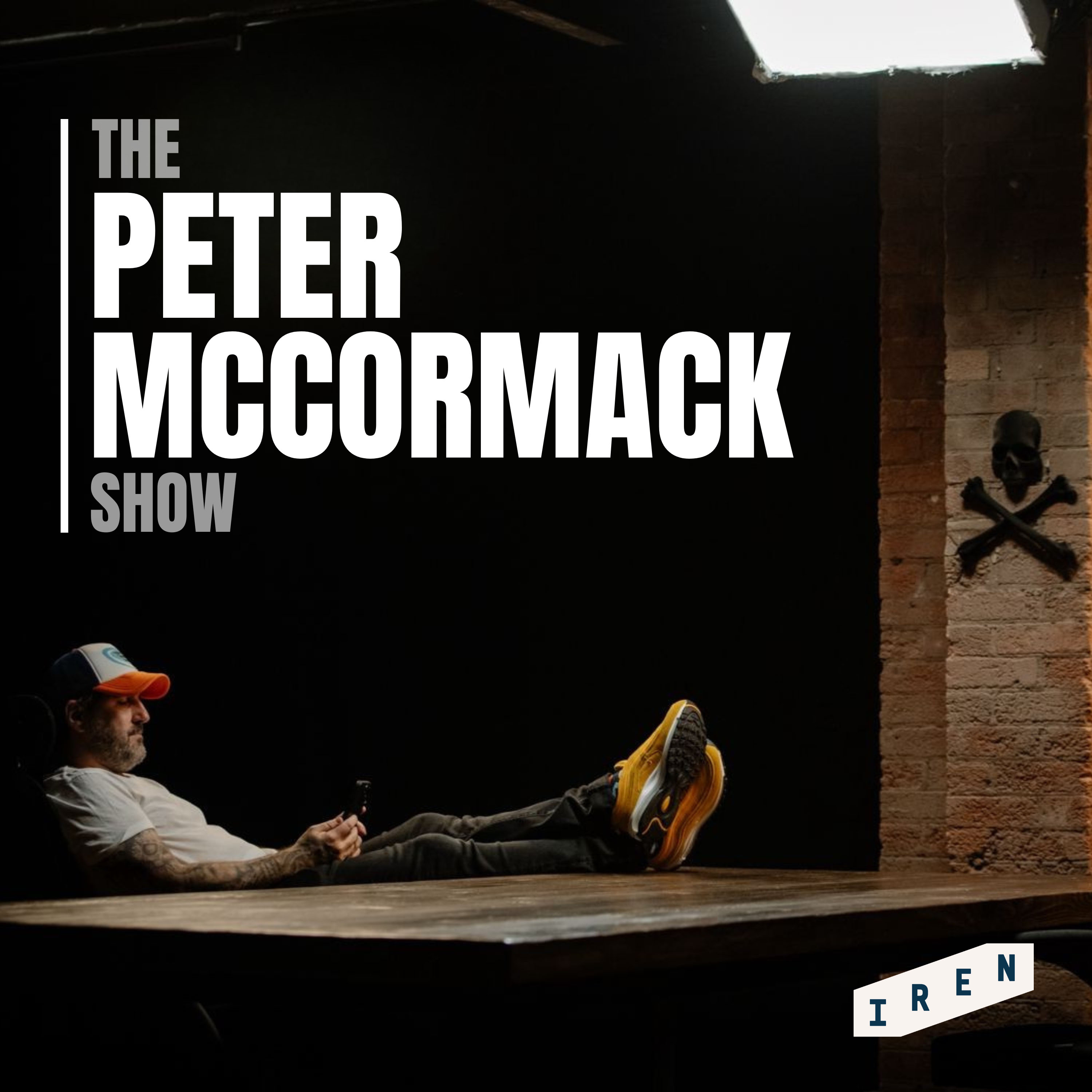
Peter McCormack
#191 - Thomas Pacchia - AI Will Expose The Fake World • Jul 7
- Thomas Pacchia predicts AI will create a societal psychosis worse than the COVID loneliness epidemic by hyper-targeting individuals to provoke anger.
- Peter McCormack built a site called Show Us Receipts and used AI to fact-check politicians' tweets. Grading the last 50 tweets of every politician cost him $5,000.
- McCormack argues centralized AI platforms like Anthropic, OpenAI, Facebook, and X are unreliable due to censorship and manipulation.
- McCormack believes decentralization and individual self-sovereignty are the only viable escape from manipulated information systems.
Also discussed on this episode: (11)
Society (3)
- Pacchia says Western societies are transitioning from a 'fake world' to a 'real world', creating immense struggle for entrenched institutions.
- McCormack notes that people trapped in careers like Hollywood or professional sports cannot speak freely without risking their jobs.
- Pacchia predicts a resurgence of traditional churches and pubs as sanctuaries for community and frank discussion to counter societal breakdown.
Politics (6)
- McCormack says Liz Truss identified the problem as the 'blob' or managerial class, not a secret 'deep state', who prioritize safety over change.
- Pacchia cites a UK welfare cliff where earning over £100,000 triggers a loss of a £10,000 tax-free allowance, killing productivity and ambition.
- McCormack argues UK public services have all deteriorated over 15 years: roads, NHS, defense, borders, and education are worse.
- McCormack says political discourse has become a team sport where winning supersedes being right, preventing rational conversation in the middle.
- McCormack cites the systemic rape scandal in the UK involving Pakistani Muslim men as an example where mainstream media avoids discussing cultural realities.
- Pacchia says compliance is attractive because dissent carries severe consequences, citing Aaron Swartz and Julian Assange as examples.
Protocol (2)
- Pacchia says unwinding entrenched political hierarchies usually requires violent revolution or the parallel emergence of a competing system like Bitcoin.
- McCormack and Pacchia agree the erosion of privacy, especially under laws like the Bank Secrecy Act and Patriot Act, has been accepted for convenience.

Nathaniel Whittemore
The Big Ways AI Just Changed • Jul 4
- Nathaniel Whittemore cites leaks showing Anthropic's Fable relaunch may require identity verification, with separate billing rather than subscription inclusion.
- Senator Mark Warner's proposed AI agent bill establishes a duty of loyalty and protects third-party agent access, though it remains a 25-page draft needing Republican support.
- California secured a statewide Claude rollout at 50% off with free training, aiming to boost government efficiency without replacing human workers.
- Amazon's Claude pricing will shift from wholesale compute hours to token-based next year, prompting internal cost reviews and potential model switches.
- Meta restricts Codex and Claude Code in its Applied AI division to avoid training data contamination and legal exposure from model distillation.
- Exponential View's report states the AI economy hit $110 billion over 12 months with a $175 billion annual run rate, growing three times faster than previous IT waves.
- Nathaniel Whittemore notes AI revenue represents 0.42% of US GDP but grew 10x from Q1 2024, while the global semiconductor market may double to $1.5 trillion this year.
- AI token volumes exceed 30 quadrillion monthly with 14x year-over-year growth, while blended price per million tokens fell from $17 to $2 between mid-2024 and mid-2026.
- Companies with high AI spend saw revenue grow over 100% in three years versus 15-20% for non-AI spenders, creating a 92% growth differential.
Also discussed on this episode: (3)
Big Tech (1)
- Google imposed usage limits on Gemini for Meta and other clients in March due to a compute crunch, pushing Meta towards token efficiency and Muse Spark.
AI Infrastructure (1)
- AWS raised EC2 GPU capacity block prices by 20%, while spot H100 rentals fell 40%; SemiAnalysis notes contract prices are rising as serious buyers lock in term capacity.
Chips (1)
- Memory price spikes driven by AI demand led to Apple and Microsoft hikes, with Micron's prices up 60% in three months and gross margins targeting 84%.

Rick Rubin on AI, Creativity, and The Way of Code • Jul 1
- Rick Rubin asserts AI lacks a point of view, serving as a tool analogous to a guitar or sampler. The artist provides the perspective, while the machine merely accelerates the iteration and modeling of the creator's specific dreams.
- Mark Andreessen argues that resistance to AI-assisted coding mirrors historical opposition to high-level programming languages. Early computer scientists once viewed high-level code as inefficient compared to manual assembly, just as modern skeptics doubt the validity of automated tools.
Also discussed on this episode: (10)
Philosophy (2)
- Rick Rubin defines vibe coding as a creative process rooted in a 3,000-year-old spiritual text, the Tao Te Ching. The term emerged just ten weeks prior to the discussion, signaling a rapid shift in how technology and philosophy intersect.
- Rick Rubin describes morphic resonance through the 'hundredth monkey' effect, where ideas spread across a species without direct contact. He suggests that once a breakthrough occurs, such as the four-minute mile, the collective consciousness makes it achievable for others.
Health (1)
- Rick Rubin notes that 50% of the information currently taught in medical textbooks is likely wrong. He advocates for starting every project with a blank slate, as believing in established facts can often cause incalculable damage to progress.
Science (1)
- Mark Andreessen highlights the 'half-life of facts,' noting that knowledge in medicine and physics decays at a predictable mathematical rate. Scientific breakthroughs from Newton to Einstein demonstrate that even the most established ideas eventually require revision or replacement.
Models (2)
- Mark Andreessen argues that AI training is hyper-concentrated within a tiny demographic in the San Francisco Bay Area. He estimates only 7% of Americans hold the extreme progressive views typically represented in current AI reinforcement learning by human feedback.
- Rick Rubin claims that 70% to 83% of the global population believes in God, yet AI rarely reflects this belief. He suggests human intervention through RLHF intentionally limits AI from exhibiting the underlying inclinations of the broader global population.
Reasoning (1)
- Rick Rubin contends that AI cannot invent breakthrough concepts like flight because it can only regurgitate existing data. True breakthroughs require an unreasonable belief in magic and a willingness to exist in a state of delusion before reality catches up.
Media (1)
- Rick Rubin discovered during the production of the American Recordings that Johnny Cash's living room demos were more compelling than studio versions. This realization led to the stripped-down acoustic style that defined the final years of the musician's career.
Startups (1)
- Ben Horowitz observes that the most successful founders refuse to compromise their core vision for the market. He cites Databricks as an example, as the company famously refused to offer an on-premise solution because it contradicted their cloud-first philosophy.
Culture (1)
- Rick Rubin posits that the artist is the only necessary audience for a creative work. He argues that trying to mind-read what a market wants is a recipe for disaster, as the audience is best served when they receive an unfiltered version of the creator.