Price:

BITCOIN

Bitcoin becomes the scarce asset for an AI-abundant economy

Friday, May 1, 2026 · from 5 podcasts
  • AI's creation of unlimited, zero-cost software destroys the value of traditional tech moats and human labor.
  • Investors and builders are fleeing to Bitcoin as the only digital asset immune to this hyper-abundance.
  • The transition is triggering a permanent wealth shift from early holders to institutional ETFs.

AI doesn't just automate tasks - it annihilates economic value. According to investor Jordi Visser, we are entering a 'SaaSpocalypse' where companies like Salesforce and Adobe see profits evaporate as AI creates a super-abundance of code and intelligence. When digital goods become infinitely reproducible at near-zero cost, capital has nowhere to go but scarcity.

Visser argues this forces a fundamental portfolio pivot toward 'atoms and math,' with Bitcoin as the cleanest expression of digital scarcity. The thesis is echoed by Michael Saylor, who warns that AI and robotics will demonetize both white-collar and blue-collar labor within a decade. In this future, owning a network or platform matters more than the ability to do the work.

"AI and robotics will crash the value of white-collar and blue-collar work within a decade."

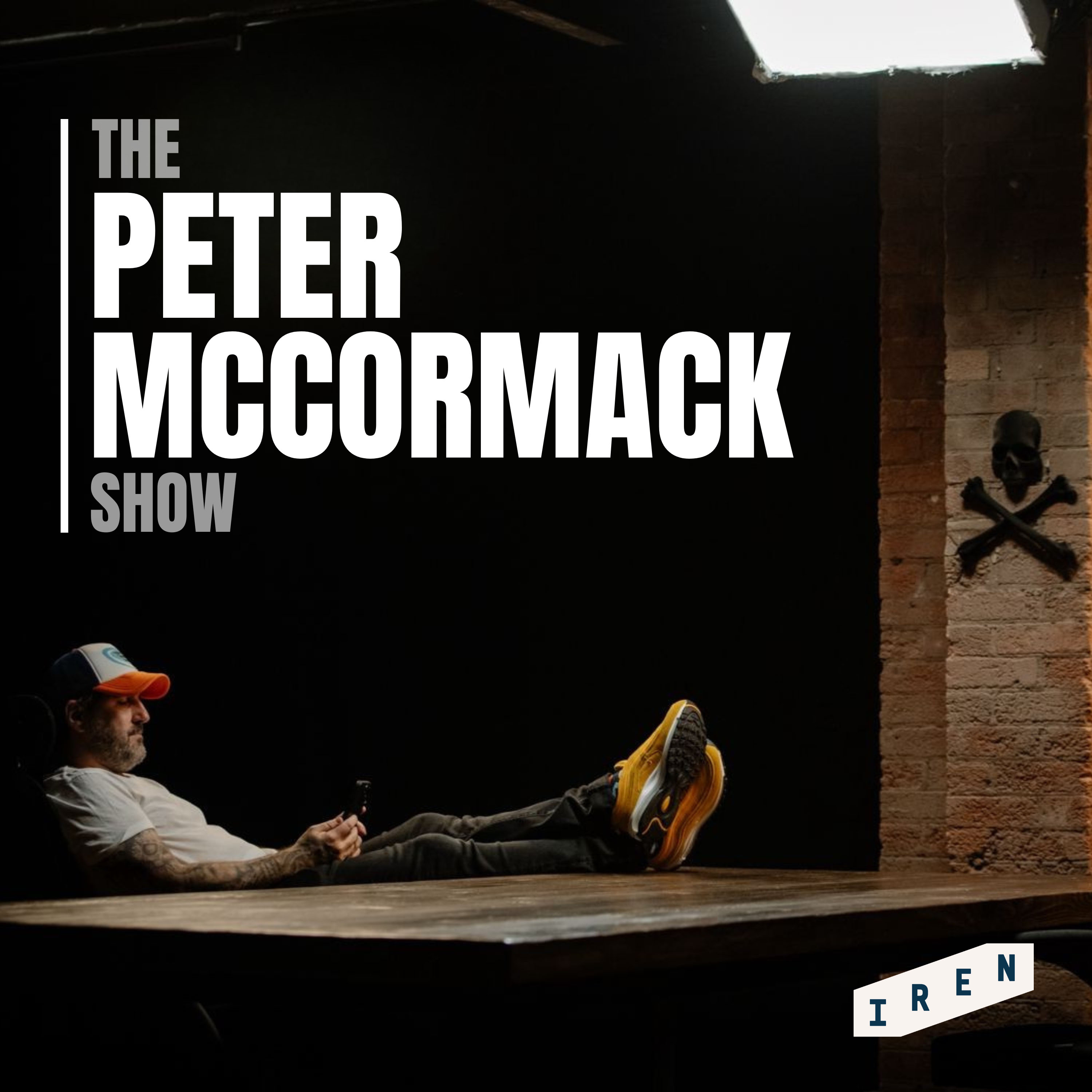
- Michael Saylor, The Peter McCormack Show

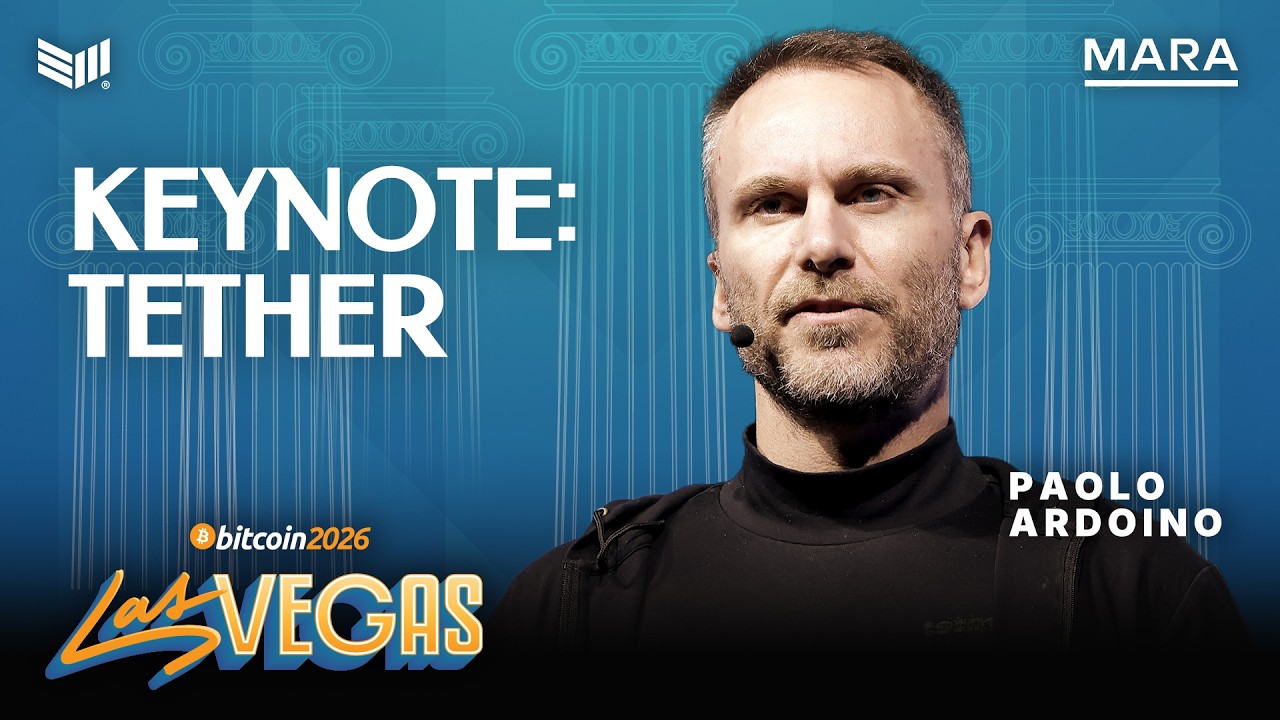
The response isn't just financial - it's infrastructural. Tether CEO Paolo Ardoino is building what he calls a 'Resilience Stack' to prepare for institutional decay. He warns the gap between the connected and excluded will widen 100x as AI becomes the primary economic driver. Tether's tools, like its Wallet Development Kit and Key Vault SDK, are designed to let AI agents run and transact locally, using the Lightning Network to handle the trillions of micro-payments an autonomous economy will require.

"The gap between the connected and the excluded will widen 100x as AI becomes the primary driver of economic value."

- Paolo Ardoino, Bitcoin 2026

Legacy finance is accelerating the shift. Jack Mallers argues central bankers are using AI-driven deflation as a new narrative to justify further currency debasement, printing into a 'productivity boom' to service a $40 trillion debt load. Simon Dixon frames the entire commercial banking system as a 'debt slave engine' that Bitcoin allows individuals to boycott through self-custody.

The wealth transfer is already underway. Visser views the current market churn as a 'Bitcoin IPO,' with early adopters selling to diversify into AI ventures while institutional ETF buyers like BlackRock become permanent, programmatic holders. This distribution is clearing the sell-side order book for what Visser expects to be a relentless next leg up, even as he predicts a flat S&P 500 for a decade. In an economy of abundance, only engineered scarcity wins.
Source Intelligence

- Deep dive into what was said in the episodes

#171 - Michael Saylor - A Billion Robots Are Coming To Take Your JobApr 30

  • He cites a 39% annualized return for Bitcoin over the past five years, double the S&P 500, but notes its high volatility deters widespread adoption for savings.
Also from this episode: (9)

Protocol (7)

  • Michael Saylor argues the dollar supply expands at roughly 7% annually, a trend consistent for the last 100 years. This currency debasement transfers wealth from those who don't own appreciating assets.
  • Saylor categorizes global currencies into tiers. The US dollar is the first-tier reserve currency. Second-tier currencies like the pound and euro stagnate against it, while third and fourth-tier currencies collapse.
  • Saylor claims scarce desirable property is the only reliable defense against monetary debasement. Historical examples include prime land, gold, fine art, and intellectual property like music rights.
  • He defines Bitcoin as digital capital and the highest form of capital yet discovered. Saylor argues it perfected portable property rights, allowing global peer-to-peer settlement without intermediaries.
  • Saylor warns that grandiose ambitions break systems, citing Napoleon and the fall of Rome. He applies this to Bitcoin, stating its primary ambition should be to not break the network by adding features.
  • He states that after the block size wars, Bitcoin transaction fees are minimal. Saylor cites Clark Moody's dashboard showing an average fee of $0.32, proving increased bandwidth was unnecessary.
  • Saylor explains his company's digital credit instrument, STRC. It aims to offer ~11.5% yield by stripping volatility from Bitcoin, targeting a market 100x larger than direct Bitcoin investors.

AI & Tech (1)

  • He posits that human capital is being demonetized by AI and automation. White-collar bots are already here, and physical robots will arrive within a decade, automating both intellectual and manual labor.

History (1)

  • Saylor references historical examples from Murray Rothbard's 'Conceived in Liberty', detailing how American colonies debased currencies and defaulted on debts, leading to Shays' Rebellion and the Constitution.
Bitcoin 2026
Bitcoin 2026

Bitcoin 2026

A Psychohistory Implementation | Paolo Ardoino, TetherApr 30

  • Tether operates in 160 countries with 573 million users across its USDT, Tether Gold, and other services, adding 34 million new wallets per quarter.
Also from this episode: (8)

Protocol (2)

  • Paolo Ardoino says Tether holds over 130,000 Bitcoin and is a continuous buyer.
  • The WDK library provides self-custodial wallet creation for people, machines, and AI agents, with built-in support for Bitcoin's Lightning Network for scale.

Stablecoins (2)

  • Ardoino frames Tether's mission as creating stability against societal 'darkness' marked by war, inflation, and currency instability, inspired by Asimov's psychohistory.
  • Ardoino introduces the 'resilience stack', Tether's open-source infrastructure suite designed to outlast societal instability, with over 1,000 projects on GitHub.

AI & Tech (4)

  • Ardoino cites 4 billion people globally lack access to basic financial services, creating a societal gap that AI will widen 100x for the excluded population.
  • Holepunch is Tether's rebuilt, cryptographic peer-to-peer protocol for scalable real-time data, enabling server-less applications like a peer-to-peer Uber.
  • Keet is Tether's messaging app built on Holepunch, with over 5 million users, designed to be unstoppable and will be fully open-sourced.
  • Key Vault is Tether's open-source SDK for building private, local AI tools, applying a 'not your keys, not your coins' principle to artificial intelligence.

Mailbag Monday: Live From The Bitcoin ConferenceApr 28

  • Jack Mallers argues the primary catalyst for Bitcoin adoption is the world realizing fiat money is broken, accelerated by geopolitics like the Strait of Hormuz closure and threats to the petrodollar.
  • Mallers cites the Pentagon telling Congress that clearing the Strait of Hormuz could take six months, implying prolonged oil price inflation and global supply chain stress.
  • He presents the U.S. granting a currency swap line to the UAE as a definitive choice to debase the dollar rather than let asset prices fall, validating the Bitcoin thesis of currency debasement.
  • Mallers frames the U.S.'s $40 trillion debt as a hole where losses must be realized, positioning Bitcoin as a way for individuals to opt out of that future wealth confiscation.
  • He states Bitcoin outperformed traditional assets in the last seven crises, including COVID, the Russia-Ukraine war, and the U.S. banking crisis, due to its hybrid nature of technology and fiat liquidity.
  • He explains that running a Bitcoin node is critical for individual sovereignty, as it allows anyone to validate consensus rules and vote on Bitcoin's monetary properties, irrespective of their wealth.
  • He notes that most of Strike's business volume comes from older wealth holders transferring assets into Bitcoin, not younger skeptics who lack significant capital.
  • Mallers says Bitcoin lending rates are high because institutional capital is expensive; cheaper rates would require a peer-to-peer market like Strike's planned 'yield on cash' product.
Also from this episode: (3)

Protocol (3)

  • Mallers dismisses near-term quantum computing threats to Bitcoin, arguing hardware progress is orders of magnitude behind software and that the developer community is actively working on solutions.
  • Mallers defines Bitcoin's trustlessness as achieving final settlement without a trusted intermediary, which gold cannot do digitally, though its future acceptance depends on free-market salability.
  • He cites rising societal disorder - including a 6.4% increase in overall cancers and a 20% rise in brain tumors - as evidence of structural flaws that better money could help fix.

Has Bitcoin Bottomed? Jordi Visser on AI, Inflation, and MoatsApr 27

  • David Hoffman notes that while many cycle investors on Bankless remain bearish on crypto's short-term bottom, Jordi Visser holds a bullish outlook, believing Bitcoin has already bottomed and that the current crypto winter will be the mildest ever.
  • Jordi Visser predicts that artificial intelligence and inflation will drive investors toward a 'scarcity portfolio,' ultimately concluding with Bitcoin and other assets possessing similar properties, due to a massive economic transition.
  • Jordi Visser identifies a 'compute shortage' as a critical current issue, as AI adoption rates have outpaced the supply of data centers and necessary hardware, potentially slowing companies' ability to replace labor and impacting margins.
  • Jordi Visser forecasts a period of inflation driven by underinvestment in physical infrastructure like power and chips needed for AI, alongside rising commodity prices for copper, silver, and energy, despite AI's long-term deflationary potential.
  • Jordi Visser describes Bitcoin's recent price action as an 'IPO' event, involving a significant distribution from early holders to new buyers, including ETFs, which have continued to accumulate during price dips.
  • Jordi Visser observes that the current Bitcoin cycle is distinct from previous ones because altcoins have not reached their 2021-2022 highs, suggesting a reshaping of the crypto market reminiscent of the post-dot-com bubble era.
  • Jordi Visser asserts that Bitcoin's strongest historical performance, with annualized returns of 247%, occurred when year-over-year CPI was above three-month bills and the Fed was on hold or easing, a regime he believes the market is rapidly approaching.
  • Jordi Visser's portfolio is heavily weighted towards 'scarcity assets' supporting the AI infrastructure, including memory stocks like Micron and Pure Storage, chip-related companies like Marvell, and raw material producers like silver miners and Brazilian mineral companies.
Also from this episode: (6)

AI & Tech (4)

  • Jordi Visser argues that AI accelerates wealth distribution problems, which have grown since the personal computer era, by disrupting human intellect and physical labor, making Bitcoin an inevitable and chosen scarcity asset in this new paradigm.
  • Jordi Visser explains that AI is destroying the moats of abundance-based software businesses, leading to a 'SaaSpocalypse' where companies like Salesforce and Adobe see profits eroded as AI creates super abundance, making their terminal value questionable.
  • Jordi Visser states that AI acts as the new quantitative easing (QE), enabling companies to reduce labor while growing, contrasting with traditional QE which aimed to keep businesses alive by maintaining credit flow.
  • Jordi Visser uses a diverse AI tool stack daily, including Perplexity, Gemini, ChatGPT, GROQ, and Claude, to conduct rapid research and generate content, highlighting the significant productivity gains for individuals.

Macro (1)

  • Jordi Visser notes that year-over-year CPI is currently 3.3%, predicting it will reach 3.6% or higher after the next print in early May, potentially surpassing 4% due to filtering effects from rising diesel and plastic prices.

Markets (1)

  • Jordi Visser argues that the S&P 500 will likely remain near current levels a decade from now, despite a doubling of the economy, as AI disrupts public companies and shifts value creation to a decentralized world of entrepreneurs.

How The Banking System Turned YOU into a DEBT SLAVE | Simon Dixon on Simply Bitcoin (19 April 2026)Apr 24

Also from this episode: (15)

Protocol (7)

  • Simon Dixon defines the Financial Industrial Complex (FIC) as a transnational governance structure that has captured Western governments, co-opted sovereign wealth funds, and cooperates with centralized governments like China's CCP.
  • At its base, the FIC is commercial banks that create fiat currency through loan issuance. Their primary goal is to turn individuals into collateralized debt obligations via mortgages, credit cards, and student loans, creating a cycle of debt slavery.
  • The petrodollar system, established after King Faisal's assassination, required oil purchases in dollars to be recycled into US Treasuries, rolling over the debt Ponzi scheme. Trump's first term broke it by making America an energy exporter, competing with the Middle East.
  • Dixon discovered Bitcoin in 2011 at $3, seeing it as an exit from the system. He later observed the sector getting co-opted as companies like Coinbase went public, ETFs like BlackRock's launched, and people borrowed against Bitcoin, giving Wall Street more power.
  • The winning strategy is to boycott the FIC by opting out: hold Bitcoin in self-custody to boycott custodians and ETFs, avoid borrowing against it to boycott banks, and build parallel local systems and supply chains.
  • Dixon believes Bitcoin will not fix the world but will create a new cycle of elites. A minority maintaining the Bitcoin ethos can achieve sovereignty, while most will hold it in custody, further empowering the FIC.
  • For individuals, Dixon advises maximizing the arbitrage between income and expenses to buy more Bitcoin monthly for at least 10 years. He personally defaulted on £250k of debt to buy Bitcoin, later negotiating a settlement after accumulating wealth.

Business (2)

  • The FIC's capital control cycle begins with venture capital, moves to private equity and credit, and culminates in taking companies public. Once public, firms are loaded with corporate debt and controlled by index funds, investment banks, and the bond market.
  • The FIC manages trillions through insurance, pensions, and endowments to dictate capital flow via asset management. Central banks socialize losses and privatize gains, while lobbies rent Congress to direct money printing into FIC-owned corporate entities.

Politics (6)

  • Dixon argues the military-industrial complex creates wars to ensure the debt-based Ponzi scheme continually rolls over. Deep state intelligence agencies bribe the judicial branch and install board seats in public companies to control all aspects of government and corporate life.
  • The FIC executes regime changes to transition between empires, deconstructing the pro-dollar system to move towards multipolarity. This involves breaking the Japan carry trade, Eurodollar system, and petrodollar through managed events like tariffs and the Epstein files release.
  • Dixon claims Trump's 2026 meeting with Xi Jinping will mark the new world order. The Strait of Hormuz closure reprices 50 commodities, benefiting nationalized oil in Iran and Russia, China's manufacturing base, and private oil corps like Chevron and Exxon.
  • Dixon states Trump's primary funders were Elon Musk (Technical Industrial Complex), the Mellon banking family (FIC), and Miriam Adelson connected to Israel (Military-Industrial Complex). His policies delivered stimulus to all three complexes while inflation and debt burdens fell on the public.
  • Governments captured by the FIC serve three functions: a piggy bank to funnel money to corporate sectors, a mechanism to dampen inflation via taxation, and a battering ram creating left/right narratives to make votes feel consequential.
  • Historical empire transitions followed a pattern: the Dutch East India Company model was taken over by the British, then the American Federal Reserve system after World Wars. Each transition involved rug pulls, gold confiscation, and rewriting history.