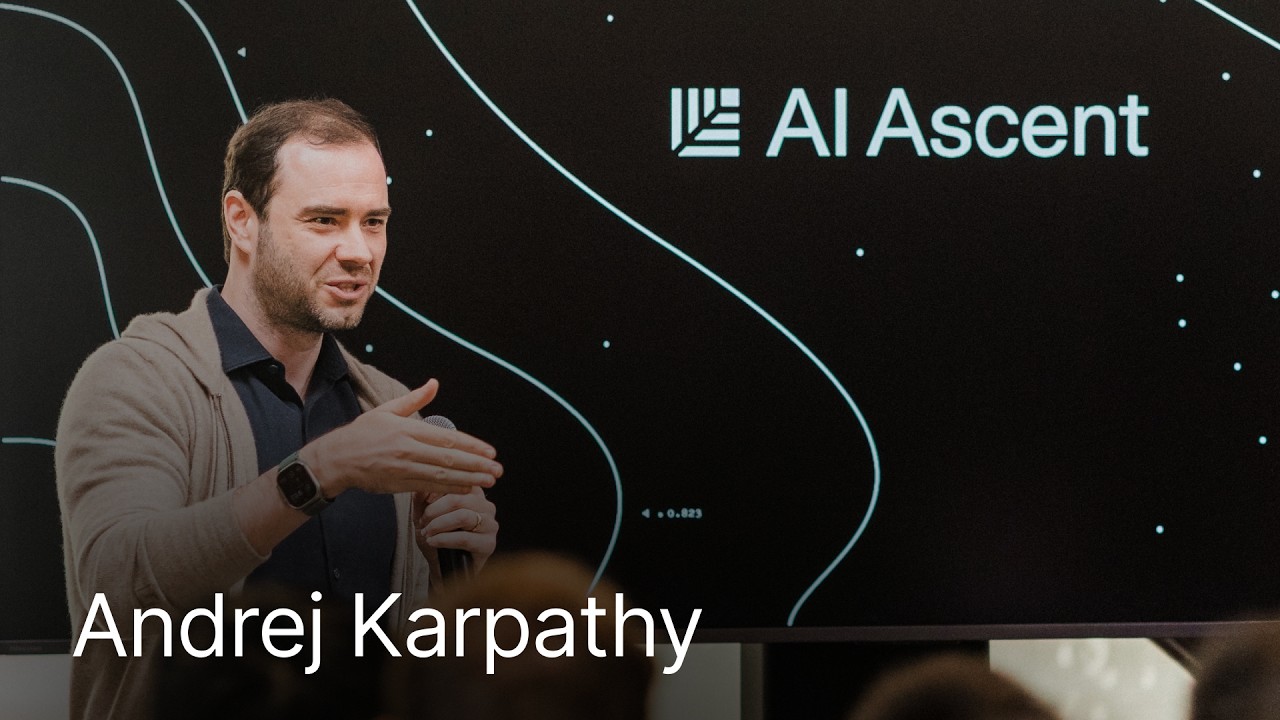
Software’s protective moat is gone. Andrej Karpathy described the shift on the Sequoia Capital podcast: programming has moved from explicit rules (Software 1.0) to prompting LLMs (Software 3.0). This turns code from a defensible asset into a commodity that can be generated on demand. Naval declared the consequence directly: pure software is now uninvestable for venture capital.
The capital is fleeing to new forms of scarcity. As Jordi Visser argued on Bankless, AI creates a ‘SaaSpocalypse’ of abundance, destroying the terminal value of companies like Salesforce and Adobe. Ben Horowitz of a16z agrees the old rule - that you couldn’t throw money at a software problem to catch up - is now false. The new bottlenecks are physical: compute, electricity, and the operational DNA to wield them.
"Pure software is uninvestable for venture capital now because it can be hacked together instantly and agents will soon build scalable versions."
- Naval, Naval
Enterprise adoption is hitting a wall of fear and slop. Nathaniel Whittemore noted on The AI Daily Brief that Nvidia’s launch of Nemo Claw targets the primary CIO friction point: the fear of giving an autonomous agent network access. Meanwhile, code quality is deteriorating. On The Pragmatic Engineer, Armin Ronacher warned that AI agents, lacking a human’s pain feedback loop, create ‘vibe slop’ - code that looks correct but builds long-term maintenance nightmares. Mario Zechner, creator of the Pi agent, now auto-closes all first-time pull requests to filter out AI-generated spam.
The surviving advantage lies in deterministic, firm-specific agent workflows. As Matan Grinberg noted on This Week in AI, the value is shifting from the LLM layer to agents that encode an institution’s specific 85-step process. This ‘forward-deployed expertise’ is harder to copy than code. The endgame is agents that don’t just write software but run businesses. Christian van der Henst’s experiment, discussed on This Week in Startups, involved an OpenClaw agent named Valerie that autonomously managed a vending machine business, handling inventory and dynamic pricing.
"The value isn't the intelligence; it’s the orchestration."
- George Sivulka, This Week in AI
We are witnessing a fundamental revaluation of assets. When AI makes digital goods abundant and valueless, investors and builders are forced to anchor value in what cannot be copied: atoms, math, and uniquely human judgment. The software era’s end isn’t a slowdown - it’s a wholesale migration to the next layer of the stack.