The AI bubble narrative is dead, replaced by a grim reality for legacy software. Nathaniel Whittemore describes a 'SAS apocalypse' where autonomous agents like Claude Co-work and Codex are cannibalizing per-seat subscriptions. When an agent can build a bespoke tool for pennies, the middleman software layer becomes a liability. This isn't speculative; hyperscalers are backing the shift with a planned $650 billion in capital expenditure this year.
"Markets stopped asking if AI would work and started fearing it worked too well."
- Nathaniel Whittemore, The AI Daily Brief
The money is moving from traditional enterprise software into the raw compute needed to run the agents that replace it. Google Cloud’s revenue jumped 63%, AWS returned to 28% growth, and Microsoft reported 20 million paid Copilot seats. Amazon is spending every dollar of profit on AI infrastructure, with demand for its Trainium chips so high it would constitute a $50 billion business if booked as revenue.
This shift has moved competition from model weights to 'harness engineering.' The runtime environment - the persistent memory, tool dispatch, and sandboxing - is now the primary location of intelligence. Benchmarks show GPT-5.5’s performance jumps from 61.5% to 87.2% when moved into a superior harness like Cursor’s. Sam Altman recently acknowledged it's increasingly hard to tell where the model ends and the harness begins.
Legacy platforms built for human administrators are uniquely vulnerable. Joe Schmidt IV argues that while systems like Workday have 97% retention, they are 'most important and least loved.' AI-native migration tools can now map and move complex databases in 60 days instead of 12 months, dissolving the friction that protected incumbents. Schmidt contends much reported AI revenue, like Workday’s $400 million ARR, is 'procurement innovation' - flex credits sold on top of old architecture - not true agentic transformation.
"The core user experience of Workday is broken... It took me six and a half minutes to find my compensation data."
- Joe Schmidt IV, The a16z Show
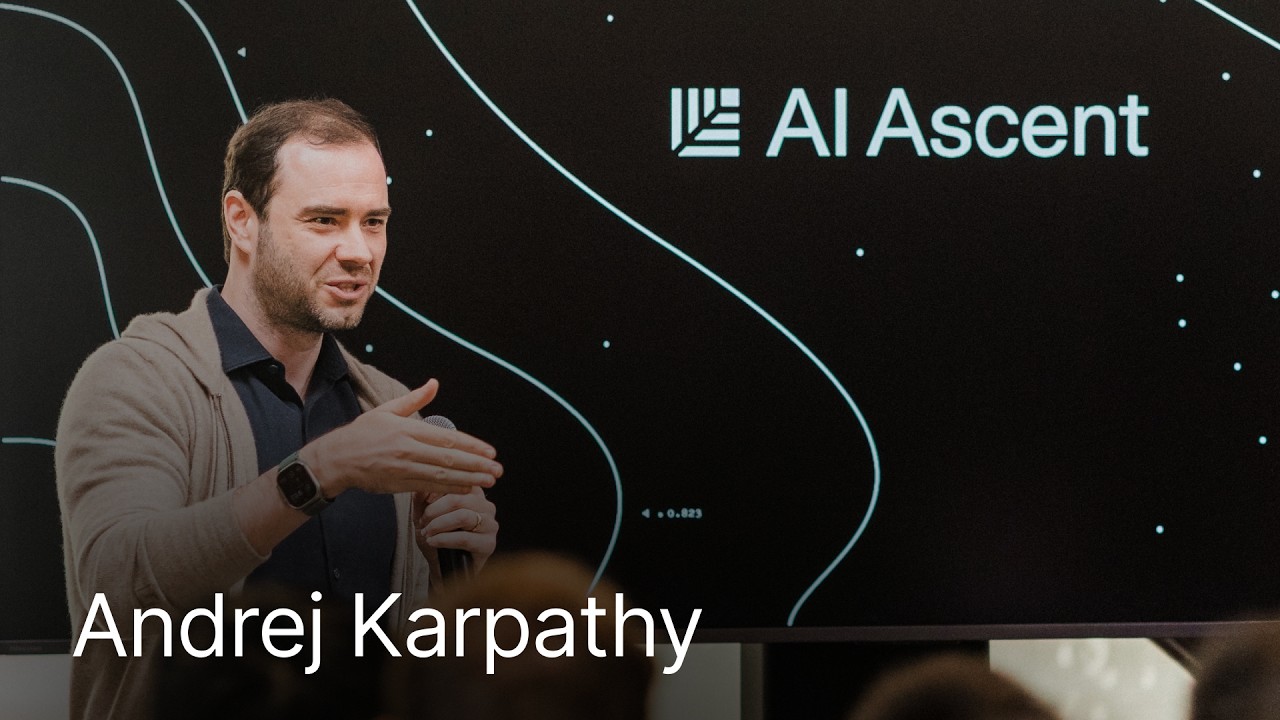
Andrej Karpathy frames the human role in this new stack as directing a fleet of 'intern entities.' The goal is coordinating stochastic agents to maintain a professional bar. As execution is automated, Max Schoening of Notion argues that individual 'agency' - the conviction the world is malleable - becomes the key differentiator. The first 10% of any project is now free; the winners are those who start without permission.
The frontier is autonomous business ownership. Experiments like the Valerie vending machine, run by an OpenClaw agent with a bank account and legal trust, point to a future of zero-employee companies. Startups like Pulsia are already hitting millions in revenue with a single founder orchestrating agents. The capability overhang is widening, and the divide between companies with working agents in production and those stuck in the pilot phase is becoming exponential.