03-21-2026Price:

The Frontier

Your signal. Your price.

BUSINESS

Oil shock triggers global chain reaction

Saturday, March 21, 2026 · from 5 podcasts, 6 episodes
  • Geopolitical oil shocks are destabilizing global markets, with Asia facing potential fuel rationing and the U.S. confronting stagflation.
  • Gold’s collapse signals fading fear, while Bitcoin holds as capital rotates from crowded safe havens.
  • A $1.8 trillion private credit bubble is cracking under rate pressure and AI disruption - bailouts loom.

Oil at $100. Flights rerouted. Factories idling. The Iran conflict didn’t just ignite war - it triggered a macro chain reaction.

The shockwave is hitting where it hurts: supply chains, household budgets, and overleveraged credit markets. On Forward Guidance, Bob Elliott laid out the math - U.S. consumption is already at zero real growth as oil prices add 1.5% to inflation. Households have no savings left to buffer the blow. The Fed can’t cut rates into this kind of crisis. It will hold - or hike.

Asia is in even deeper trouble. Peter St Onge calculates China has three months of oil stockpiles, India just one. When those run out, rationing and factory shutdowns follow. The U.S. is insulated by domestic production, but not immune. Airlines are burning more fuel on longer routes, and low-cost carriers without hedges face billions in losses.

Markets are re-pricing risk in real time. Nick Bhatia, once bullish, now watches oil, the dollar, and Treasuries for signals. The VIX isn’t pricing total trade collapse - it’s pricing margin destruction from sustained high oil. That’s a slower, more insidious threat.

Gold, the traditional chaos hedge, just crashed 7%. Nathan Fitzsimmons sees it as a sentiment flush - the debasement trade is unwinding. Capital isn’t fleeing risk; it’s rotating. Bitcoin, down only slightly, may be the beneficiary. The real story isn’t Bitcoin’s price - it’s that money is leaving a $30 trillion asset class and not panicking.

Beneath it all, the private credit bubble is deflating. Richard Dias warns of gated funds, hidden losses, and inevitable bailouts. When the mark-to-market reckoning hits, net asset values could collapse from 100 to 20 overnight. The response? More central bank intervention - and political pressure for digital currencies that bypass financial limits.

Bitcoin, in this view, isn’t just an asset. It’s a safety valve.

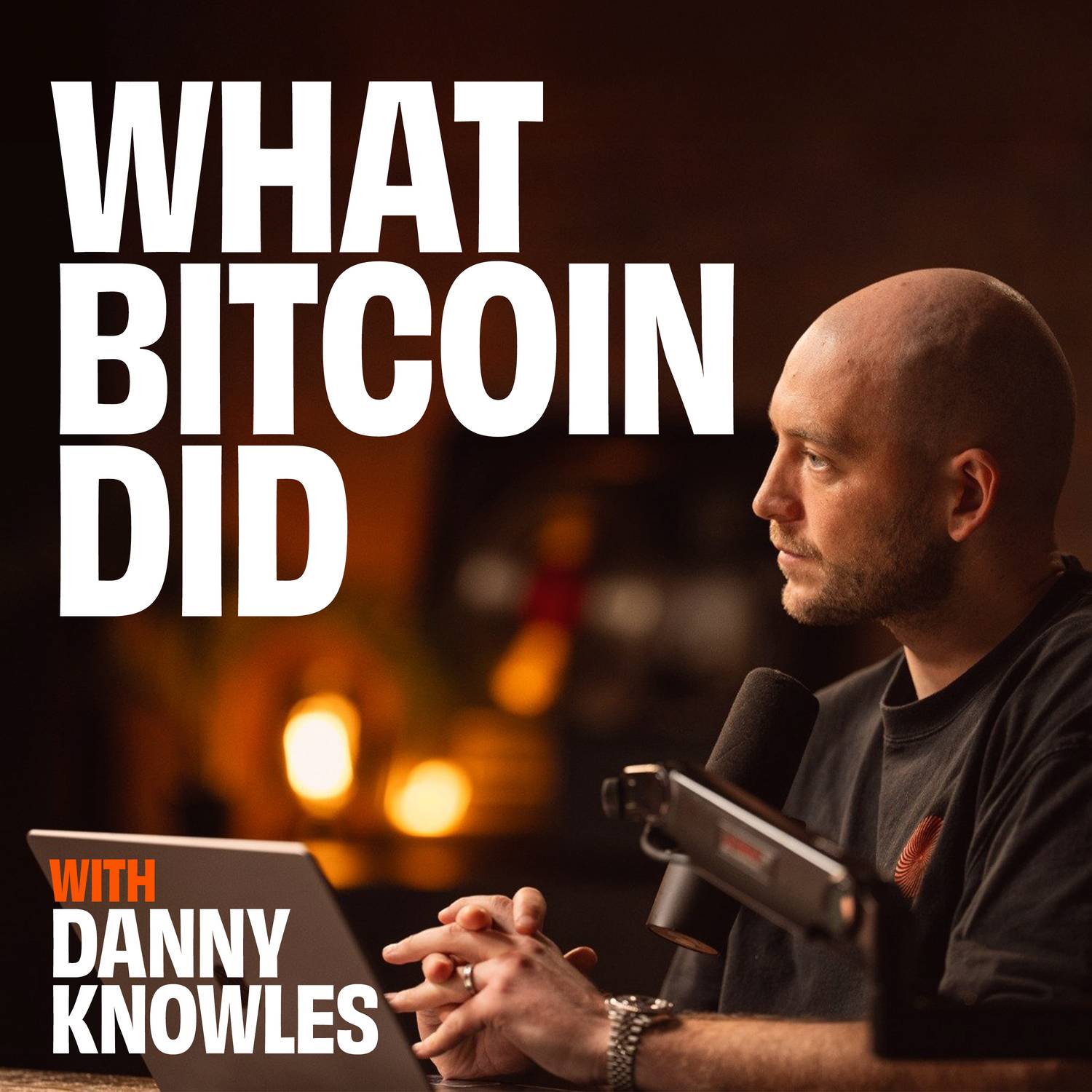
Nick Bhatia, What Bitcoin Did:

- You have to take price as truth.

- And if prices are moving that don't agree with your narrative, don't agree with your bias, then you have to take a second look.

Source Intelligence

What each podcast actually said

Is It Over For Gold? James Lavish Exposes $3T Bitcoin Signal Nobody SeesMar 19

  • Nathan Fitzsimmons interprets gold's recent 7% crash as capital flight from a crowded 'debasement trade', signaling the market expects a cooling of geopolitical tensions and potential resolution to Middle East conflicts rather than further escalation.
  • Fitzsimmons argues gold's sell-off, which moves trillions from a $30 trillion+ asset class, points to the unwinding of a consensus, narrative-driven trade that reached peak retail FOMO through avenues like Costco gold bars and social media.
  • Bitcoin exhibited notable decoupling during the gold crash, falling only a fraction of a percent, which Fitzsimmons sees as a potential early signal of capital rotating from the overbought safe haven into other assets.
  • The relative stability in Bitcoin's much smaller market cap during the gold rout suggests the beginning of a pivot where capital may flow from 'chaos insurance' into perceived growth assets or what Bitcoiners call the 'least risky thing in existence.'
  • Fitzsimmons argues central banks like the Bank of England are misdiagnosing wartime supply-driven price spikes as 'inflation', a policy error that risks rate hikes during a conflict, confusing a symptom for the underlying monetary cause.
  • The gold crash is characterized as a necessary sentiment flush that resets the playing field after a period of extreme retail and institutional crowding, potentially creating a cleaner backdrop for the next major capital rotation.
  • Mainstream financial media labeling a trade as 'consensus', as Fitzsimmons notes ZeroHedge did with gold, often acts as a reliable contrary indicator and a top signal for that specific market move.

"There's Never Just One Cockroach" Credit Crisis Incoming | Richard DiasMar 17

  • Richard Dias warns the $1.8 trillion private credit sector, built on yield-chasing during quantitative easing, faces a dual catalyst of higher interest rates and AI disruption of tech cash flows.
  • According to Dias, investors moved further out the risk curve, treating unreliable borrowers as safe, setting the stage for a valuation collapse as this malinvestment unwinds.
  • Dias describes a 2008-like dynamic of gated funds, halted redemptions, and hidden mark-to-market losses, where a fund trading at a net asset value of 100 could fall to 20 overnight when finally priced.
  • Dias argues central bank bailouts for the private credit collapse are inevitable, as there is no alternative liquidity source outside of Bitcoin.
  • The episode argues that the current compression in credit spreads is artificial, hiding the true scale of the crisis which is just beginning to unfold.

Also from this episode:

Regulation (2)
  • This inevitable bailout, Dias claims, will create political pressure for the adoption of central bank digital currencies, which he labels tyrannical and highly undemocratic.
  • Dias is explicitly worried that this critical role for Bitcoin will motivate regulators to try to outlaw it, seeing it as a threat to the bailout-dependent system.
BTC Markets (1)
  • Richard Dias positions Bitcoin as the essential safety valve against this potential financial tyranny, a mega option value on systemic failure.

This Is The Macro Reset | Nik BhatiaMar 18

  • Analyst Nik Bhatia told What Bitcoin Did he has abandoned his prior economic assumptions of strong growth and controlled inflation following the outbreak of the Iran war, resetting his entire macro view.
  • Bhatia's new guiding principle is to let price action dictate his analysis, warning against clinging to a narrative when market prices contradict it.
  • Bhatia identifies crude oil breaching $100, a strengthening U.S. dollar, and equities breaking multi-year trend lines as a dangerous combination for risk assets.
  • He notes the Treasury market holding near 4.25% provides a crucial counter-signal of stability amidst the turmoil in oil and equities.
  • Bhatia analyzes that the current volatility surge, driven by the Iran conflict, differs from past geopolitical shocks like the 2024 tariff announcements, where he was more certain volatility would recede.
  • He breaks down the VIX, or fear index, as the price of portfolio insurance, with last year's tariff fears pricing in a total trade seizure while the current fear centers on oil choking corporate profits.
  • The key next signal Bhatia is watching for is whether pressure from sustained triple-digit oil prices will finally crack the composure of the Treasury market.

Also from this episode:

War (1)
  • Bhatia states that war is a personal analytical blind spot for him, requiring fresh study to understand its market implications.

Flagging carriers: war shuffles the Gulf-airline flight deckMar 18

  • The Economist's Simon Wright states the Middle East is a critical global aviation hub, making the war's disruption to airspace immediate and widespread.
  • Closure of airspace over the Gulf, combined with earlier bans over Russia, forces airlines to take longer, more fuel-intensive detours on routes between Europe and Asia.
  • A jet fuel supply crisis compounds the route problem, as Wright notes 20% of global supply moves through the now-stalled Strait of Hormuz.
  • Asian refineries, which handle much global capacity, are slowing output to conserve their own constrained crude supplies from the Gulf, tightening the fuel market further.
  • Low-cost carriers are more vulnerable, with fuel accounting for about a third of their costs versus a fifth for legacy network airlines, according to the analysis.
  • While airlines like Ryanair are hedged against price spikes, major American and Chinese carriers are not, exposing them to billions in potential losses.
  • The disruption is already forcing capacity cuts, with Air New Zealand grounding over a thousand flights in response.
  • Gulf superconnectors Emirates, Etihad, and Qatar face a steep challenge winning back connecting passengers and Dubai's tourist trade.
  • Western rivals are already capitalizing, with Lufthansa reporting a jump in bookings to Asia in March and raising fares on alternative routes.
  • Wright argues the impact on airlines worldwide may persist well after the war ends, as restoring fuel supplies and lowering prices will take time.
  • The stage is set for a fierce price war, with Gulf carriers likely to resort to heavy discounting in a fundamentally altered global network.

The Macro Chain Reaction of Oil Shocks | Bob ElliottMar 18

  • Bob Elliott argues the US entered 2026 as a savings-driven economy, with households and businesses already drawing down dwindling savings to maintain spending and investment.
  • The oil shock from Iran imposes an estimated 1 to 1.5% price increase across the entire consumer basket, according to Bob Elliott.
  • For households already spending more than they earn, the oil shock pushes real consumption growth to zero, directly contradicting market expectations for 2-3% GDP growth.
  • Bob Elliott contrasts the 2022 shock, where hot labor markets and COVID cash buffers allowed nominal spending to hold up, with the 2026 scenario where households have far less savings to draw from.
  • Oil futures project prices to end 2026 40% higher than they started, indicating a more prolonged stagflationary squeeze than the 2022 shock.
  • Bob Elliott's historical analysis concludes central banks never ease monetary policy into an oil shock, citing the 2008 surge and the 2022 spike that forced a hawkish Fed pivot.
  • Elliott states an oil shock creates an impossible policy dilemma because it simultaneously increases inflation and decreases real growth.
  • Bob Elliott predicts the Fed will be forced to respond to the shock not with cuts, but by holding or even hiking interest rates.

Ep 164 Weekly Roundup: China has just 3 Months of OilMar 16

  • Peter St Onge calculates that Chinese strategic oil reserves amount to roughly three months of supply, including both government and private stockpiles.
  • St Onge warns that a protracted conflict involving Iran, which controls roughly one-fifth of global oil exports via the Strait of Hormuz, could trigger a severe energy crisis in Asia within months.
  • India and Southeast Asia face more immediate risk, with St Onge estimating India has at most 30 days of oil stockpiles and Southeast Asia has about 60 days.
  • St Onge argues the United States and Europe are insulated from this risk due to substantial domestic oil production and the ability to source from alternative suppliers like the Americas and West Africa.
  • China has already implemented domestic fuel export bans as a first step toward rationing, with Peter St Onge predicting subsequent license-plate driving bans and rolling industrial shutdowns if shortages deepen.
  • A worst-case political scenario outlined by St Onge could see a future U.S. president, like Donald Trump, ban oil exports to crash domestic prices, forcing the rest of the world to bid up a constrained global supply.

Also from this episode:

Labor (2)
  • Analyzing recent U.S. jobs data, Peter St Onge contends that underlying labor market weakness stems from artificial intelligence beginning to displace white-collar and entry-level roles.
  • St Onge points to spiking unemployment among young workers and a corporate shift toward 'no hire, no fire' strategies as evidence of AI-driven disruption to the traditional graduate employment pipeline.