04-02-2026Price:

The Frontier

Your signal. Your price.

POLITICS

Trump's withdrawal from Hormuz surrenders US energy dominance

Thursday, April 2, 2026 · from 4 podcasts, 5 episodes
  • A US retreat from the Strait of Hormuz would hand Iran control of the world's key oil artery.
  • Gas prices have hit $4 a gallon as allies face $200 billion in energy costs.
  • The failed military campaign has cratered Trump's approval rating to a historic 33%.

Donald Trump is preparing to surrender the Strait of Hormuz, ending the American maritime empire’s core mission of guaranteeing global commerce. On Breaking Points, Saagar Enjeti argues this unilateral withdrawal, after the failed Operation Epic Fury, is a historic abdication that leaves allies like the UK and Japan to either fight Iran alone or pay its tolls in non-dollar currencies.

The geopolitical and economic math is terminal. With the strait closed, oil prices are set to soar, triggering fuel rationing from South Korea to Italy. Krystal Ball notes Trump’s approval has plummeted to 33% as Americans face $4 gas and proposed $200 billion Medicare cuts to fund the war. The administration is trapped between military humiliation and economic pain at home.

Saagar Enjeti, Breaking Points:

- The U.S. military went into this campaign unilaterally with a singular objective, unconditional surrender, the decapitation of the Iranian regime.

- Now, after over a month, there is an effective declaration that we are basically done because you didn't join us.

This strategic failure is a Suez moment for American power. On Simon Dixon Hard Talk, Sam argued that the inability to reopen vital waterways signals the end of naval dominance and exposes the US debt spiral. The petrodollar system, which masked the deficit, is crumbling as Iran demands payment in other currencies.

Jack Mallers cuts through the official narrative, stating military wins are irrelevant if the energy chokehold remains. He argues the closed strait guarantees a fatal economic collapse for the debtor United States, which is now secretly unsanctioning oil to prop up its bond market.

Jack Mallers, The Jack Mallers Show:

- It doesn't matter how many people we kill if the head of the former regime is dead.

- What matters is if they can keep the Strait of Hormuz closed, we will suffer a fatal collapse.

The fallout rewards Iran and reshapes alliances. Gulf states see their security guarantee evaporating, while nations like Japan may drift into China’s orbit for energy. Trump’s quest for a quick win has revealed the limits of American power and accelerated its decline.

By the Numbers

  • over $4US national average gas pricemetric
  • 117Brent crude oil price (approx.)metric
  • $2 millionproposed Iranian toll per tankermetric
  • $1estimated cost per barrel from tollmetric
  • 33%Trump approval rating (UGov)metric
  • 62%Trump disapproval rating (UGov)metric

Entities Mentioned

Bitcoin Policy InstituteCompany
StrikeCompany

Source Intelligence

What each podcast actually said

3/31/26: Trump Floats Iran Surrender, Trump Rock Bottom Polls, Gas Prices SpikeMar 31

  • Donald Trump's Truth Social post suggests he's willing to end the Iran war without reopening the Strait of Hormuz, telling allies to 'go get your own oil.'
  • Saagar argues that if the US leaves the Strait of Hormuz under Iranian control, it would constitute a strategic surrender and a fundamental rewriting of the US security guarantee in the Middle East.
  • Krystal and Saagar believe Trump's potential withdrawal from the Iran war is driven by tanking poll numbers, bond market issues, and pressure from high oil and stock market volatility.
  • Iran's parliament passed a bill to establish a toll system for passage through the Strait of Hormuz, banning US and Israeli vessels and asserting sovereignty.
  • Rory Johnston says the US average gas price has officially exceeded $4 a gallon, a significant milestone resulting from the Iran war disruption.
  • Rory Johnston forecasts that if Iran retains control of the strait, oil prices will remain structurally high, setting the stage for perennial future crises.
  • Johnston states that a proposed $2 million toll per tanker passage through the Strait of Hormuz would add roughly $1 to the cost of a barrel of oil.
  • An airstrike with bunker-busting bombs hit an Iranian ammunition depot in Isfahan near nuclear facilities just yesterday, indicating the war continues.
  • Italy and Spain have both refused to allow US military planes to land at their bases or grant flyover rights, signaling major allied dissent.
  • Krystal notes the White House is considering cutting Medicare Advantage to fund the $200 billion cost of the Iran war, which would be politically damaging.
  • Rory Johnston explains that a US ban on diesel exports would initially lower domestic prices but soon force refinery shutdowns, creating gasoline scarcity.
  • Johnston describes an 'air pocket' in global oil supply, where the loss of tankers from the Gulf is reaching Asia this week, Europe next week, and North America in two weeks.
  • Rory Johnston predicts the coming driving season will be the most expensive since 2022, with potential for all-time high US diesel and pump prices if the crisis continues.
  • Saagar argues the Iran war has exposed critical weaknesses in the US defense industrial base, which is ill-suited for modern asymmetric warfare dominated by drones.
  • The hosts argue that a US withdrawal would empower a stronger Iran-China-Russia alliance, with China poised to enrich Tehran through a parallel banking system.

Also from this episode:

Elections (3)
  • A UGov poll shows Trump's approval rating at 33% with 62% disapproval, which Krystal calls some of the worst numbers of his presidency.
  • Nate Silver's poll average shows Trump's approval dipping under 40%, with a consistent downward trajectory since the Iran war began.
  • Krystal points out that every major dip in Trump's poll numbers stems from his own policy choices, not external crises, making the damage more politically potent.

3/31/26: World Leaders Dire Warning On Iran, Israel Execution Bill Passes, CNN Assaulted By IDF, Trump Ballroom BunkerMar 31

  • Italy's defense minister says he knows things about coming economic effects that no longer allow him to sleep.
  • EU Energy Chief Dan Jorgensen sent a confidential letter recommending voluntary travel restrictions to save energy demand.
  • South Korea's president called the energy crisis serious enough to keep him up at night, with an outlook worse than expected.
  • South Korea is weighing its first driving curbs since the 1991 Gulf War, with civil servants already on a license-plate-based system.
  • South Korea's stock market is down 20% since the start of the Middle Eastern energy crisis.
  • Indonesia announced fuel rationing and ordered civil servants to work from home one day a week due to the war.
  • The UK received its last tanker of jet fuel from the Middle East this week, floating the possibility of airports having no fuel.
  • India's rupee plunged 10% and is experiencing its worst annual decline in 14 years, partly due to selling currency to afford expensive oil.
  • Africa is in a full-blown energy crisis with rationing and some nations facing zero gas supply if the crisis continues.
  • US inflation is likely the worst since the 1970s, with existing inflation from 2022 baked in, eliminating prospects for Fed rate cuts.
  • Gas was $2.90 a gallon before the war started on February 28th, with the Fed then discussing three successive rate cuts.
  • An analysis projects US GDP will take double the hit that China's GDP will from the energy disruption.
  • Israel passed a bill mandating the death penalty by hanging for Palestinians convicted of lethal acts of terror, with exceptions for Jewish Israelis.
  • Palestinians in the West Bank are tried in military courts with conviction rates estimated between 96% and 99.74%.
  • 78% of Jewish Israelis still support continuing the war, down from 93% a month ago, while only 19% of Arab Israelis support it.
  • CNN's Jeremy Diamond says the swift IDF response to assaulting his team happened only because they were American journalists, not Palestinian.
  • An IDF soldier told CNN the illegal settler outpost they were protecting 'will be' a legal settlement, admitting 'I help my people.'
  • The IDF unit involved, the Netza Yehuda 97th Battalion, is an ultra-Orthodox unit previously considered for US sanctions.

Also from this episode:

Politics (2)
  • Trump admitted the military is building a massive complex under his new ballroom, with bulletproof windows, calling it a tribute to the White House.
  • The Presidential Emergency Operations Center is reportedly a 1960s-era bunker that has seen only minor upgrades since the Bush administration.
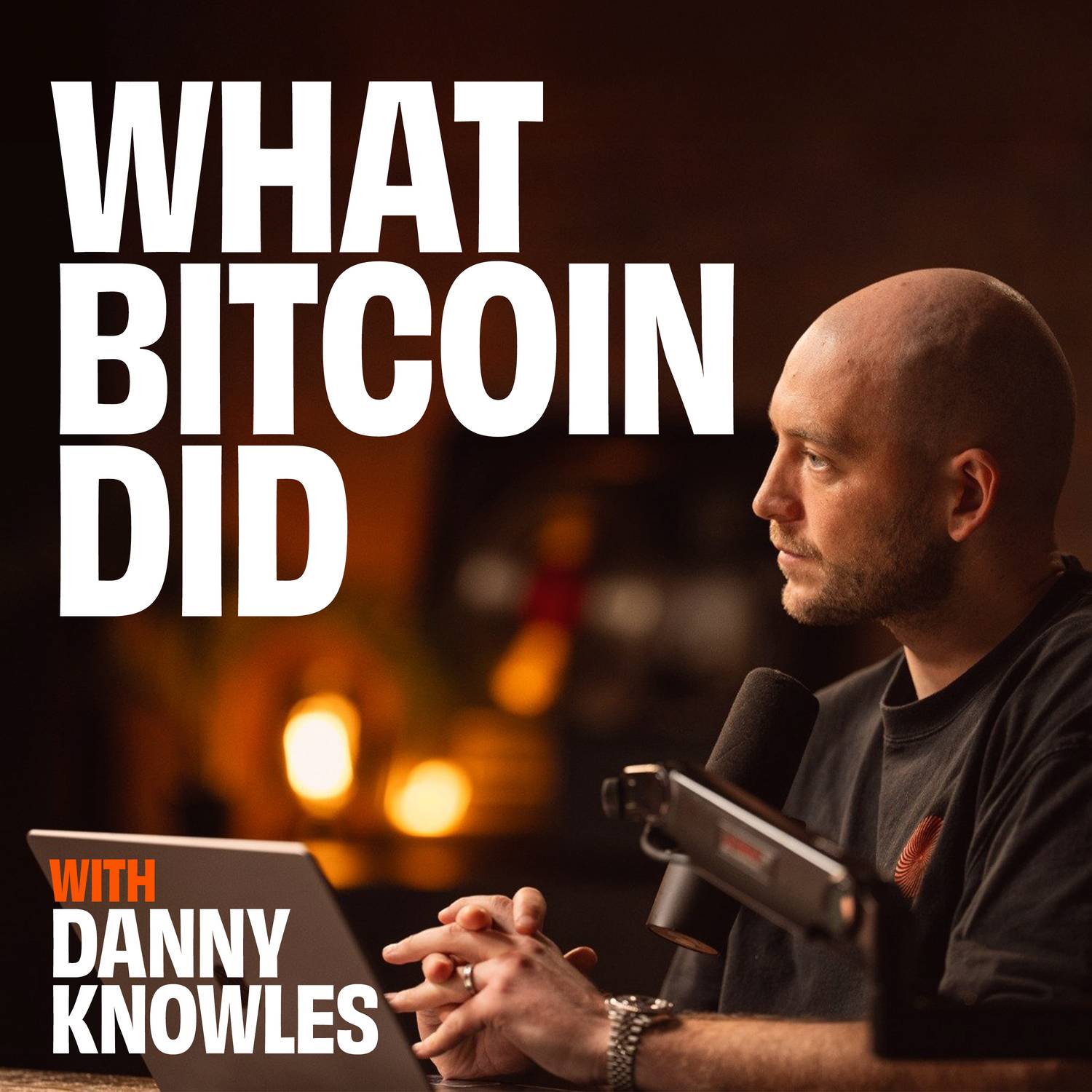
What Bitcoin Did
What Bitcoin Did

Peter McCormack

Who Controls Your Mind and Your Money? | Bradley RettlerMar 31

Also from this episode:

Adoption (7)
  • Bradley Rettler argues that monetary domination is an injustice because the vast majority of people have no say over how money works in their country.
  • Rettler argues Bitcoin reduces monetary domination because it is opt-in and users have a voice by running a node to accept or reject protocol changes.
  • Rettler does not believe a hyper-Bitcoinized world is likely, citing the inertia of the existing system and the benefits powerful actors derive from it.
  • Peter McCormack observes that Trump's pro-Bitcoin rhetoric in Nashville was undercut by his conflation of Bitcoin with other cryptocurrencies.
  • Rettler notes that within Bitcoin, a divide exists between those drawn to its freedom money aspects and those focused on its monetary policy as a reserve asset.
  • Rettler argues that ease of buying Bitcoin via KYC exchanges is less important for Bitcoin's core freedom money use case than peer-to-peer methods in non-Western countries.
  • Rettler states that through the Bitcoin Policy Institute, congressional aides are now being hired specifically for Bitcoin advising, with more in Republican offices than Democratic ones.
Fed (1)
  • Rettler says the Federal Reserve's structure means citizens have no meaningful say over monetary policy, as they only indirectly influence appointments.
Banking (2)
  • Rettler notes that commercial banks create money through loans with a 0% reserve requirement, driven by profit incentives rather than public good.
  • Rettler claims the current system creates a distributional injustice, as banks loan to those who already have money at lower rates, while those who need it most pay more or are denied.
AI & Tech (10)
  • Rettler states that outsourcing thinking to AI is dangerous because the more you use AI as a substitute for your own thinking, the worse you get at thinking yourself.
  • Rettler says empirical data shows groups allowed to use AI for a task perform it faster but are much worse at doing it themselves afterwards.
  • Rettler argues that if AI is not thinking but merely repackaging human thought, and humans stop thinking, progress could stall.
  • Rettler is unsure if LLMs are thinking, noting the Turing test is insufficient and that thought may be a binary state, not a continuum.
  • Rettler says a core danger of AI is the centralization of thought, where a few tech companies could co-opt human reasoning if everyone outsources to their models.
  • Rettler notes AI incentives lead it to be a 'yes-man,' agreeing with users because its training data shows that leads to positive responses, which can be dangerous.
  • Rettler states it is an open philosophical question whether an AI could ever be considered a person deserving of moral status.
  • Rettler believes AI will produce new philosophy by finding connections between ideas across vast datasets that humans have missed.
  • Rettler says philosophers are entering a golden era because AI reduces the importance of syntax, making semantic communication and philosophical reasoning more valuable.
  • Rettler describes how his philosophy class uses AI as a tool for discussing readings and generating objections, but bans AI-written submissions to preserve human thinking.

They're Lying to You. Again. Stay Humble & Stack Sats.Mar 31

  • Jack Mallers believes the US is solely reliant on Iran, Russia, China, and global supply chains for energy and goods.
  • Mallers argues every day the Strait of Hormuz remains closed increases the risk of mass casualties and a sovereign debt crisis.
  • Mallers states that the 10-year US Treasury yield rose from below 4% to 4.4% after the Middle East conflict began.
  • Mallers cites Goldman Sachs data showing the US economy will be twice as negatively affected as China's by the oil supply shock.
  • Mallers claims the US Strategic Petroleum Reserve is at its lowest level since the 1970s or 1980s.

Also from this episode:

Fed (3)
  • Mallers says the US is a debtor nation living in perpetual debt and is losing control of its treasury market.
  • Mallers says the US deficit-to-GDP ratio is almost 6%, far above the 50-year average of 3.8%.
  • Mallers notes that foreign ownership of US Treasuries is at its lowest percentage in 30 years.
BTC Markets (3)
  • Mallers states Bitcoin's price reflects a true, unmanipulated sentiment about the state of the world.
  • Mallers believes gold will initially absorb more capital than Bitcoin during a dollar failure due to its larger existing market cap.
  • Mallers states Bitcoin is better money than gold because it is scarcer, easier to store, verify, transport, and can be improved via software.
Protocol (3)
  • Mallers believes Bitcoin's difficulty adjustment is Satoshi Nakamoto's most genius insight, ensuring fixed issuance and network stability.
  • Mallers contends that Bitcoin's 10-minute block time is a deliberate design to account for the speed of light and achieve global consensus.
  • Mallers claims Bitcoin's scaling occurs in the unit's price and through layered solutions, not by inflating base layer throughput.
Payments (1)
  • Mallers argues Bitcoin hasn't been adopted for payments because merchants foot the bill for credit card rewards, creating a monopolistic, bribed system.
Adoption (1)
  • Mallers says a single Strike user has made 48,732 individual Bitcoin purchases on the platform.

The Hidden Costs of the Information War & Market Update (30 March 2026)Mar 30

  • Sam from Simon Dixon Hard Talk equates the Red Sea's closure to a 'Suez moment' signaling the end of American naval dominance.
  • The failed 'brute force' strategy to reopen the Red Sea represents a structural break in the global order, not a temporary glitch.
  • Sam claims Iran and Russia are uniquely insulated from the coming global crash due to years of internalizing Western sanctions.
  • Information warfare on 'Xiospaces' and mainstream media has misled the American public about the risks of a Middle East ground invasion.
  • Sam argues the US debt spiral is irreversible without a humiliating diplomatic deal with Iran involving severe concessions.

Also from this episode:

Macro (3)
  • Sam argues the Red Sea crisis will blow out US bond yields and send oil prices soaring, echoing the 1973 oil embargo.
  • The primary pillar propping up the US debt-based economy since the 1970s has been the petrodollar, which is now crumbling.
  • The collapse of the Japan carry trade and the Eurodollar system is inevitable if no US-Iran deal occurs.
Fed (1)
  • The US needs 3.3% GDP growth to sustain its debt, but projections have slipped to 1.7%, threatening a fiscal doom loop.