04-05-2026Price:

The Frontier

Your signal. Your price.

AI & TECH

Dorsey replaces middle managers with AI agents

Sunday, April 5, 2026 · from 2 podcasts
  • Jack Dorsey is rebuilding Block by replacing corporate hierarchy with a central AI that processes all company data.
  • The ‘mini-AGI’ model eliminates middle managers, letting employees query an AI for company knowledge and contacts.
  • Blockstream devs warn quantum threats to Bitcoin are an N-1 problem, not an immediate collapse.

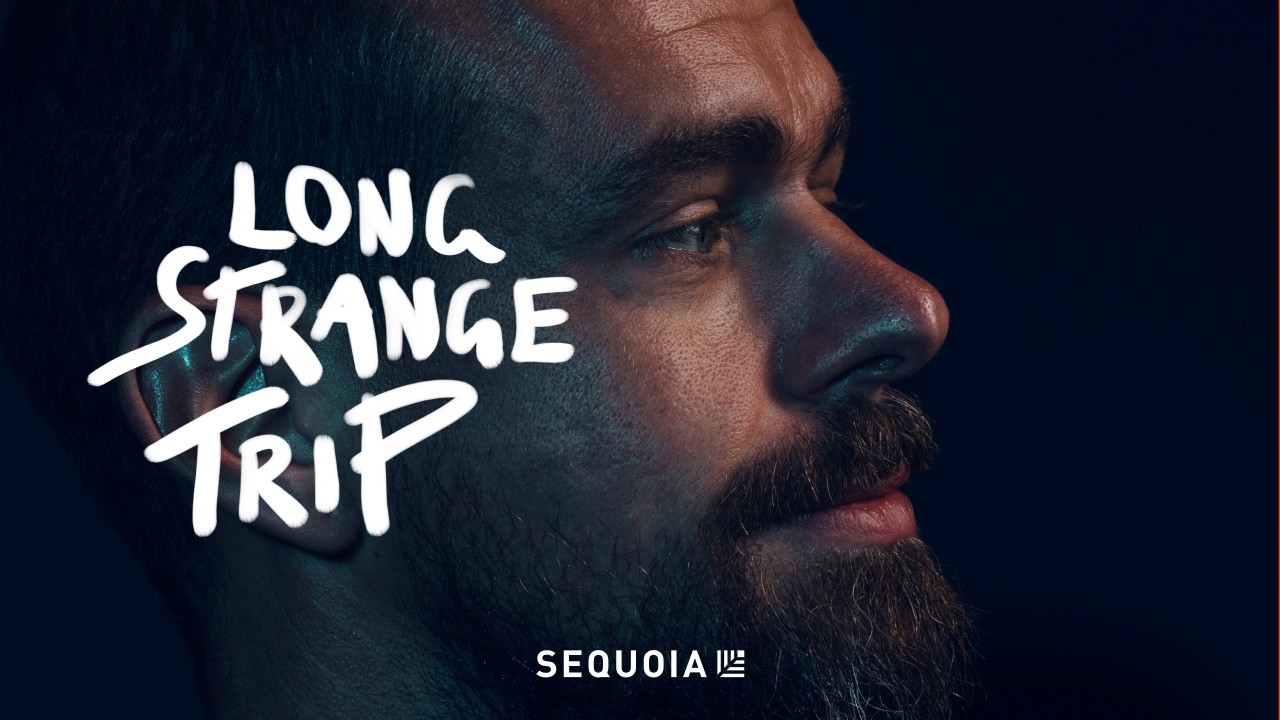
Jack Dorsey is dismantling the corporate org chart, arguing the 2,000-year-old model of human middle managers is obsolete for the information age. On *Long Strange Trip: CEO to CEO*, he told Brian Halligan that every Slack message, email, and code commit is an artifact that can train a company-specific intelligence engine. This internal AI, which Dorsey calls a “mini-AGI,” becomes the central nervous system, identifying operational patterns and answering employee queries directly.

At Block, this vision is already in motion. According to *Presidio Bitcoin Jam*, the company has restructured around three roles - Individual Contributor, Directly Responsible Individual, and Player-Coach - erasing traditional management layers. An internal tool called BuilderBot, integrated into Slack, lets employees ask the AI for company data, generate SQL, or get recommended contacts for verification.

The shift moves AI from a productivity tool to the core operational framework. Dorsey’s recently published manifesto, “From Hierarchy to Intelligence,” frames this as a foundational moment for work, where the goal is to minimize information loss and scale knowledge access to every role.

Jack Dorsey, Long Strange Trip: CEO to CEO:

- Every single thing that we do creates some sort of artifact, whether it be a Slack message, an email, or a pull request for code.

- All these things have these artifacts of information about how the company is building, how it is failing, and how it is making mistakes.

The *Presidio Bitcoin Jam* also dissected a parallel technological threat: quantum computing. While Google’s claimed 20x speedup in breaking elliptic curve cryptography made headlines, developer Steve Lee framed it as an “N-1” problem. If a cryptographically relevant quantum computer is a decade away, a 20x speedup merely shortens the timeline by weeks, not years. Defense research like Blockstream’s Shrinks and Shrimps quantum-resistant signature schemes exists, but they trade larger signature sizes for security - a cost Bitcoin’s block space can’t easily absorb.

Dorsey’s experiment at Block represents a radical bet that autonomous AI teams can outperform human-managed hierarchies. The rest of the industry is watching to see if a company can truly function as its own brain.
By the Numbers

  • S&P 500Index listingmetric
  • 2,000 yearsduration of organizational structuresmetric
  • 354-byteShrinks signature sizemetric
  • 5xShrinks signature size increase over Schnorrmetric
  • 2500-byteShrimps signature sizemetric
  • 50Number of Spiral developers/grantees surveyed on AI usemetric

Entities Mentioned

BLOCKSPACESCompany
BuilderBotConcept
Cash AppProduct
DeepSeekCompany
Google AntigravityProduct
OpenAgentsplatform
OpenAItrending
ShrimpsProduct
SlackProduct
SpiralCompany
SquareCompany
TwitterProduct

Source Intelligence

What each podcast actually said

Long Strange Trip: CEO to CEO with Brian Halligan

Long Strange Trip: CEO to CEO with Brian Halligan

Jack Dorsey: Every Company Can Now Be a Mini-AGIApr 4

  • Jack Dorsey is unique as the only founder to have two companies, Twitter and Block, listed on the S&P 500.
  • Jack Dorsey recently published a manifesto titled 'From Hierarchy to Intelligence,' advocating for a fundamental rethinking of organizational structures.
  • Dorsey's article proposes eliminating traditional company hierarchies by integrating AI directly into the core of organizational operations.
  • Block is currently undergoing a significant internal transformation based on Dorsey's philosophy, and he is actively seeking feedback on this early-stage process.
  • Traditional company hierarchies, developed over more than 2,000 years, primarily facilitate information flow and communication across large groups of people at a human scale.
  • In a remote-first environment like Block, nearly all activities generate digital artifacts, including Slack messages, emails, code, Google documents, and recorded meetings.
  • This AI-driven model enables any individual within the company to query and interact directly with the organization's collective intelligence for information access.
  • Jack Dorsey proposes treating a company as a 'mini AGI' (Artificial General Intelligence) to optimize information flow, minimize loss, and enhance efficiency.
  • An AI-powered information system allows for scaling direct access to company knowledge to any role, transcending the limitations of conventional hierarchies.
  • With an AI-modeled company, board meetings and analyst calls can pivot to focus on strategic, creative, and existential decisions rather than routine operational details.

Also from this episode:

Business (2)
  • Brian Halligan expresses both existential dread and hope regarding the future of company structures in light of rapid technological advancements.
  • Dorsey highlights the present as a foundational moment, allowing for critical examination of every aspect of work, particularly company hierarchy and communication methods.
AI & Tech (1)
  • Instead of human managers relaying information, AI can process these digital artifacts to construct an intelligent model of the entire company's operations.

Google's Quantum Warning Overblown?, OpenAI Acquires TBPN, Jack Dorsey Makes Block Mini-AGIApr 3

Also from this episode:

Science (2)
  • Google's quantum cryptography paper claims a 20x performance improvement in algorithms to break elliptic curve signatures used by Bitcoin.
  • Steve Lee argues quantum computing progress should be framed as N minus 1, where N is years until cryptographically relevant quantum computers exist.
Adoption (6)
  • Lee says the quantum threat is harder for Bitcoin due to the need for decentralized consensus, Satoshi's potentially exposed coins, and blockchain cost sensitivity.
  • Blockstream's Shrinks quantum-resistant signature scheme produces 354-byte signatures, about 5x larger than current Schnorr signatures, but requires stateful management.
  • Blockstream's Shrimps scheme creates stateless 2500-byte signatures for recovery scenarios, trading larger size for no required off-chain data.
  • Lee says Bitcoin's anti-fragility means it could survive a price crash from a quantum emergency, similar to Mt. Gox, and recover long-term.
  • Square's rollout of Bitcoin Lightning payments faces hurdles: sellers must manually update software, not all hardware supports it, and tipping flows are incompatible.
  • David Marcus notes Cash App's Bitcoin Lightning payments save merchants credit card fees, with 1 in 10 Cash App users holding Bitcoin versus 60 million total active users.
AI & Tech (7)
  • Spiral surveyed 50 developers and grantees on AI usage, creating archetype-based reports from non-developers to low-level protocol coders.
  • OpenAI acquired The Big Podcast Network for an estimated $100 million, seen as a strategic move to control its own media channel amid competition.
  • Max Hillebrand argues America needs a 'DeepSeek moment' - a competitive open-source AI model - as Chinese models surge ahead and Llama's progress stalled.
  • Block's 'Hierarchy to Intelligence' vision restructures the company around AI agents handling internal information flow, with people as orchestrators.
  • Block's internal BuilderBot AI, integrated into Slack, allows employees to query company data, generate SQL, and get recommended contacts for verification.
  • A creator used AI tools for GLP-1 lead generation, reportedly generating $418 million in revenue within 18 months with minimal staff.
  • Max Hillebrand says peer-to-peer AI compute networks like Mesh LLM and OpenAgents are gaining traction, but lack payment mechanisms and computation verifiability.
Business (1)
  • Steve Lee says Block's new org structure has three roles: Individual Contributor, Directly Responsible Individual, and Player-Coach, eliminating traditional middle management.