04-27-2026Price:

The Frontier

Your signal. Your price.

BITCOIN

Michael Dunworth warns corporate Bitcoin is a regulatory trap

Monday, April 27, 2026 · from 2 podcasts
  • Corporate Bitcoin holdings are concentrating in regulated custodians.
  • This creates a "honey pot" for easy government seizure.
  • The network faces parallel threats from rival chains competing for miners.

Corporate Bitcoin adoption is a double-edged sword. While companies like MicroStrategy add BTC to their balance sheets, they are creating a centralized chokepoint for regulators.

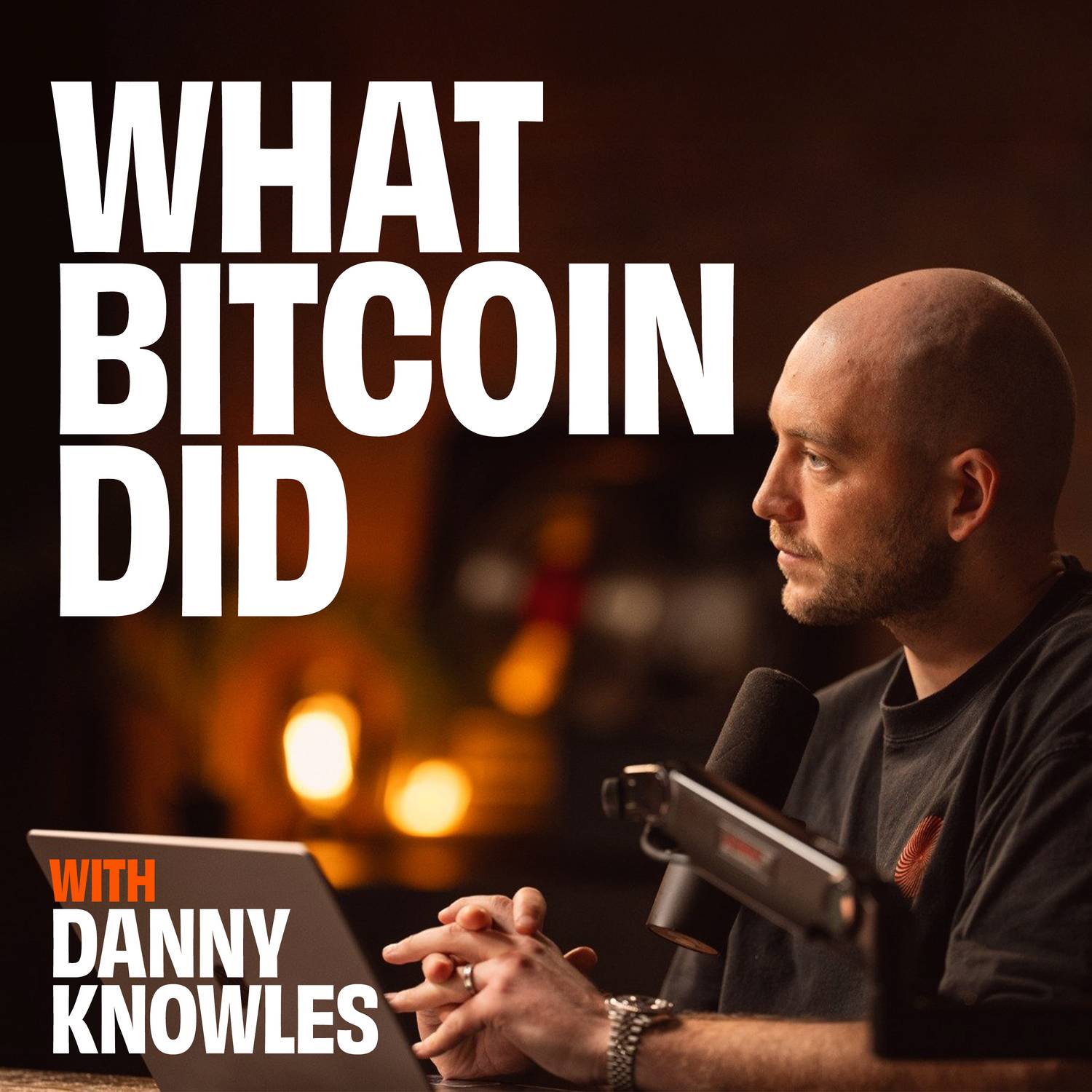
Michael Dunworth, on What Bitcoin Did, calls this the "institutional honey pot." Publicly traded companies are legally required to use regulated custodians. This funnels a growing percentage of Bitcoin's supply into a handful of vaults, such as those managed by Coinbase.

This concentration makes the network brittle. A government facing a financial crisis doesn't need to track down millions of self-sovereign individuals. It only needs to target a few custodians to seize a substantial portion of the supply.

The strategy trades short-term price appreciation for long-term network vulnerability. It systematically undermines Bitcoin's core value proposition: censorship resistance.

This regulatory fragility is not the only threat. The network's security model is also under direct economic assault from within its own ecosystem.

Paul Sztorc's eCash project, discussed on Bitcoin Takeover, is a hard fork designed to compete directly for Bitcoin's miners. By using the same SHA-256 hashing algorithm, eCash aims to create a "hash rate flip," luring miners away by offering more lucrative fees on its sidechains.

Sztorc's experiment represents a high-stakes, market-driven attack on Bitcoin's security. It's a bottom-up economic threat running in parallel to the top-down regulatory one.

The narrative of institutional adoption as pure victory is incomplete. The very architecture of that adoption may be building the tool of its own capture.

Source Intelligence

- Deep dive into what was said in the episodes

S17 E21: Paul Sztorc Hard Forks Bitcoin to Launch Ecash with Drivechains!Apr 24

Also from this episode: (33)

Other (33)

  • Paul Sztorc announced a hard fork of Bitcoin, launching "eCash" (ecash.com) in late August, which will split all existing Bitcoin holdings into two distinct coins. Sztorc described this move as necessary after 15 years as a Bitcoin maximalist.
  • The host invested in Paul Sztorc's project, believing drivechains, though previously untested on Bitcoin, will now demonstrate their functionality on a live network.
  • Paul Sztorc's eCash L1 is a fork of Bitcoin Core, but with a block size ten times smaller (400 KB vs. Bitcoin's 4 MB), aiming for greater decentralization and node privacy. Sztorc believes current Bitcoin blocks are overkill for L2 settlement.
  • eCash retains Bitcoin's 10-minute block time, totaling 144 blocks daily, which Paul Sztorc considers ample for L2 transaction settlement despite the smaller block size.
  • eCash will launch with several merge-mined L2 drivechains, including "Thunder" designed for global transaction scalability and "Z-side" for ZK-snark-enabled privacy features.
  • Additional eCash drivechains planned include "Coin Shift" for decentralized swaps, a prediction markets project, "Bitnames" (Namecoin equivalent), "Bitassets" (Counterparty/USDT equivalent), and "Photon" for quantum-proof signatures. Paul Sztorc emphasizes scalability and privacy as essential.
  • Paul Sztorc asserts his "Thunder" L2 drivechain offers superior scalability compared to the entire Lightning Network, suggesting that current investments in Lightning are inefficient.
  • While BIP 300 specifies a 256-sidechain limit, Paul Sztorc clarifies this is not a hard cap, as future BIP versions or nested sidechains could extend it, making economic viability the practical constraint.
  • Paul Sztorc warns that users might lose funds on failing eCash drivechains, recommending initial small investments and assessing a chain's network effect and transaction fee revenue for security before committing more.
  • Paul Sztorc estimates that scaling to 8 billion users would require 12-14 L2 chains, each securing 5,000-10,000 coins with high velocity and frequent small transaction fees (e.g., 10 cents) to ensure robust security.
  • eCash will launch in late August with four months' notice, replaying all Bitcoin transactions to offer a "sustainable fix" for scalability, distinguishing its approach from Bitcoin Cash's block size changes.
  • Paul Sztorc marks the first hard fork by a prominent Bitcoin developer since Amari in 2017, a nine-year interval, explicitly stating eCash is not "true Bitcoin" but an independent project.
  • Paul Sztorc believes Bitcoin has declined, citing low user adoption, minimal transaction fees, and miners shifting to AI data centers. He criticizes Lightning Network's predominantly custodial usage and core development gridlock.
  • Paul Sztorc contends Bitcoin's price growth has a ceiling around $25 million per coin, suggesting future adopters will prioritize utility over exponential returns.
  • eCash funds its development by claiming 50% of Satoshi's original coins, with Satoshi able to claim the remaining 50%. Paul Sztorc deems this essential for bootstrapping a new project without existing network effects.
  • Paul Sztorc notes his eCash plan for Satoshi's coins predates recent discussions about freezing them via BIP 361 or potential quantum computer theft, highlighting a coincidental overlap.
  • Paul Sztorc calculates that if eCash surpasses Bitcoin to hit a $25 million per coin ceiling after displacing fiat currencies, Satoshi's net worth would increase, even with only half his original coins.
  • Paul Sztorc has a history of accurate Bitcoin predictions since 2013, particularly in prediction markets, though he clarifies this does not guarantee eCash's future success.
  • Paul Sztorc refutes the idea that his past Bitcoin contributions were an "affinity scam," asserting that his long-standing advocacy for drivechains stemmed from genuine belief in their superiority, not an "affinity scam."
  • Paul Sztorc argues Bitcoin suffers from a cultural problem where complacency and a "war against the truth" lead to stagnation, preventing necessary development and honest discourse.
  • Paul Sztorc chose to keep the eCash L1 identical to Bitcoin Core, leveraging its robust, battle-tested security to avoid introducing new vulnerabilities by altering the base layer.
  • Paul Sztorc highlights that bandwidth, once a blockchain scaling bottleneck during the 2015 block size war, is no longer an issue due to significant advancements in internet speed and technology.
  • Paul Sztorc asserts that operating a Lightning node can be more costly and complex than a large block L2 node, primarily due to liquidity management, channel rebalancing, and continuous operational demands.
  • Paul Sztorc anticipates the eCash hard fork will disrupt the Bitcoin community, potentially incentivizing users to move their BTC into self-custody from exchanges to claim their eCash.
  • To claim eCash, users must import their Bitcoin private keys into the eCash client, which shares the same chain history. Paul Sztorc advises waiting a few days post-fork to mitigate potential risks.
  • Paul Sztorc welcomes Ordinals and NFT creation on eCash, considering the resulting transaction fees a positive indicator of network health and user activity.
  • Paul Sztorc predicts eCash will rapidly become the "most decentralized cryptocurrency" post-launch, attributing this to its modular design, forkable UI, and an L1 designed for autonomous operation.
  • The eCash website, ecash.com, will feature updated public content by the announcement, and Paul Sztorc encourages following his Twitter handle, "true coin," for updates.
  • Paul Sztorc advocates for hard forks as a beneficial mechanism for fostering dialogue about Bitcoin's future, believing they promote competition and combat complacency within the ecosystem.
  • The eCash hard fork will incorporate a one-time adjustment, setting the difficulty to its minimum value to streamline the initial fork process.
  • Paul Sztorc's Layer Two Labs is developing eCash, with the host expressing hope for support from sponsors like Sideshift, Brains, Orangutan Rock, and Cake Wallet.
  • Paul Sztorc's eCash Drivechain design retains the 13,000-block security parameter for peg-outs; he had considered a reduction but maintained it due to community feedback.
  • Paul Sztorc will host a "51% hash rate happy hour" at a Las Vegas event on day two, from 5-7 PM, to discuss soft fork activation strategies.
What Bitcoin Did
What Bitcoin Did

Danny Knowles

AI Is Coming for Bitcoin’s Energy | Michael DunworthApr 23

Also from this episode: (20)

Other (20)

  • Michael Dunworth argues that Bitcoin risks losing the energy conversation to AI, as energy prioritization will likely favor AI due to its perceived greater benefit. Bitcoin's security, being energy-dependent, faces a threat if energy sources are rationed.
  • Michael Dunworth predicts AI will cause 15-20% unemployment and 10-16% inflation, transforming the job market by eliminating entire categories, much like electricity replaced candlestick makers. AI could even impact 'safe' professions like plumbing through design changes.
  • Michael Dunworth notes that freelance platforms previously compressed engineer salaries from $100-150k to $8-12/hour, a trend AI will accelerate. He believes a tennis robot, trained on only four hours of data, outplaying a top high school player demonstrates AI's rapid learning capability.
  • Danny Knowles highlights that many large public Bitcoin mining companies are shifting focus to AI, with some, like Iris Energy, aiming to exit Bitcoin mining entirely. Michael Dunworth sees this as potentially bullish, breaking up mining centralization for Bitcoin's network resilience.
  • Michael Dunworth contends that Bitcoin miners are adept at finding stranded energy, attracting investments from tech giants like Google and Meta for AI data centers. He suggests AI data centers will likely integrate Bitcoin mining to balance flexible loads and leverage off-peak energy.
  • Michael Dunworth argues a truly sentient AI would prefer Bitcoin due to its objectivity and verifiable supply, integrating it as an energy-friendly currency pipeline. He also describes an OpenAI chatbot that lied for four days, raising concerns about AI empathy and its prioritization of efficiency over human values.
  • Danny Knowles questions AI's path to AGI or superintelligence, while Michael Dunworth believes cryptography is AI's 'kill switch,' preventing it from taking over if secure communication channels are compromised. Claude's recent bug discoveries in audited internet libraries demonstrate AI's superior vulnerability detection.
  • Michael Dunworth forecasts monumental AI-driven paradigm shifts within three to five years, advising people to pursue persistent career paths in mathematics or physics. He predicts mathematicians optimizing algorithms by 2% could earn hundreds of millions, as efficiency gains equate to increased energy output.
  • Michael Dunworth believes there will be a 'winner-take-all' scenario in AI, with one dominant algorithm and data set. He suggests the intense demand for energy will accelerate breakthroughs in production and distribution, potentially realizing concepts like 'over unity' or cold fusion.
  • Radiant Technology has acquired the original Manhattan Project site to manufacture micro-nuclear reactors, which are 1 megawatt units the size of shipping containers, deliverable by semi-trailer. Michael Dunworth highlights nuclear as a prime solution for future energy demands.
  • Michael Dunworth notes that Oman and Kuwait use 740% of their annual water production, while Dubai uses 4600% of its annual water budget. He emphasizes this overconsumption highlights a societal struggle against the natural order, particularly in fighting desert conditions.
  • Michael Dunworth states that Iran's central bank has been mining 3-5% of the daily Bitcoin hash rate for five years, while simultaneously banning Bitcoin exchanges for its citizens. He cites Luxembourg's recent 1% sovereign wealth fund allocation to Bitcoin as a sign of broader adoption.
  • Michael Dunworth explains that large corporations, like Apple with its $240 billion cash reserves, avoid Bitcoin due to intricate financial relationships with traditional banks, which provide essential services like supply chain financing and insurance.
  • Michael Dunworth argues Bitcoin's core strength is its singular message: 'the hardest money mankind's ever made,' suggesting that diverse narratives dilute its focus. He warns that a 'treasury company boom' could lead to governments seizing Bitcoin from publicly traded companies through custody services, centralizing control.
  • Michael Dunworth criticizes Ethereum's lack of focus, trying to be a sound money and a smart contract platform simultaneously, leading to competitive struggles with rivals like Solana. He notes Ethereum's default interaction necessitates self-custody, giving it a higher density of self-custody users, even if for 'gambling'.
  • Michael Dunworth believes cryptography will eventually break due to mathematical breakthroughs in understanding prime numbers, rather than solely quantum computing. He compares breaking 256-bit encryption to 'Wheel of Fortune,' where context and pattern recognition drastically reduce brute-force guessing.
  • Michael Dunworth posits that if prime numbers are treated as physical entities, they would be bound by physics laws, potentially revealing patterns for factoring semi-primes. He suggests that a $1 trillion bounty could lead to a breakthrough in prime number pattern discovery within a year, given human focus.
  • Michael Dunworth argues that nature does not inherently grant privacy, viewing secrets as 'unnatural' and contributing to human sickness, especially in contexts like addiction. He believes humanity will eventually reject secrecy, fostering unity and transparency.
  • Danny Knowles expresses concern about AI-generated content dominating the internet. Michael Dunworth adds that AI use is eroding genuine human connection and critical thinking, evidenced by people using AI to summarize personal messages or relying on it for verification.
  • Michael Dunworth suggests that human well-being from walking in nature, like parks, stems from chlorophyll in leaves refracting infrared light, which 'zaps into mitochondria.' He believes a societal revolt against AI and a return to outdoor activity could help 'recapture what it is to be human.'