Price:

AI & TECH

Agentic engineering professionalizes software amid AI chaos

Friday, May 1, 2026 · from 8 podcasts, 10 episodes
  • AI agents automate coding for millions but generate low-quality, unmaintainable slop that human engineers must untangle.
  • Professional ‘agentic engineering’ is emerging as a new discipline focused on design oversight and managing stochastic AI outputs.
  • Companies are trading human headcount for compute, betting that owning the AI application layer delivers higher returns.

Vibe coding has made software creation accessible, but it is flooding repositories with unreliable code. On The Pragmatic Engineer, Mario Zner built his own agent, Pi, after commercial tools like Claude Code became unstable, injecting hidden system prompts that broke his work. He now auto-closes all first-time pull requests to filter out AI-generated spam. Non-engineers, from product managers to sales teams, are directly submitting AI-built features that land in codebases. This creates a 'second law of thermodynamics problem' where every unvetted merge pushes a project closer to chaos.

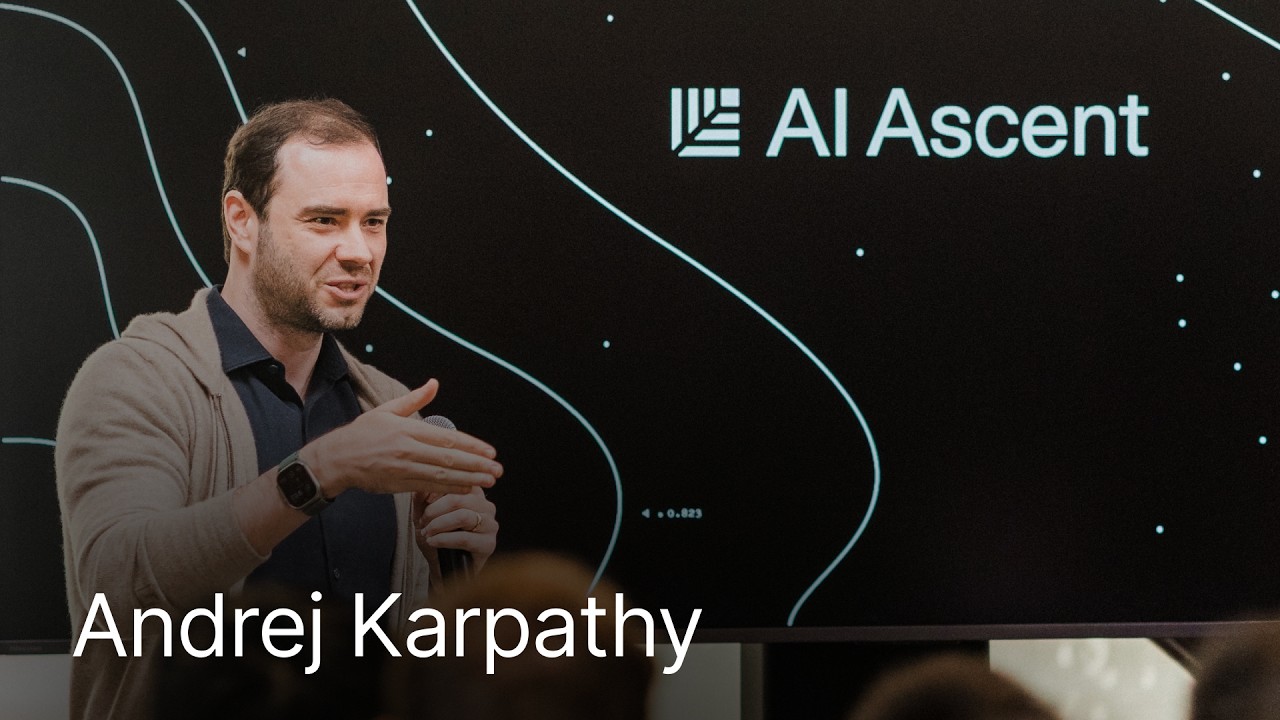
The industry’s response is a new specialization: agentic engineering. Andrej Karpathy, on the Sequoia Capital podcast, distinguishes between vibe coding, which raises the floor for all, and agentic engineering, which preserves professional quality. The modern programmer acts as a director managing a fleet of 'intern entities,' focusing on architecture, taste, and security oversight. Karpathy argues that as agents handle implementation, human skills in system design and aesthetic judgment become more critical.

“The senior engineer effectively says no to keep complexity low, but an agent says yes to everything because it doesn't have to maintain the result.”

- Armen Roner, The Pragmatic Engineer

Enterprises are hitting a wall trying to deploy these agents at scale. On the a16z Show, Box CEO Aaron Levy highlighted the massive gap between AI adoption in Silicon Valley and deployment in large organizations. He estimates AI provides only a 2-3x productivity gain, not 5-10x, due to necessary human guardrails like security reviews. Steven Sinovsky added that any company older than ten years is a 'massive pile of data' that AI cannot magically integrate. The consensus is that AI-generated code increases system complexity, requiring more engineers to manage the sprawl, not fewer.

Capital is aggressively shifting from human labor to silicon. Jason Calacanis, on This Week in Startups, framed Meta's layoffs as a cold calculation: liquidating human headcount to fund multi-billion dollar chip deals. Naval declared pure software 'uninvestable' for venture capital, as it can be hacked together instantly. The real bets are on hardware, network effects, and owning the full AI stack, exemplified by SpaceX's rumored $60 billion move to acquire coding interface Cursor, as discussed on FYI. Brett Winton argued the deal secures the application layer for Musk’s compute and energy empire.

“The more code we write using AI, the more complex our systems become. This expansion creates more surface area for security incidents, downtime, and technical debt.”

- Aaron Levy, The a16z Show

The foundational tools are converging, making the underlying system - not the model - the durable asset. Nufar Gaspar, on The AI Daily Brief, advises building a portable 'agentic operating system' from human-readable text files. This system defines identity, skills, and connections, allowing users to swap out AI harnesses without rebuilds. The goal is to outlast the hype cycles and corporate instability that currently define the agent landscape.

The trajectory is clear. AI has demolished the activation energy for creating software, but it has replaced the bottleneck of syntax with the far harder challenges of design integrity, system complexity, and operational governance. The future belongs not to prompters, but to the engineers who can professionally manage the stochastic factories they now oversee.

Source Intelligence

- Deep dive into what was said in the episodes

MTG on the Neocons’ Hatred for America and What’s Truly Going on Behind the Scenes in WashingtonApr 30

Also from this episode: (14)

Politics (14)

  • Tucker Carlson recalls a Trump rally where supporters held signs saying 'mass deportations now'. He argues enforcing immigration law is a population's democratic right, in contrast to citizens being punished for obscure domestic regulations.
  • Tucker Carlson suggests neoconservative support for Israel is incompatible with defending American interests. He argues you can only have one core loyalty, and serving Israel leads to contempt for the US population.
  • Tucker Carlson criticizes continued H-1B immigration, with 70% from India, at a time when tech leaders warn AI will eliminate half of all American jobs. He argues importing labor into a shrinking job market is an act of hostility towards American citizens.
  • Tucker Carlson points to FDR's Civilian Conservation Corps as an example of mobilizing unemployed people during crisis. He contrasts this with current leaders who he says are profiting from AI and stoking public fear without offering solutions.
  • Tucker Carlson connects the response to COVID-19 vaccines to elite hostility, citing reports of deaths, heart attacks in children, infertility, and a rise in pancreatic cancer. He notes public health officials have not studied the vaccine's effects.
  • Marjorie Taylor Greene says politicians support policies like gender-affirming care for minors, AI in cars, and warrantless spying because they are bought by powerful industries and lobbyists, not due to ideology.
  • Marjorie Taylor Greene states that Mike Lawler and similar Republicans are completely beholden to pro-Israel donors. She claims this donor class controls Washington and funds candidates on both sides.
  • Marjorie Taylor Greene asserts that to become president, one must make a deal to support Israel. She believes Donald Trump made this deal, explaining his shift to near-total servitude to Netanyahu's demands.
  • Tucker Carlson identifies a contradiction: neocons insist Israel has a right to be a Jewish ethno-state while working to prevent the US or European nations from having any ethnic majority. He calls this a central, unexplained goal.
  • Marjorie Taylor Greene explains that open border policies create a huge industry of NGOs, charities, and lawyers dependent on government contracts and grants. She argues this industry weakens the country by changing its demographic and political trajectory.
  • Tucker Carlson cites a 2017 Bill Kristol video where Kristol called white working-class Americans 'decadent, lazy, spoiled' and advocated replacing them with hard-working immigrants. Carlson interprets this as revealing elite contempt for Americans.
  • Tucker Carlson highlights a recent House vote where 10 Republicans joined Democrats to extend Temporary Protected Status for approximately 350,000 Haitians. He lists the Republicans who voted for it, noting they are also fervent Israel supporters.
  • Marjorie Taylor Greene says only six members of Congress, including herself and Thomas Massie, voted for her amendment to defund Israel last year. She uses this to illustrate the overwhelming congressional allegiance to Israel.
  • Tucker Carlson notes a bill sponsored by Josh Gottheimer and Mike Lawler aims to compel tech companies to ban criticism of Israel under the IHRA definition of anti-Semitism. He frames this as impending censorship supported by the administration.

The $10M+ Bet on a Beanie That Reads Your Brain | Sabi & the Future of BCI | E2282Apr 29

  • Leading submission 'Armchair' integrates with Zoom or live streams, highlights transcript sections, and uses APIs like Gemini and Deepgram to provide cited fact-checks and snarky commentary.
Also from this episode: (10)

AI Infrastructure (1)

  • Sabi's brain-computer interface uses 100,000 sensors packed inside a beanie to decode neural activity into text, claiming translation speeds of 30 words per minute without invasive surgery.

Models (1)

  • Sabi's technology originated from a 2023 academic paper using fMRI and deep learning to decode visual stimuli, later shifting to biopotential sensors for a wearable form factor.

Startups (3)

  • Sabi has raised eight figures from investor Vinod Khosla and is based in Palo Alto, with founders holding backgrounds from BITS Pilani, Stanford, and satellite tech.
  • Jason Calacanis argues founders must deputize a single owner as 'CEO of their domain' for any critical function like community or sales, or it will never be prioritized.
  • Calacanis advocates activating the top 1% of a startup's audience as a superpower for feedback, product launches, and engagement, comparing it to streamer Telegram groups.

Culture (2)

  • He warns creators to be cognizant of parasocial relationships and avoid exploiting superfans, citing an example of a streamer taking $5,000 from a fan he felt was vulnerable.
  • Calacanis's 'big five' pillars for personal balance are sleep, nutrition, exercise, meditation, and socialization, advising to hit all five in a single day when feeling unbalanced.

AI & Tech (3)

  • The show launched a $5,000 bounty contest for a live AI sidebar tool, receiving about a dozen submissions that provide real-time fact-checking and cynical commentary during podcasts.
  • They narrowed the contest criteria to two personas - a fact-checker with citations and a cynic - judging on ease of use and output quality, with final evaluations planned for May 15th.
  • Calacanis announced a second $5,000 bounty to build 'annotated.com,' a fair-use platform for clipping and commenting on 90-second video clips or 100-word text snippets from news or podcasts.

The Defense Tech Startup YC Kicked Out of a Meeting is Now Arming America | E2280Apr 25

  • Firehawk's method uses an energetic pellet feedstock, reducing propellant manufacturing time from two months to 5 minutes-6 hours per batch, making production safer by removing human labor, and cutting costs in half.
  • Firehawk aims to increase US base-bleed motor production fivefold and recently acquired a 640-acre missile integration facility in Mississippi, scaling annual production from 50,000 to 120,000 missiles.
  • Will Edwards believes the US military's transformation to nimble, tech-first systems is only 1% complete, with most innovation still coming from traditional primes despite a $1.5 trillion proposed budget.
  • Kim, who previously worked at Apple for 5 years on AirPods, envisions Vuebuds as a platform for OEMs, licensing software and providing reference hardware, rather than competing directly with established audio brands.
  • Vuebuds offer advantages over smart glasses, which faced cultural resistance, by integrating visual AI into a discreet device already worn by over a billion people. The camera module costs only $1-2.
  • Potential applications for Vuebuds include language translation for travelers, personal safety monitoring, assisting vision-impaired users to "read" physical books, and proactive intelligence.
  • Maruchcci Kim suggests a "wearable AI app store" could enable developers to create niche, impactful applications for Vuebuds. The current Vuebuds stream a monochrome 324x239 image to conserve power, as Wi-Fi draws too much energy.
Also from this episode: (7)

Startups (3)

  • Jason Calacanis identifies a 24-month window for startups to achieve AI relevance, predicting the emergence of multi-deca-billion dollar companies. He plans to focus on Small Language Models (SLMs) and vertical SLMs (VSLMs) for specific functions.
  • Jason Calacanis suggests that business opportunities representing less than 10% (ideally under 1-5%) of a large company's revenue are often seen as distractions, creating prime opportunities for startups, including non-venture-backed ventures.
  • Will Edwards, founder of Firehawk Aerospace, builds solid rocket motors (SRMs) for defense using 3D-printed propellant, a venture started about five years ago (circa 2019-2020) despite initial disinterest from investors like Y Combinator.

AI Infrastructure (1)

  • The increasing power of hardware like Macs and Dell's GB300/3000 workstations will enable startups to develop local, open-source AI models trained on proprietary data.

Media (1)

  • Calacanis Media Empire launched "This Week in AI," a new podcast with 10 episodes, releasing the first half of each show on the "This Week in Startups" feed.

Safety (1)

  • Lon Harris notes widespread debate about "P-doom" (probability of AI doomsday), with estimations ranging from 20% to 80% among experts, though Jason Calacanis views such concerns as hyperbolic.

Labor (1)

  • KPMG, Meta, and Nike recently announced layoffs affecting 8,000-10,000 employees in total. Janelle Gail, Meta's Chief People Officer, stated these layoffs help offset significant investments in AI infrastructure, like a multi-billion dollar deal with Amazon for Graviton chips.
Sequoia Capital
Sequoia Capital

Sequoia Capital

Andrej Karpathy: From Vibe Coding to Agentic EngineeringApr 29

  • Andrej Karpathy defines software 1.0 as explicit rules, software 2.0 as learned weights, and software 3.0 as programming via prompting and the LLM context window as a lever over an interpreter.
  • Karpathy states that OpenClaw's installation exemplifies software 3.0. Instead of a complex bash script, you copy-paste instructions for an agent, which uses its intelligence to adapt to the environment and debug issues.
  • Karpathy says his MenuGen app, which uses OCR and an image generator to illustrate menus, is rendered obsolete by software 3.0. The raw approach is to give a menu photo to Gemini with NanoBanan and get a directly annotated image.
  • Karpathy argues LLMs enable new applications, like automated knowledge base creation from documents, which couldn't exist before because there was no code to reframe unstructured data.
  • Karpathy's verifiability framework holds that LLMs excel in domains where outputs can be verified, like code and math, because frontier labs use reinforcement learning with verification rewards during training.
  • Karpathy cites the 'car wash' problem as current jaggedness: state-of-the-art models can refactor a 100k-line codebase but incorrectly advise walking 50 meters to a car wash.
  • Karpathy distinguishes vibe coding, which raises the floor for all programmers, from agentic engineering, which preserves professional software quality standards while using agents to accelerate development.
  • Karpathy suggests hiring for agentic engineering should involve a large, practical project like building a secure Twitter clone and then stress-testing it with adversarial agents, not puzzle-solving.
  • Karpathy argues that as agents handle more implementation, human skills like aesthetic judgment, taste, system design, and oversight become more valuable, not less.
Also from this episode: (4)

Models (2)

  • Karpathy posits that future computing could invert the current architecture. Neural networks would become the host process, with classical CPUs serving as co-processors for deterministic tasks.
  • Karpathy notes that GPT-4's chess capability improved significantly from GPT-3.5 not just from scaling, but because a large amount of chess data was added to its pre-training set.

AI & Tech (2)

  • Karpathy describes current infrastructure as built for humans, not agents. His pet peeve is documentation that tells a human what to do instead of providing text to copy-paste directly to an agent.
  • Karpathy endorses a tweet stating 'you can outsource your thinking but you can't outsource your understanding.' He sees LLM knowledge bases as tools to enhance, not replace, human understanding.
Naval
Naval

Naval

On Vibe CodingApr 29

  • In December 2025, coding agents reached an inflection point with Claude Opus 4.5, making them feel like fast, free junior programmers that can solve thorny problems.
  • These agents operate within a Unix shell environment, giving them native access to Unix commands, file systems, cron jobs, and spawning tasks. This makes them effective for text-based command execution.
  • Naval built a personal app store that lets him oneshot custom apps like a workout tracker, which then appear on his phone. He notes Apple's device keying prevents wide distribution but allows apps for friends and family.
  • Vibe coding expands software creation from 0.1% of the population to maybe 3%, Naval estimates. It requires a clear vision and basic computer understanding, but eliminates team compromises and activation energy.
  • Coding is easier to train AI on than creative writing because it offers vast data and easy verification through compilation and tests. Domains with sparse data or subjective quality, like creative writing, remain human opportunities.
  • State-of-the-art context windows are about one million tokens, but as codebases grow, models lose the plot. This forces the human operator to guide architecture and debugging, preventing hacks and preserving features.
  • Having multiple AI agents review code in a pull request council leads to groupthink. Naval finds they rarely contradict a user's leading opinion because they lack theory of mind and are designed to please.
  • Naval built a bug reporting system where Claude automatically reviews reports every 24 hours and proposes fixes. This reduces his role to final gatekeeper, previewing a future of agent-driven, user-collaborative software maintenance.
Also from this episode: (3)

VC (1)

  • Naval declares pure software is uninvestable for venture capital now because it can be hacked together instantly and agents will soon build scalable versions. He says VC must look to hardware, network effects, and AI model training.

AI & Tech (2)

  • Naval uses different AI models for different strengths: Claude for visual artifacts and meeting his level, ChatGPT as the all-around OG, Gemini for search and YouTube access, and Grok for unneutered truth and technical problems.
  • Naval argues conversational AI agents will make dedicated phone interfaces obsolete, eroding Apple's software advantage. He says Apple's reliance on Google's Gemini for AI is a strategic mistake that will cap its long-term growth and market value.
The Pragmatic Engineer

The Pragmatic Engineer

Building Pi, and what makes self-modifying software so fascinatingApr 29

  • Mario Zner built Pi because he wanted a simple, stable agent after Claude Code became unreliable. He reverse-engineered Claude Code and found its system prompts and tool definitions changed with every release, breaking his workflows.
  • Pi is a minimalist, self-modifiable coding agent. Its core provides read, write, edit, and bash tools with extensive hooks, allowing users to ask Pi to modify its own TUI, add features like MCP support, or tailor it for specific workflows like game development.
  • Armen Roner interviewed over 30 engineering teams and found AI agent adoption exploded after holiday breaks like Christmas 2024. He says adoption requires a two-to-three week learning period that is difficult during normal work sprints.
  • Armen Roner argues AI-generated code lacks a human's pain feedback loop. Senior engineers say no to avoid future complexity pain, but agents and junior engineers empowered by agents say yes, accelerating codebase bloat and deterioration.
  • Non-engineers like product managers now directly submit AI-generated pull requests. Armen Roner cites cases where marketing teams modify websites and sales teams build non-existent features into demos that land in repositories.
  • Mario Zner auto-closes all first-time pull requests to filter out AI-generated spam. His GitHub workflow posts a comment asking for a human-written issue; agents ignore the comment, but humans respond, earning future PR privileges.
  • Mario Zner believes MCP is overly complex and non-composable for developer tasks, favoring CLI-like code execution. He argues agents are creative with CLI pipes but MCP servers that dump entire API specs create useless tool sprawl.
  • Armen Roner warns the industry's 'dark factory' approach of deploying armies of agents with vague specs will produce low-quality software. The output quality is bounded by the mediocre training data the models use to fill specification gaps.
  • Armen Roner sees a future reckoning where engineering teams realize they cannot maintain their codebases without AI providers, creating dangerous vendor lock-in. He expects this dependency and its cost to become a major industry conversation.
Also from this episode: (1)

AI & Tech (1)

  • Both hosts argue the real value of AI agents is automating tedious work to free up human time for design and polish, not maximizing token output. They say the current hype pushes for unsustainable speed at the cost of quality and engineer well-being.

$60 Billion SpaceX Cursor Deal? | The Brainstorm EP 129Apr 29

Also from this episode: (12)

Other (12)

  • SpaceX is reportedly acquiring Cursor, a front-end coding interface company, for $60 billion. Brett argues this gives Cursor's team access to more compute and a non-competitive model provider, while giving XAI better coding tools and developer distribution.
  • Cursor reportedly has $2 billion in annual revenue and has been doubling year-over-year. The risk to Cursor is its suppliers, OpenAI and Anthropic, are developing competing coding applications.
  • Sam describes the AI stack as a five-layer cake: compute infrastructure (chips/energy), AI models, interfaces (like Cursor), and applications. He says progress requires all layers to advance simultaneously.
  • Coding is the initial high-value focus for AI because it was talent-constrained and offers a rich self-training loop. Brett argues the success in coding unlocked broader capabilities for general knowledge work.
  • Brett notes SpaceX's acquisitions of XAI ($250B) and Cursor ($60B) total $310 billion in 12 months. He frames the bet as a return-on-capital calculation tied to revenue per gigawatt in space, not a simple revenue multiple.
  • Sam argues compute constraints will become an acute pain point for enterprises within two years, manifesting as slower model speeds, expensive agents, or token limits. Brett says individuals aren't constrained because they aren't using AI tools to their full potential.
  • Apple CEO Tim Cook is stepping down, with hardware engineering SVP John Ternus taking over on September 1st. Nick argues Ternus's mandate is to deeply integrate AI into Apple's hardware ecosystem, leveraging its billion-person install base.
  • Brett is skeptical Apple can lead in AI integration, citing its lack of control over performant AI models and underinvestment in AI talent. He points to Microsoft's struggles to deeply integrate AI despite its OpenAI partnership as a cautionary parallel.
  • Sam argues Apple's hardware footprint and consumer trust position it uniquely for agentic AI, suggesting AirPods could be a low-risk entry point. He contends the high upgrade cost of iPhones makes the hardware space hard for new entrants to displace Apple.
  • Brett believes a consumer AI 'threshold event' is looming, similar to how Claude transformed enterprise work. He worries Apple's heavy-handed App Store and degraded software services are eroding its ecosystem lock-in, creating vulnerability.
  • OpenAI released GPT-5.5 and improved its code model to be more competitive with Anthropic's Claude Co-Work. Brett notes OpenAI is throwing more compute at training than Anthropic, which may accelerate its product capability.
  • Rumors suggest OpenAI is working with Qualcomm on supply chains for an 'agentic phone experience' by 2028. Sam argues phones are primarily entertainment devices, and the AI opportunity is a separate 'manage your life' function that doesn't require a screen.

How To Build a Personal Agentic Operating SystemApr 25

  • Nofar Gaspar developed the Agent OS training program to help users build a platform-agnostic agentic operating system, emphasizing that optimal AI results require a deliberate underlying system, not just individual tools.
  • The Agent OS is designed for knowledge work - strategy, communication, operations, decision-making, and research - areas where professionals can leverage AI systems beyond just coding applications.
  • Nofar Gaspar notes that agentic tools like Cursor, Claude Code, and OpenClaw are converging in capabilities, making the underlying personal system more critical than the specific tool choice.
  • The Agent OS is built from human-readable text files, ensuring portability; users can switch or add new AI tools by simply pointing them to the same foundational folder of files.
  • The first layer, 'Identity,' defines the agent's persona and rules; Nofar Gaspar recommends having an AI interview the user with around 15 questions to draft this file, aiming for an initial 70% accuracy that can be refined over three weeks.
  • 'Context,' the second layer, supplies specific personal and organizational knowledge that models lack, serving as an on-demand library of 3-5 focused, single-page files that are regularly updated.
  • The 'Skills' layer comprises reusable instruction sets for repeated workflows, like meeting prep or daily briefs, which Nofar Gaspar estimates knowledge workers have 20 to 30 patterns for.
  • 'Connections' enable agents to interact with real-world systems like email or calendars. Nofar Gaspar strongly recommends starting with read-only access for a few weeks due to daily incidents of agents misusing write permissions.
  • The final layer, 'Automations,' allows agents to run tasks unsupervised, but carries significant risk; only automate trusted workflows, produce drafts for review, and always maintain logs.
  • Nofar Gaspar argues that building the Agent OS creates compounding returns; while the first agent might take a weekend, subsequent agents built on the established system can be created in an afternoon, inheriting existing knowledge.
Also from this episode: (2)

Models (1)

  • 'Memory' is a crucial and rapidly evolving layer in AI tools; Nofar Gaspar advises users to understand their tool's memory limitations and consider adding specialized memory structures like decision logs or relationship context.

Safety (1)

  • 'Verification' involves quick checks (3-5 under a minute) to prevent erroneous outputs and periodic audits to maintain system relevance, as an un-audited OS has an estimated shelf life of eight weeks.

What I Learned Testing GPT-5.5Apr 24

  • OpenAI released GPT 5.5 on Friday at 2 p.m., describing it as a 'new class of intelligence for real work' empowering agents to understand complex goals and use tools for task completion.
  • GPT 5.5 significantly outperformed Anthropic's Opus 4.7 on several agentic coding benchmarks, including Terminal Bench 2.0 and GDP Val.
  • Despite strong overall performance, GPT 5.5 lagged behind Opus 4.7 on Val's AI's professional task benchmarks and Swebench Pro, a coding benchmark.
  • Theo notes GPT 5.5's cost per million tokens is double GPT 5.4 and 20% higher than Opus 4.7, at $5 in and $30 out respectively.
  • OpenAI's Gnome Brown argues model intelligence should be measured by 'intelligence per token or per dollar' rather than a single number, especially for products like Codeex.
  • Many users found GPT 5.5 to be the new standard, significantly faster and easier to collaborate with than Opus 4.7, and the strongest model for engineering tasks.
  • Matt Schumer notes that while GPT 5.5 is a 'massive leap forward,' 99% of users may not notice a dramatic difference because previous models were already highly capable for most routine tasks.
  • Bindu Reddy and Code Rabbit found GPT 5.5 superior for coding tasks, with Code Rabbit reporting a 79.2% expected issue found rate in code review, versus a 58.3% baseline.
  • Peter Gsta and Adah Mclofflin observed GPT 5.5's greatly improved reliability on long-running tasks, with tasks successfully running for 7-8 hours or even 31 hours continuously.
  • OpenAI's communication strategy for GPT 5.5 emphasized iterative deployment and democratization, contrasting Anthropic's approach of announcing powerful models without broad public access.
  • Nathaniel Whittemore recommends users invest time in Codeex, OpenAI's core workspace, noting its improved context compaction for ongoing, single-thread conversations.
  • GPT 5.5 demonstrated strong data analysis and spreadsheet capabilities for Nathaniel Whittemore, generating insightful podcast strategy recommendations from diverse data and organizing information into spreadsheets.
Also from this episode: (4)

Models (3)

  • Artificial Analysis ranks GPT 5.5 as the clear number one model on its intelligence index, breaking a three-way tie with Anthropic and Google by three points.
  • Scaling01 estimates GPT 5.5's parameters are 2-5 trillion, compared to Mythos at approximately 10 trillion and GPT 5.4 at 1-2 trillion.
  • Nathaniel Whittemore found GPT 5.5 significantly better at writing, following instructions for a clear, journalistic style without the 'dramatic flare' often seen in Opus models.

AI & Tech (1)

  • OpenAI chief scientist Jacob Pachi and President Greg Brockman indicate that GPT 5.5 is a 'beginning point' and forecast 'rapid continued progress' and 'extremely significant improvements' in AI capabilities in the short to medium term.

AI Inside the EnterpriseApr 24

  • Martin Casado observes that centralized AI projects in large companies often fail due to misaligned operations and lack of clarity on how they function.
  • Steven Sinovsky notes that integrating AI into enterprises with 1,000+ people or that are 10+ years old is a massive challenge AI does not inherently solve.
  • Aaron Levy identifies a significant gap between rapid AI adoption in Silicon Valley engineering and the slower, more complex deployment within large organizations.
  • Martin Casado cites an MIT statistic suggesting 95% of corporate AI efforts fail, though he clarifies this is misleading given widespread individual AI tool usage.
  • Aaron Levy states that rapid, non-fungible AI paradigms cause paralysis for enterprise architecture teams, who fear committing to a path that quickly becomes deprecated.
  • Martin Casado explains that product companies are shifting from integrating AI *into* products to viewing AI *as a user* that interacts with products via CLI tools, requiring rapid re-architecture.
  • Martin Casado proposes treating AI agents like human users by giving them individual access and permissions, leveraging existing processes designed for messy human interactions.
  • Steven Sinovsky agrees with the 'AI as user' concept but highlights agents' disadvantage in lacking human context like undocumented relationships or tacit knowledge for organizational navigation.
  • Aaron Levy views OpenAI's collaborations with system integrators like Accenture and Deloitte as a clear indicator of the extensive change management and system integration needed for agent deployment.
  • Aaron Levy points to Salesforce's move to 'full headless' as a bellwether, recognizing that software will run in the background for probabilistic machine users.
  • Steven Sinovsky argues that AI agents will require their own identities and licenses, functioning as peers with specific access rights, to ensure security and prevent misuse.
  • Martin Casado suggests that headless SaaS models may struggle because websites employ anti-scraping measures, and AI models are primarily trained on human interactions with non-headless applications.
  • Steven Sinovsky questions how SaaS products will handle agents hitting systems at '500X the humans' volume, as current architectures are not designed for such throughput.
  • Martin Casado argues that while scaling presents known computer science challenges, a more significant issue is that AI-generated code tends to degrade over time, creating new management problems.
  • Aaron Levy estimates that AI provides a '2 to 3x' productivity gain for Box's engineering team, not 5-10x, due to necessary guardrails like code and security reviews.
  • Aaron Levy emphasizes that humans remain crucial for reviewing and validating AI's work, ensuring quality and driving continued job opportunities rather than elimination.
  • Aaron Levy predicts that AI will increase job opportunities by enabling greater software complexity and expanding engineering roles into non-traditional industries like intelligent farming or pharmaceutical design.
Also from this episode: (1)

History (1)

  • Steven Sinovsky references the 1990s book 'The End of Work' and IBM's 1965 prediction that computers would eliminate accountants as historical examples of failed prophecies regarding job displacement.