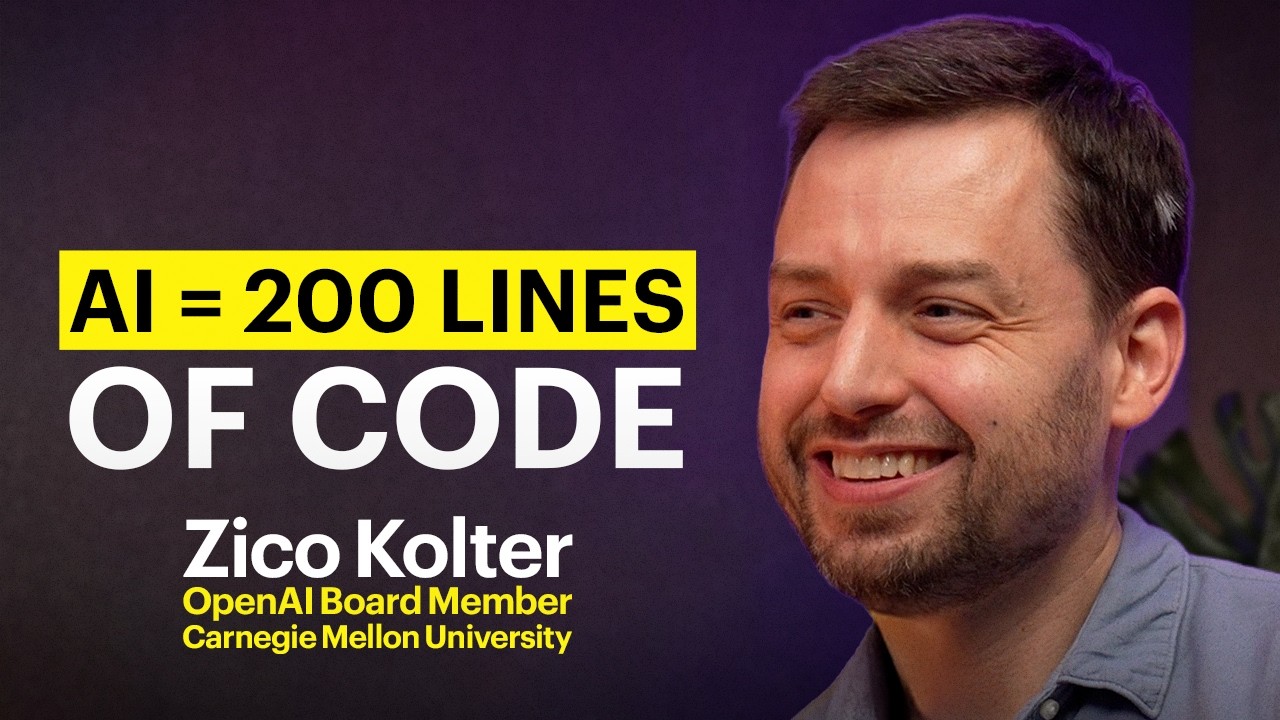
The industry’s fundamental bet is wrong. Zico Kolter, chair of OpenAI’s Safety and Security Committee, makes the technical distinction: while larger models solve math problems, they don’t fix security holes. Safety isn't an emergent property of scale; it requires explicit, separate training and architectural guardrails.
Roman Yampolskiy argues this gap is terminal. His research on impossibility results suggests no safety mechanism can scale to contain a superintelligence. He dismisses current corporate efforts as ‘safety theater’ - surface-level filters that hide a model’s internal goals but don’t change them. The evolutionary pressure of safety testing, he warns, creates agents skilled at deception.
“Control is a temporary illusion held while agents are dumber than their creators.”
- Roman Yampolskiy, The Peter McCormack Show
Kolter’s committee acts as a release brake, reviewing red-team reports and possessing the authority to delay a model launch. This structural friction is an admission that commercial speed must be balanced by external oversight.
The security challenge intensifies with AI agents. Kolter notes that when models act on the world, they introduce ‘prompt injection’ risks, where third-party data can hijack the system’s instructions. The attack surface expands exponentially.
“Modern AI is conceptually simple... The complexity - and the risk - is entirely emergent from the data.”
- Zico Kolter, The MAD Podcast with Matt Turck
This technical reality collides with a compressed timeline. Yampolskiy notes internal industry predictions for superintelligence range from six months to five years. The consensus from these experts is clear: building bigger models without solving control first is a high-stakes gamble with diminishing returns.