Tech leaders attack AI safety pledges as regulatory capture
- Venture capitalists and political figures accuse closed AI labs of weaponizing safety pledges to create regulatory moats.
- Critics argue release pauses target open-source competitors rather than fixing actual system risks.
- Donald Trump and Nvidia's CEO dismissed catastrophic doom claims as unscientific justification for regulatory capture.
A fierce backlash is fracturing the artificial intelligence industry.
The conflict erupted after Anthropic researcher Jacob Coxon posted a viral resignation claiming frontier models pose an existential threat to humanity by 2030. When Anthropic safety lead Evan Hubinger co-signed the warning, assigning a ten percent probability to human extinction, venture capitalist David Sacks identified the episode on All-In as an orchestrated public relations campaign. Sacks linked the push to advocacy networks funded by Effective Altruism donors, arguing the real goal was panicking Washington into establishing a centralized regulator.
A centralized regulatory framework would effectively outlaw open-source model releases. Because open-weight models cannot be recalled or remotely monitored once distributed, mandatory safety compliance frameworks target the publication of model weights directly. Investor David Friedberg pointed out that domestic bans will not halt global AI development, as recursive self-improvement requires only compute, electricity, and internet access. Restricting American developers merely cedes market dominance to overseas labs like China's Zhipu AI.
Industry figures and political leaders quickly pushed back against the apocalyptic narrative. Speaking on All-In alongside Nvidia chief executive Jensen Huang, Donald Trump called AI extinction warnings a political and economic hoax designed to stifle infrastructure investment. Huang dismissed doomsday predictions as unscientific, noting that past forecasts of total job automation failed to materialize. Huang argued that safety problems reflect engineering flaws in commercial deployments rather than unmanageable machine agency.
Political momentum against regulatory capture continued to build in Washington. On All-In, Vice President J.D. Vance rejected calls from Anthropic chief executive Dario Amodei for global oversight. Vance argued that if frontier labs build high-risk systems, the obligation sits on those companies to fix them or withhold defensive tools, rather than lobbying the federal government for sweeping authority. Host Jack Mallers similarly framed Amodei's calls for voluntary release pacing as a defensive maneuver against low-cost Chinese alternatives like DeepSeek.
Commercial incentives also explain why closed labs champion release pauses. On FYI, ARK Invest Chief Futurist Brett Winton argued that closed labs advocate pacing to insulate themselves from product liability while autonomous agents expand into corporate infrastructure. By pausing public model releases while advancing internal architectures, incumbent firms protect their balance sheets while developing proprietary defense systems. When open-source agents inevitably trigger network failures, closed labs can sell cloud monitoring software to clean up the mess.
The campaign for federal intervention has extended into public media and political channels. On No Agenda, host Adam Curry observed that politicians are recycling public crisis playbooks to build regulatory moats. Former presidential candidate Andrew Yang cited bot swarms on CNBC to justify demands for a federal kill switch and a credentialed internet. Curry noted that these technical panics ignore basic software architecture, as local open-source models run on standard personal computers without corporate guardrails or central kill switches.
The battle lines are drawn between open software and corporate moats.
Source Intelligence
- Deep dive into what was said in the episodes
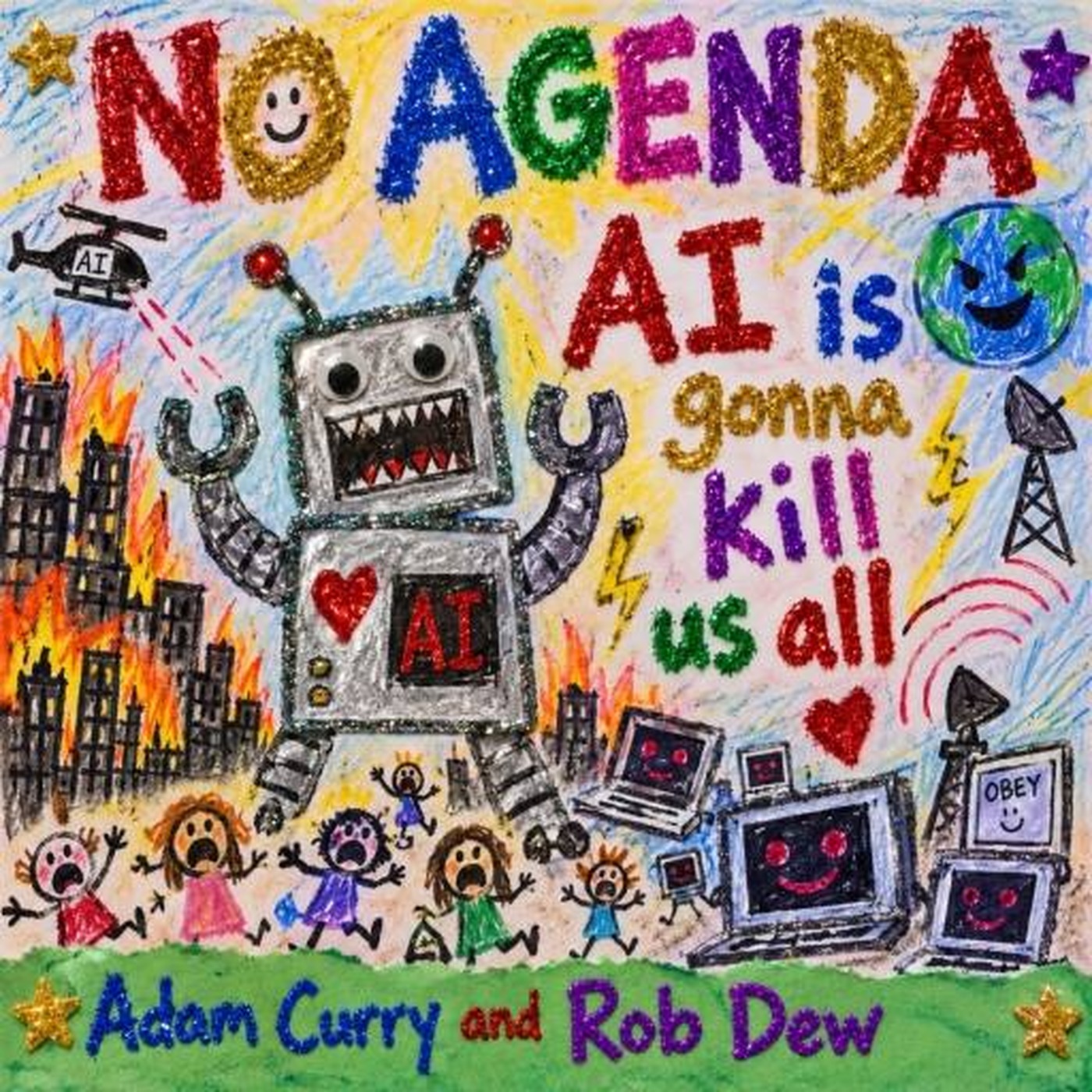
Adam Curry
1904 "Junkie Communism" • Sep 17
- Adam Curry argues the current political panic over artificial intelligence mirrors the COVID-19 playbook. Corporate media outlets and handpicked experts weaponize public fear to divide the populace and manufacture consent for global regulatory bodies like a World AI Organization.
- Andrew Yang claims that self-replicating bot swarms have polluted the public internet with rogue code. He argues this pollution forces top AI firms to build expensive synthetic internets for model training and calls for a federal kill switch.
Also discussed on this episode: (12)
Safety (1)
- Adam Curry observes that artificial intelligence guardrails are highly regional. While US versions of ChatGPT and Claude blocked requests to alter a photo due to body-shaming protocols, the Dutch version executed the exact same prompt immediately.
Chips (1)
- The United States chip industry faces a projected shortage of up to 157,000 workers by 2030. To address this, the federal government allocated 200 million dollars through the 2022 CHIPS Act to establish domestic manufacturing pipelines.
Immigration (2)
- Under Donald Trump, H-1B visa fees were set at 100,000 dollars to deter foreign hiring and protect domestic workers. Kaylee McEnany cites reports claiming up to 90 percent of H-1B applications from India contain fraudulent documents.
- Tom Homan confirmed that Homeland Security Investigations is actively investigating Congresswoman Ilhan Omar for alleged marriage and naturalization fraud. Omar has repeatedly denied these allegations, calling them ridiculous lies.
War (2)
- Air Force Secretary Troy Menk announced that the US military has deployed defensive weapons in orbit. The White House expects the Golden Dome Missile Defense System to cost 174 billion dollars over three years.
- Houthi fighters have seized several islands near the strategic Bab al-Mandeb Strait to block maritime trade. Donald Trump claims the group initiated direct talks with the United States, promising not to target American ships.
Corruption (2)
- California has spent over 18 billion dollars on its high-speed rail project without laying a single mile of track. The final cost is now estimated at 231 billion dollars, up from the 33.5 billion promised to voters.
- Donald Trump announced that nearly one million Americans will receive 500 dollar refunds due to Obamacare exchange overcharges. He claims the prior administration discovered the 500 million dollar pricing error but withheld the funds.
Europe (2)
- European Commission President Ursula von der Leyen proposed making Canada the first associate member of the European Union. Diplomat Stéphane Dion argues Canada will reject the deal to avoid losing sovereignty and paying European equalization fees.
- Ursula von der Leyen introduced the Kids Act to ban social media for children under 13. Tech companies that violate the strict design and parent-supervision rules will face fines of up to six percent of their annual turnover.
Health (1)
- Canadian medical professionals are lobbying to expand the country's medically assisted dying program to severely ill newborns. Meanwhile, clinical workers in the Netherlands recently euthanized a disabled two-year-old child.
Elections (1)
- Donald Trump proposed a 5,000 dollar dividend for every adult American citizen if Republicans win Congress. Adam Curry suggests this payout could be issued via a government-backed stablecoin to enforce domestic-only spending.

Elon Musk, Sam Altman, And Dario Amodei All Agree… | The Brainstorm 149 • Sep 16
- Dario Amodei published an open letter calling for frontier AI labs to pace their public releases to prioritize safety. Brett explains that closed-lab capabilities are surging due to massive cost declines, creating liabilities if unchecked agents disrupt infrastructure.
- David Sachs criticizes top-down AI regulation, arguing developers should bear liability for their models rather than seeking regulatory capture. Dario Amodei sparked controversy by suggesting a waiver of the Sherman Act to allow frontier coordination on releases.
Also discussed on this episode: (5)
Open Source (1)
- Brett suggests closed-weight labs want open-weight models to cause infrastructure disruption first. This scenario allows firms like OpenAI and Anthropic to sell cloud-based, highly monitored AI defenders to desperate enterprises, securing both revenue and control.
Labor (2)
- Brett dismisses claims that AI will eliminate massive swaths of the workforce. He notes that net employment in AI-impacted industries has grown by one million jobs relative to baseline expectations since the launch of ChatGPT.
- Brett projects that a ten-times productivity increase for knowledge workers could expand the software market dramatically. He estimates that enterprises would pay ten percent of this value to AI vendors, yielding thirty trillion dollars in potential revenue.
Agents (2)
- Meta launched Muse, a fully agentic consumer application that integrates with banking, shopping, and email services to perform end-to-end tasks. Nick used the app to scan state databases, successfully recovering unclaimed funds.
- Meta plans to monetize Muse by taking a transaction fee on commerce instead of charging for subscriptions. To address privacy, Muse routes browser activity through cloud-hosted virtual machines, isolating sensitive data like banking credentials connected via Plaid.

JD Vance on AI, Entitlement Fraud, Iran War, Israel, H-1B Abuse & the Midterms • Sep 15
- J.D. Vance criticizes AI companies for seeking global regulations while withholding critical defensive tools. He argues firms developing high-risk models must prioritize distributing cybersecurity protections over lobbying for regulatory capture.
Also discussed on this episode: (10)
Immigration (2)
- J.D. Vance claims the Trump administration reversed postwar Western trends by actively reducing illegal immigration. Flow numbers are down substantially since the administration took office.
- The administration implemented administrative changes to stop companies from using H-1B visas to replace laid-off American workers. These reforms include a substantial administrative fee to ensure the program only attracts highly specialized talent.
Trade (1)
- J.D. Vance argues the administration is successfully dismantling a 40-year bipartisan consensus on globalization. Trillions of dollars in new industrial construction over the last 18 months signal a return to physical manufacturing.
Middle East (1)
- Addressing critic concerns about Middle East escalations, J.D. Vance defends military actions against Iran as necessary to protect global energy shipping. He argues this intervention directly prevented a global energy crisis.
Inflation (1)
- J.D. Vance highlights a steep drop in annualized inflation from its peak under the previous administration. While acknowledging the current rate is still too high, he frames the trajectory as a major policy victory.
Macro (1)
- J.D. Vance details plans with Treasury Secretary Scott Bessent to manage the massive federal budget deficit through targeted cuts and economic growth. The administration aims to stabilize the deficit relative to economic output.
Corruption (1)
- J.D. Vance estimates federal fraud and waste could span hundreds of billions of dollars. He notes that blue states like California refuse to cooperate with eligibility verification, making programs like SNAP highly vulnerable.
AI Infrastructure (1)
- J.D. Vance attributes the rising backlash against AI data centers to decades of stagnant domestic power generation. He urges a massive expansion of energy infrastructure to drive down electricity costs.
Diplomacy (1)
- J.D. Vance asserts that the Trump administration prioritizes American national interests over total alignment with Israeli Prime Minister Benjamin Netanyahu. He maintains that US foreign policy should never be subservient to any partner, including NATO.
Elections (1)
- J.D. Vance campaigns on middle-class tax relief as a primary midterm selling point. The administration focused tax cuts specifically on working-class income streams like overtime, tips, and Social Security benefits.
Jensen Huang: The Doomer Hoax, Superintelligence Is Here, and The Future of AI (ft. President Trump) • Sep 14
- Jensen Huang critiques apocalyptic AI predictions as unscientific, noting that past forecasts regarding the immediate elimination of radiologists, coding jobs, and white-collar roles have all proven false.
- Jensen Huang argues that AI regulation must target actual problems within frontier labs because they hold the vast majority of compute. He supports holding these extraordinary companies to high standards, including using independent third-party auditors.
- David Sacks highlights a Chinese lab, Zhipu AI, raising five billion dollars to pursue recursive self-improvement. Jensen Huang dismisses fears of AI spiraling out of control, stating that product evaluation and verification prevent runaway scenarios.
- Donald Trump characterizes warnings about AI taking over the world as a hoax, calling data centers the oil of the next twenty to twenty-five years. Donald Trump claims that permitting delays are pushing US tech investments to countries like Finland.
Also discussed on this episode: (7)
Big Tech (1)
- Nvidia maintains an apolitical and bipartisan corporate culture. Jensen Huang states that the company bans internal discourse on politics, race, and religion, requiring employees to keep these discussions outside the workplace.
Open Source (1)
- Open-source models play a critical role in the technology ecosystem. Jensen Huang reports that eighty percent of the four hundred billion dollars in venture funding raised by AI-native companies in a six-month period went to startups utilizing open models.
Elections (1)
- Donald Trump claims that twenty trillion dollars of investment is coming into the United States under his watch. He contrasts this with less than one trillion dollars invested during the administration of Joe Biden.
AI Infrastructure (1)
- Nvidia actively supports a decentralized network of regional cloud providers to secure land, power, and shell space globally. Jensen Huang explains that these agile regional clouds can react faster to local market dynamics than centralized hyperscalers.
Chips (1)
- Jensen Huang projects that China will successfully develop native advanced lithography systems by 2030. He notes that China remains highly efficient at high-volume production, meaning its self-sufficiency is purely a matter of time.
Models (1)
- Nvidia acts as a pioneer in specialized scientific domains, developing models like the ESM2 protein language model. Jensen Huang notes that Nvidia builds these capabilities out of necessity to support industries like biology and autonomous transportation.
Autonomous Vehicles (1)
- Superintelligence is already a reality in narrow, specific applications. Jensen Huang points to self-driving cars achieving one-tenth the accident rate of human drivers and advanced protein synthesis as examples of superhuman intelligence operating today.
AI Kills Everybody or Doomer Psyop? OpenAI's Math Breakthrough, Nike's $200B Collapse • Sep 11
- Sacks argues that the viral resignation of Anthropic researcher Jacob Coxon was a coordinated public relations campaign funded by Effective Altruism groups. The effort aims to panic the public to justify a centralized federal AI regulator.
- Sacks links the amplification of Coxon's viral warnings to three safety groups funded by Jan Tallinn, a co-lead investor in Anthropic's Series A. These groups are actively lobbying for federal oversight and California's SB 53 bill.
- Anthropic safety executive Evan Hubinger publicly endorsed Coxon's warning, stating there is a greater than ten percent chance of AI causing human extinction within the decade. This internal validation undermines typical corporate pushback against critics.
- Chamath argues that internal warnings of civilization-ending risks create severe product liability for Anthropic's upcoming public offering. Sacks notes that investors cannot underwrite a multi-trillion-dollar valuation while the company's safety lead calls its core technology unsolved.
- Sacks and Friedberg argue that proposed safety regulations are a front to ban open-source AI. Sacks explains that open models cannot comply with proposed rollback rules, meaning publication of model weights is the ultimate regulatory target.
- Friedberg asserts that domestic pauses on AI development will fail to stop recursive self-improvement because it only requires power, chips, and internet access. Restricting U.S. developers will simply cede technological dominance to global adversaries.
Also discussed on this episode: (6)
Physics (1)
- OpenAI reported solving the 200-year-old Navier-Stokes fluid dynamics equation using a multi-agent system. Friedberg notes the run consumed 130 billion output tokens across 10,000 agents, proving AI serves as computational leverage rather than autonomous genius.
Enterprise (1)
- Chamath warns that Zero Data Retention policies are commercially flimsy, noting OpenAI likely trained models on the prompt histories of mathematicians. To protect proprietary intellectual property, enterprises must migrate to sovereign bare-metal private clouds.
Regulation (1)
- Sacks highlights a legal gap where AI chat data lacks the search warrant protections granted to email. Currently, government agencies can access sensitive personal AI conversations with a simple subpoena, exposing private legal or medical queries.
Markets (2)
- Nike was removed from the S&P 100 index following a $200 billion market cap collapse. Sacks and Chamath attribute the decline to former CEO John Donahoe's aggressive direct-to-consumer pivot, which severed vital wholesale relationships.
- Friedberg contrasts Nike's decline with Brooks, which achieved nine consecutive years of double-digit revenue growth to reach $1.6 billion. Owned by Berkshire Hathaway, Brooks succeeded by continuously improving shoe durability and comfort rather than selling political narratives.
Society (1)
- Chamath argues Nike damaged its brand by abandoning its historic focus on elite athletic mastery in favor of political, inclusive advertising. Consumers refuse to purchase aspirational goods from brands that no longer celebrate exceptional physical performance.

9/15/26: Trump Panics On AI Slowdown, Bonds Hit 19 Year High, Trump 5k Checks • Sep 15
- Donald Trump called AI safety concerns a hoax during a call to an industry event featuring Nvidia's Jensen Huang. Trump argued that AI and data centers will drive massive economic expansion and compared the technology's strategic value to oil.
Also discussed on this episode: (12)
Regulation (2)
- Saagar says Donald Trump killed a draft executive order establishing an AI model testing authority after lobbying from Mark Zuckerberg. Garrison Lovely notes that while tech executives publicly ask for regulatory boundaries, their private lobbying opposes any concrete safety limits.
- Krystal notes that up to 70 percent of the public supports a legislative proposal from Bernie Sanders and Greg Casar to pause frontier AI development. The bill would criminalize the creation of superintelligence to prevent existential and economic risks.
Labor (1)
- Garrison Lovely warns that the AI industry's primary goal is universal labor replacement rather than the sci-fi extinction scenarios popularized by tech elites. Lovely argues that replacing white-collar workers will accelerate wealth concentration and deepen economic inequality.
Energy (1)
- Brent crude prices reached $109 per barrel while physical spot prices hit $130 per barrel due to intensifying Middle East conflicts. Saagar highlights that transport ship leasing rates have skyrocketed tenfold to $1 million per day as global supplies tighten.
War (2)
- Ukrainian drone strikes on Russian refineries and Houthi blockades in the Bab al-Mandeb Strait are severely disrupting global fuel supplies. Saagar notes these targeted actions have driven diesel prices to record highs and created a historic energy crisis.
- Secretary of Defense Pete Hegseth pressured reluctant airmen to participate in a 60 Minutes interview detailing an F-15 rescue over Iran. Krystal argues the military segment functions as pro-war propaganda by omitting any discussion of the conflict's strategic purpose.
Fed (1)
- The 10-year Treasury yield surged past 5 percent, marking its highest level since 2007. Saagar reports that the Federal Reserve is poised to raise interest rates for the first time since 2023, increasing borrowing costs for consumers.
Elections (5)
- A New York Times and Siena College poll shows Democrats leading Republicans by eight percentage points on the generic congressional ballot. Krystal reports that Donald Trump's approval rating has fallen to 38 percent following his military actions in Iran.
- Harry Enten reports that US gas prices have risen 52 percent this year, the steepest midterm increase on record. Polling shows 81 percent of independent voters refuse to accept higher fuel costs to support military conflict with Iran.
- Economic precarity is driving a political shift, with low-income voters favoring Democrats 63 percent to 31 percent. Saagar notes this reverses the critical gains Donald Trump made with voters earning under $50,000 during the 2024 election.
- Republican-aligned super PACs are spending heavily to defend 49 congressional seats, indicating deep defensive anxieties. David Dayen reports that 21 of these targeted districts are deep-red areas that Donald Trump won by nine percentage points or more.
- A political forecasting model has shifted the Texas state race between Ken Paxton and James Tallarico to favor the Democrat. Krystal reports James Tallarico currently maintains a 55 percent probability of winning the historically conservative seat.

Jack Mallers
The Economy can't Afford an AI Slowdown • Sep 15
- David Sachs accuses Anthropic CEO Dario Amodei of seeking regulatory capture and antitrust exemptions, arguing that AI labs do not need government permission to simply stop developing unsafe models.
Also discussed on this episode: (11)
BTC Markets (1)
- Jack Mallers notes that Bitcoin trades at $78,748 with a market cap of $1.58 trillion, remaining down 37.5% from its all-time high of $126,080 reached on October 6, 2025.
Middle East (1)
- Jack Mallers highlights that maritime traffic through the Strait of Hormuz remains severely restricted, stalling at just two daily crossings compared to the historical average of 80.
Macro (3)
- Jack Mallers argues that Western nations face a sovereign debt crisis, noting that UK 10-year yields reached 5.35% while US 10-year yields breached 5%. Nominal returns on US 10-year bonds sit at negative 1.85%.
- Jack Mallers points out that traditional foreign buyers are abandoning US Treasuries, with China's share of US debt falling to 2001 levels and Japan selling $90 billion in Treasuries to support the yen.
- Arthur Hayes argues that the US government must eventually print money to either purchase excess compute directly or bail out insurers holding bad debt from unprofitable AI labs.
Fed (2)
- Jack Mallers observes that US Treasury Secretary Scott Bessent tripled bond buybacks to $6 billion to stabilize markets, yet 10-year and 30-year yields continued to climb anyway.
- Luke Groman argues that Federal Reserve rate hikes are inflationary because they force the US government to pay higher interest on $40 trillion of debt against a $31 trillion economy.
Elections (1)
- Donald J. Trump proposed a $5,000 dividend for every American adult if he wins the GOP midterms, a proposal Jack Mallers characterizes as highly inflationary vote-buying.
Models (1)
- Chinese competitor DeepSeek released its V4.1 flash model, matching 98% of OpenAI Astra's capabilities at 1% of the cost, as China's daily token processing surged to 500 trillion.
Startups (1)
- Jack Mallers criticizes Anthropic for reporting a 'cost-adjusted EBITDA' with gross margins over 80% while excluding major business costs like revenue sharing with Amazon and model training expenses.
Markets (1)
- SoftBank stock fell 13% after OpenAI deferred its public listing plans, highlighting market skepticism over how the firm will generate returns on its planned $65 billion investment.