03-10-2026Price:

The Frontier

Your signal. Your price.

BITCOIN

Bitcoin Emerges as Refuge Amid Global Turmoil

Tuesday, March 10, 2026 · from 3 podcasts
  • Bitcoin offers a lifeline for fleeing conflict zones.
  • It's valued for security and independence amid financial system doubts.

The world is in chaos, and Bitcoin is shining as a safe haven. With geopolitical tensions at an all-time high, particularly in Iran, Bitcoin's role as a financial refuge is clear.

On Rabbit Hole Recap, Marty Bent argues that in a crisis, Bitcoin is unrivaled for moving wealth. Gold is cumbersome, cash attracts scrutiny, and banks can freeze assets. Bitcoin's borderless nature, without reliance on third-party approval, is its crucial edge.

Amid the chaos, the reliability of information is vanishing. Bent highlights the new intensity of the information war, with AI fakes and contradictory reports making truth elusive. In this uncertainty, Bitcoin's independence from government manipulation becomes increasingly appealing.

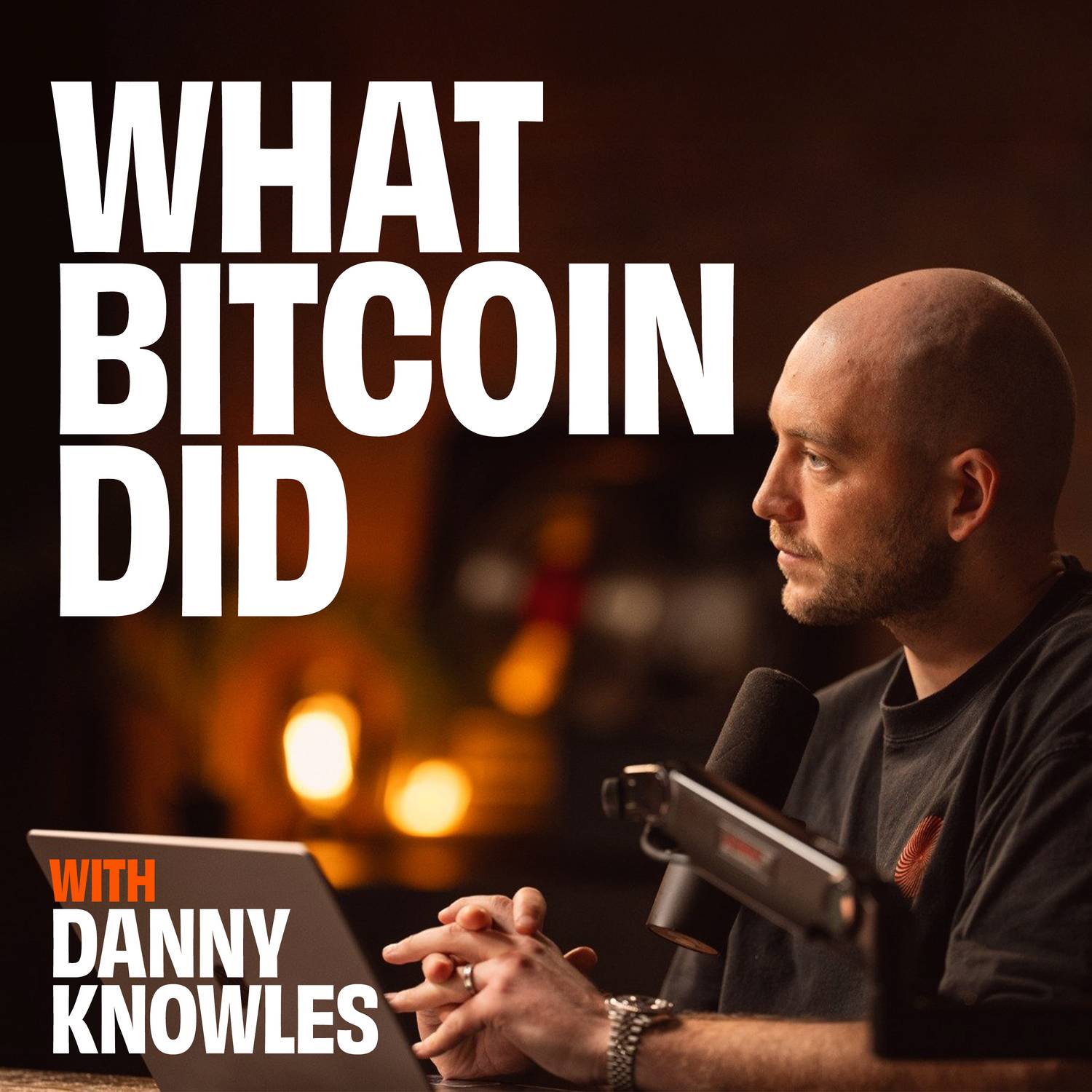
Luke Gromen on What Bitcoin Did connects the dots between military vulnerability and economic fragility. With escalating conflict and potential financial collapse on the horizon, Bitcoin offers financial security beyond the reach of traditional systems.

On TFTC, the discourse shifts to using Bitcoin as a tool against perceived governmental overreach. Host GMONEY frames tax resistance, empowered by self-custodied Bitcoin, as a form of peaceful rebellion against a corrupted state.

In a world where missiles carry religious meanings and news feeds distort reality, Bitcoin stands out. It requires no trust beyond its mathematical foundation, offering a stable refuge in turbulent times.

Marty Bent, Rabbit Hole Recap:

- If you end up in a war zone, Bitcoin is the single best thing to own if you need to move and get the hell out of Dodge.

- It is the truth. If you're trying to move large amounts of money in times of chaos, there's Bitcoin and then there's basically nothing else.

Source Intelligence

What each podcast actually said

Iran, Oil and the Next Financial Crisis | Luke GromenMar 10

Also from this episode:

Politics (4)
  • Luke Gromen says the U.S. Navy's recent refusal to enter the Strait of Hormuz after Iranian aggression revealed the failure of America's global military protection racket.
  • Gromen argues this collapse of the security guarantee is catastrophic for U.S. financial dominance, as the dollar's status relies on global trust in American protection.
  • Gromen claims Iran is now weaponizing oil price spikes against U.S. fiscal stability, using this knowledge to force tactical pauses in conflict.
  • Gromen concludes that the U.S. attempt to use Iran to choke China's oil supply has backfired, instead uniting adversaries against a common financial pressure point.
War (2)
  • Iran demonstrated in the conflict that modern missile and drone technology has rendered traditional, legacy naval power partially obsolete.
  • Gromen predicts the conflict will accelerate a frantic push by Iran, China, and Russia for Iran to obtain nuclear weapons.
Macro (1)
  • The immediate financial pressure point is oil, with Gromen stating U.S. bond and stock markets cannot withstand a sustained price of $100 per barrel.
BTC Markets (2)
  • Bitcoin's price rose during recent Middle East tensions, a departure from its typical correlation with risk on assets, which Gromen interprets as a sign it is functioning as a geopolitical hedge.
  • This price action suggests a growing market perception of Bitcoin as digital property, separate from the fragilities of the traditional financial system.

#724: Bitcoin Is The Peaceful Revolution with GMONEYMar 9

Also from this episode:

Society (5)
  • GMoney describes federal income tax as aiding and abetting a criminal cartel funding bioweapons labs and genocide, and has refused to file a federal income tax return for six years.
  • GMoney argues a peaceful, non-violent protest movement only needs 3.5% of a population to create major social upheaval, citing academic research.
  • GMoney labels the current political structure a proof-of-stake democracy, a shit coin, where a small group controls the fate of millions.
  • GMoney's radical stance was catalyzed by his presence at the 2017 Las Vegas mass shooting, an event he believes was covered up.
  • GMoney frames Bitcoin as the missing piece for lasting change, calling it a digital 1776 and a peaceful revolution of love.
BTC Markets (2)
  • GMoney sees Bitcoin as a tool for mass peaceful dissent, allowing individuals to self-custody wealth and withdraw consent from a system they deem criminal.
  • GMoney's ultimate bet is that Bitcoin becoming the world's most valuable asset will force governments that can't print energy to negotiate with its holders, shifting power.
Protocol (1)
  • GMoney contrasts Bitcoin's proof-of-work model with proof-of-stake democracy, arguing proof-of-work is a system where power isn't handed over.
Corruption (1)
  • GMoney's investigation into QAnon drops led him to connect dots about corruption and a potential counter-operation, which he later overlaid with Bitcoin.

RABBIT HOLE RECAP #399: SAFETY IN SATSMar 5

Also from this episode:

Adoption (3)
  • Marty Bent argues that for someone fleeing a war zone, Bitcoin is the single best asset to own for mobility, as gold is too heavy, cash attracts customs scrutiny, and banks freeze during government panics.
  • Bent claims that in times of chaos, for moving large sums of money, there is Bitcoin and essentially nothing else, highlighting its role as a non-confiscatable, borderless monetary escape hatch.
  • Bent concludes that when missiles carry biblical significance and news feeds carry deepfakes, Bitcoin's value proposition sharpens because it requires trust only in math and a private key, not governments, banks, or narratives.
War (4)
  • Matt Odell and Marty Bent state that the current information war is more intense than ever, citing a landscape filled with AI-generated fake videos, official propaganda styled like video games, and contradictory intelligence reports.
  • The hosts frame truth itself as a scarce commodity in modern conflict, hoarded by those with direct sources and obscured by a fog of disinformation, AI fakes, and rapid-fire contradictory narratives.
  • Bent and Odell note that the Middle East conflict carries explicit religious coding, from prophetic interpretations of a 'blood moon' Purim to reports of Israeli officers framing strikes as a holy war for Trump and Jesus Christ.
  • They highlight Senator Marco Rubio's claim that the military strikes serve a specific religious faction in Israel focused on rebuilding the Third Temple, suggesting the conflict is driven by eschatology as much as geopolitics.