03-12-2026Price:

The Frontier

Your signal. Your price.

BITCOIN

Bitcoin Becomes War Zone Exit Strategy

Thursday, March 12, 2026 · from 6 podcasts, 8 episodes
  • In conflict zones, Bitcoin is the only asset you can flee with - gold is too heavy, cash is too risky, and banks freeze.
  • The information fog of modern war - AI fakes, religious coding, propaganda - makes truth scarce and self-sovereign wealth critical.
  • The U.S. government appears to be targeting Bitcoin entrepreneurs who threaten dollar hegemony, from remittances to tax resistance.

Missiles fly. Bitcoin pumps. The correlation is no longer just financial.

On Rabbit Hole Recap, Marty Bent framed it practically. If you need to flee a war zone with your wealth, gold weighs too much. Cash draws customs agents. Banks freeze when governments panic. Only Bitcoin lets you cross a border with your wealth memorized or secured on hardware, no third party required.

But knowing which direction to run requires navigating an information war more intense than ever. Bent described AI-generated fake bombing videos, Call of Duty-style White House propaganda, and contradictory intelligence reports. When truth becomes a scarce commodity hoarded by those with direct sources, a trustless asset becomes essential.

The conflict carries explicit religious coding, from "blood moon" astrology to military officers framing strikes as holy war. This isn't geopolitics as usual. It's eschatology with fighter jets, raising stakes beyond politics into the realm of existential survival.

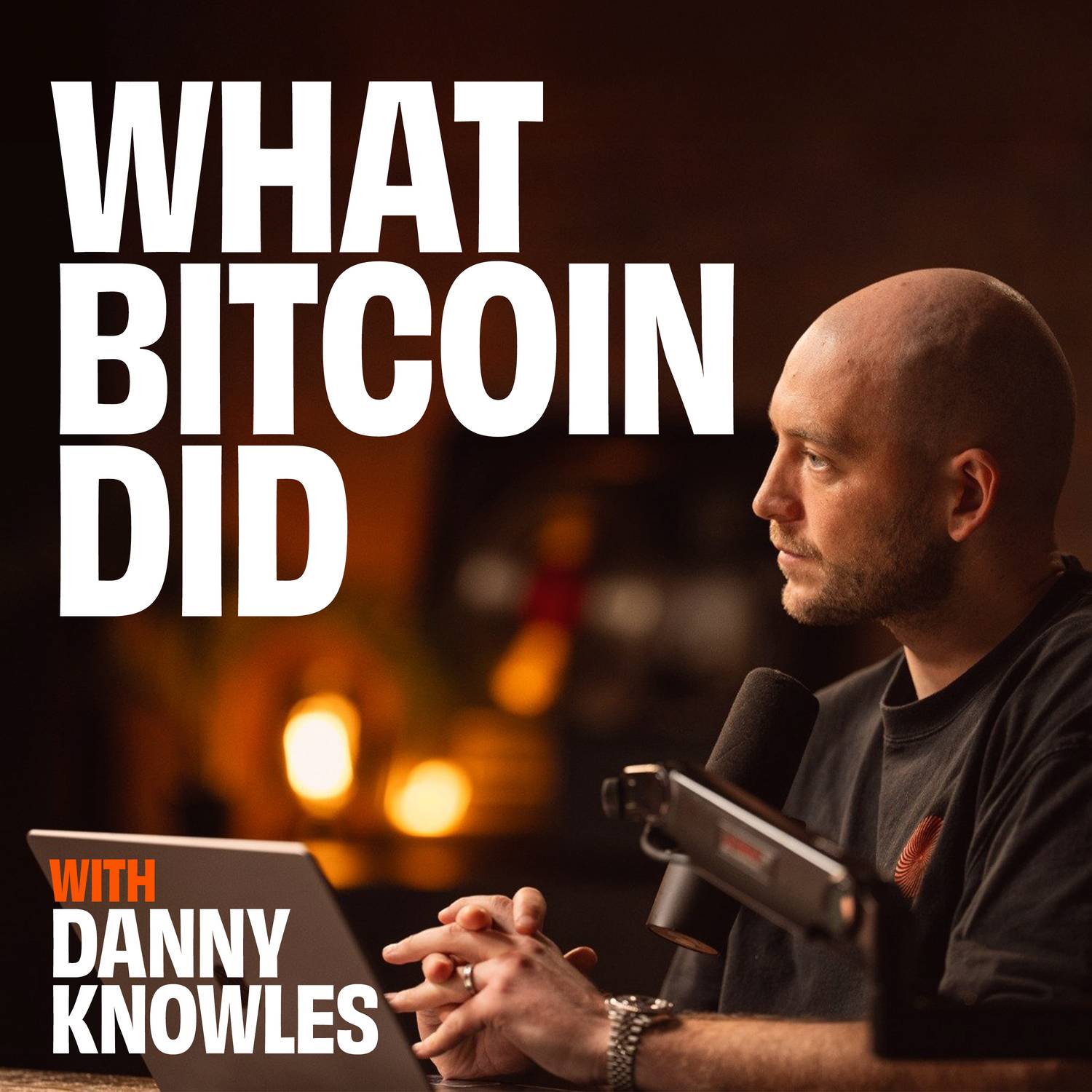
Across podcasts, the consensus is clear: Bitcoin is acting as a refuge asset. Luke Gromen on What Bitcoin Did outlined how mounting military tensions and economic fragility hint at a brewing financial crisis. The strain on the U.S. dollar is palpable as allies reconsider reliance on American stability.

The U.S. response to this shift appears to be aggressive enforcement. The Department of Justice pursues a second trial against Tornado Cash co-founder Roman Storm, risking a 40-year sentence for writing open-source code. Ray Youssef, CEO of remittance platform Noones, claims on the Bitcoin Takeover Podcast that the U.S. conspired to have him kidnapped from Mexico after his service undercut traditional remittance fees by 30-60%, threatening dollar hegemony in the Global South.

This crackdown is fueling a radical philosophy of resistance. On TFTC, guest GMONEY argued Bitcoin enables mass civil disobedience through tax resistance. He stopped filing federal taxes six years ago, viewing payment as funding genocide and a system of 'satanic pedophiles.' His tactical argument cites studies showing peaceful civil disobedience becomes effective with just 3.5% participation.

The state is framed as a 'proof-of-stake shitcoin' where a small cabal changes rules. Bitcoin's proof-of-work offers a system where consensus cannot be forged. As bitcoin becomes the world's most valuable asset, governments cannot print it. They will be forced to ask for sats, flipping the script and putting moral agency back in individual hands.

Escaping with your sats requires tools. Strike secured a New York BitLicense, a regulatory feat host David Bennett on Bitcoin And noted pushed out 80% of smaller firms years ago. Tether invested in UTXO to settle USDT directly on Bitcoin, aiming to turn the chain into a global dollar settlement rail. These moves aim to build the plumbing for a new system, even as the old one fights back.

The exit strategy is being written in code, tested in conflict, and defended in courtrooms. The question is no longer if Bitcoin works in a crisis, but who gets to control the exit.

Marty Bent, Rabbit Hole Recap:

- If you end up in a war zone, Bitcoin is the single best thing to own if you need to move and get the hell out of Dodge.

- It is the truth. If you're trying to move large amounts of money in times of chaos, there's Bitcoin and then there's basically nothing else.


Entities Mentioned

Alex FinnPerson
Cash AppProduct
CoinbaseCompany
USDCProduct

Source Intelligence

What each podcast actually said

#725: Why Bitcoin Adoption Is Fragmented with Fernando NikolicMar 11

  • Nikolic argues Bitcoin thrives as the logical victor in a world where the foundational lies of the fiat system are no longer hidden.

Also from this episode:

Society (5)
  • Fernando Nikolic argues institutions like the church, governments, and legacy media maintained control for centuries by leveraging information asymmetry as sole gatekeepers of truth.
  • Nikolic contends the internet destroyed this monopoly of centralized truth, collapsing the information asymmetry that allowed old institutions to control narratives.
  • Nikolic identifies this collapse of centralized truth as the core driver of current societal upheaval, not merely economic cycles.
  • Nikolic calls this societal phenomenon the 'fourth turning vibes', characterized by old institutions crumbling in front of everyone.
  • Nikolic claims the speed of information transfer accelerates societal crises and exposes institutional rot faster than ever before.
Macro (1)
  • Nikolic states the flaws and devaluations of central banks are now transparent in this new environment, exposing the foundational lies of the old system.

#724: Bitcoin Is The Peaceful Revolution with GMONEYMar 9

  • GMoney sees Bitcoin as a tool for mass peaceful dissent, allowing individuals to self-custody wealth and withdraw consent from a system they deem criminal.
  • GMoney frames Bitcoin as the missing piece for lasting change, calling it a digital 1776 and a peaceful revolution of love.
  • GMoney's ultimate bet is that Bitcoin becoming the world's most valuable asset will force governments that can't print energy to negotiate with its holders, shifting power.

Also from this episode:

Society (4)
  • GMoney describes federal income tax as aiding and abetting a criminal cartel funding bioweapons labs and genocide, and has refused to file a federal income tax return for six years.
  • GMoney argues a peaceful, non-violent protest movement only needs 3.5% of a population to create major social upheaval, citing academic research.
  • GMoney labels the current political structure a proof-of-stake democracy, a shit coin, where a small group controls the fate of millions.
  • GMoney's radical stance was catalyzed by his presence at the 2017 Las Vegas mass shooting, an event he believes was covered up.
Protocol (1)
  • GMoney contrasts Bitcoin's proof-of-work model with proof-of-stake democracy, arguing proof-of-work is a system where power isn't handed over.
Corruption (1)
  • GMoney's investigation into QAnon drops led him to connect dots about corruption and a potential counter-operation, which he later overlaid with Bitcoin.

BTC's Golden Ticket | Bitcoin NewsMar 10

  • The Department of Justice is pursuing a second trial against Tornado Cash co-founder Roman Storm on unresolved money laundering charges, which could carry a maximum 40-year sentence.
  • Roman Storm was previously convicted of operating an unlicensed money-transmitting business. Bitcoin & Economic News host argues Storm is being prosecuted for writing open-source code for a protocol he doesn't control, calling him a political martyr.
  • The host characterizes the DOJ's pursuit of a second trial against Storm as political theater, questioning why a potential Trump administration hasn't intervened with a pardon.
  • U.S. authorities are sending conflicting messages, with a DOJ official stating 'writing code is not a crime' and the Treasury acknowledging legitimate privacy uses for mixers, while prosecutors simultaneously push forward with the case against Storm.
  • Coinbase has launched regulated Bitcoin and crypto futures in 26 European countries through its MiFID-registered entity, offering a regulated alternative to offshore platforms.
  • The host speculates Coinbase's European futures launch aligns with its 'exchange for everything' strategy and predicts Elon Musk might attempt to buy the company to integrate it into his 'everything app' vision for X.
  • The host frames the dual narratives of the legal battle over code and the race to build regulated financial empires as two sides of the same fight to define the next era of finance.

Also from this episode:

Markets (1)
  • Coinbase's new European futures platform, which includes cash-settled Bitcoin futures and a 'MAG7' crypto-equity index with up to 10x leverage, uses USDC for funding instead of Tether. The host sees this as a regulatory-driven choice.

Iran, Oil and the Next Financial Crisis | Luke GromenMar 10

  • Bitcoin's price rose during recent Middle East tensions, a departure from its typical correlation with risk on assets, which Gromen interprets as a sign it is functioning as a geopolitical hedge.
  • This price action suggests a growing market perception of Bitcoin as digital property, separate from the fragilities of the traditional financial system.

Also from this episode:

Politics (4)
  • Luke Gromen says the U.S. Navy's recent refusal to enter the Strait of Hormuz after Iranian aggression revealed the failure of America's global military protection racket.
  • Gromen argues this collapse of the security guarantee is catastrophic for U.S. financial dominance, as the dollar's status relies on global trust in American protection.
  • Gromen claims Iran is now weaponizing oil price spikes against U.S. fiscal stability, using this knowledge to force tactical pauses in conflict.
  • Gromen concludes that the U.S. attempt to use Iran to choke China's oil supply has backfired, instead uniting adversaries against a common financial pressure point.
War (2)
  • Iran demonstrated in the conflict that modern missile and drone technology has rendered traditional, legacy naval power partially obsolete.
  • Gromen predicts the conflict will accelerate a frantic push by Iran, China, and Russia for Iran to obtain nuclear weapons.
Macro (1)
  • The immediate financial pressure point is oil, with Gromen stating U.S. bond and stock markets cannot withstand a sustained price of $100 per barrel.

The Four Year Cycle Is Not Broken | Matthew MezinskisMar 5

Also from this episode:

Markets (9)
  • Guest Matthew Mezinskis argues Bitcoin's growth follows a unique power law rather than traditional exponential compound interest models.
  • He states that for every 13% increase in Bitcoin's lifespan measured in days, its price will double.
  • This power law relationship is described as highly stable with a 96% R-squared statistical confidence.
  • Unlike the constant doubling time of exponential compound interest, Bitcoin's proportional doubling time slows as the network matures.
  • Mezinskis compares this slowing, proportional growth pattern to the sustainable development of cities, which grow rapidly at first and then settle.
  • He argues this distinction from traditional finance is critical because compound growth typically leads to unstable boom-bust cycles.
  • While the current implied Compound Annual Growth Rate of 40% will eventually diminish, the power law model offers a stable asset class.
  • The power law growth model defies standard financial analysis and expectations for asset behavior.
  • The podcast notes that Bitcoin's price trajectory baffles traditional finance as it operates on entirely distinct rules.

S17 E12: Ray Youssef on Fighting for the Global SouthMar 7

  • Ray Youssef, CEO of Noones, claims the U.S. government conspired to have him kidnapped from Mexico and arrested on fabricated charges.
  • He asserts his real crime was building Bitcoin-based remittances that undercut traditional services by 30-60%.
  • Youssef argues his service threatened the U.S. dollar's hegemony in the Global South, which provoked the government's response.
  • His remittance platform, Noones, connected gift cards to peer-to-peer crypto markets to facilitate transfers.
  • The service reportedly reduced typical remittance fees from 30-60% down to 1%.
  • Noones achieved a volume of $60 million per week flowing into Nigeria and across Africa.
  • Youssef states that U.S. authorities never thought crypto would be useful as a means of exchange in the Global South, believing it would remain 'a casino'.
  • He claims that after a speech in Mexico, 20 Mexican federales and immigration agents, allegedly bribed by U.S. officials, surrounded him.
  • Youssef says he was deported without extradition paperwork and flown to LAX, where federal marshals arrested him.
  • He describes the Department of Justice's charges as 'absurd', relying on expired money laundering statutes.
  • A novel accusation against him is conspiring not to have an effective anti-money laundering compliance program.
  • His lawyers argue the statute of limitations for the alleged crimes expired three years ago.
  • Youssef notes that his real-world compliance team was one-third of his 300-person company.
  • He believes the government's goal is punishment, not prosecution, and is 'working to rectify that mistake' of letting his service grow.
  • Youssef sees his case as a parallel to historical efforts to suppress pan-African financial independence, invoking Muammar Gaddafi.
  • He states the core conflict is about control, where a cheap, pan-African clearing layer built on Bitcoin threatens the dollar's grip on cross-border trade.
  • Youssef's trial will test how far the U.S. will go to protect its financial control, according to the summary.
  • Youssef quotes himself saying, 'I am guilty of the one unforgivable crime... I made crypto useful for real people.'
  • He further quotes, stating his service let people use their money 'without paying 30 to 60% fees.'

Strike In New York | Bitcoin NewsMar 6

  • Strike secured a New York BitLicense, a regulatory achievement that previously led many smaller Bitcoin firms to exit the state due to high compliance burdens.
  • Host David Bennett stated that roughly 80% of digital asset firms left New York when the BitLicense regime was first introduced.
  • David Bennett suggests that Strike obtaining the BitLicense demonstrates its scale and willingness to navigate a difficult regulatory environment.
  • David Bennett argues that Bitcoin's market perception as a risk-on speculative asset prevents its true decoupling from traditional financial markets.
  • Tether's investment in UTXO aims to position Bitcoin as a global settlement layer for USDT, the world's most-used digital dollar.
  • David Bennett expresses skepticism about stablecoins as long-term savings tools but acknowledges their established utility.
  • Tether's strategy aims to cement Bitcoin's place in the global financial system, regardless of objections from Bitcoin purists.

Also from this episode:

Markets (1)
  • David Bennett observed a short-term inverse correlation between Bitcoin and oil prices during U.S. trading hours, linking it to Middle East tensions and the Federal Reserve's inflation response.
Stablecoins (2)
  • Tether led a $7.5 million investment in UTXO, a startup developing infrastructure to settle USDT transactions directly on the Bitcoin blockchain and Lightning Network.
  • David Bennett views Tether CEO Paolo Arduino's consistent focus on Bitcoin as a deliberate strategy to solidify Bitcoin's role in global finance.

RABBIT HOLE RECAP #399: SAFETY IN SATSMar 5

  • Marty Bent argues that for someone fleeing a war zone, Bitcoin is the single best asset to own for mobility, as gold is too heavy, cash attracts customs scrutiny, and banks freeze during government panics.
  • Bent claims that in times of chaos, for moving large sums of money, there is Bitcoin and essentially nothing else, highlighting its role as a non-confiscatable, borderless monetary escape hatch.
  • Bent concludes that when missiles carry biblical significance and news feeds carry deepfakes, Bitcoin's value proposition sharpens because it requires trust only in math and a private key, not governments, banks, or narratives.

Also from this episode:

War (4)
  • Matt Odell and Marty Bent state that the current information war is more intense than ever, citing a landscape filled with AI-generated fake videos, official propaganda styled like video games, and contradictory intelligence reports.
  • The hosts frame truth itself as a scarce commodity in modern conflict, hoarded by those with direct sources and obscured by a fog of disinformation, AI fakes, and rapid-fire contradictory narratives.
  • Bent and Odell note that the Middle East conflict carries explicit religious coding, from prophetic interpretations of a 'blood moon' Purim to reports of Israeli officers framing strikes as a holy war for Trump and Jesus Christ.
  • They highlight Senator Marco Rubio's claim that the military strikes serve a specific religious faction in Israel focused on rebuilding the Third Temple, suggesting the conflict is driven by eschatology as much as geopolitics.