04-05-2026Price:

The Frontier

Your signal. Your price.

BUSINESS

Fed paralyzed by debt and oil, risks stagflation

Sunday, April 5, 2026 · from 4 podcasts, 5 episodes
  • The US government's interest expense has hit a ceiling, preventing the Fed from hiking rates to fight inflation.
  • Middle East oil shocks create a stagflationary trap, making rate cuts equally dangerous.
  • Analysts warn the Fed will choose to protect the bond market, letting the dollar weaken.

The Federal Reserve is trapped. On one side, the US government’s soaring debt service costs prevent aggressive rate hikes. On the other, war-driven oil price spikes threaten to reignite inflation, making rate cuts impossible. The central bank is left with no good options, setting the stage for a prolonged period of financial repression and currency debasement.

John Arnold argued on TFTC that the Fed has hit a fiscal ceiling. The Treasury’s interest expense is already at its limit; hiking rates further would threaten sovereign solvency long before it tamed inflation. The danger extends to the financial system’s plumbing, where spiking Treasury volatility - measured by the MOVE index - threatens to force liquidations by leveraged hedge funds, risking a systemic liquidity crunch.

John Arnold, TFTC: A Bitcoin Podcast:

- The Fed does not have the leeway to get substantially more aggressive or more restrictive across its different facilities and different tools on the strategy market and on rates.

- I think broadly, that's a theme that I would fade as we go forward this year, that the Fed's just going to respond mechanically to higher inflation with higher rates.

Geopolitics tightens the trap. Mel Mattison, also on TFTC, warned that a prolonged conflict in the Middle East could keep oil between $90 and $150, bleeding costs into fertilizers, plastics, and transportation. This creates a 1970s-style stagflationary environment. Peter St Onge of BTC Sessions highlighted the Fed’s historic blind spot: mistaking such supply shocks for monetary inflation and hiking rates into a slowing economy, a move a Deutsche Bank study flagged as the single biggest recession risk.

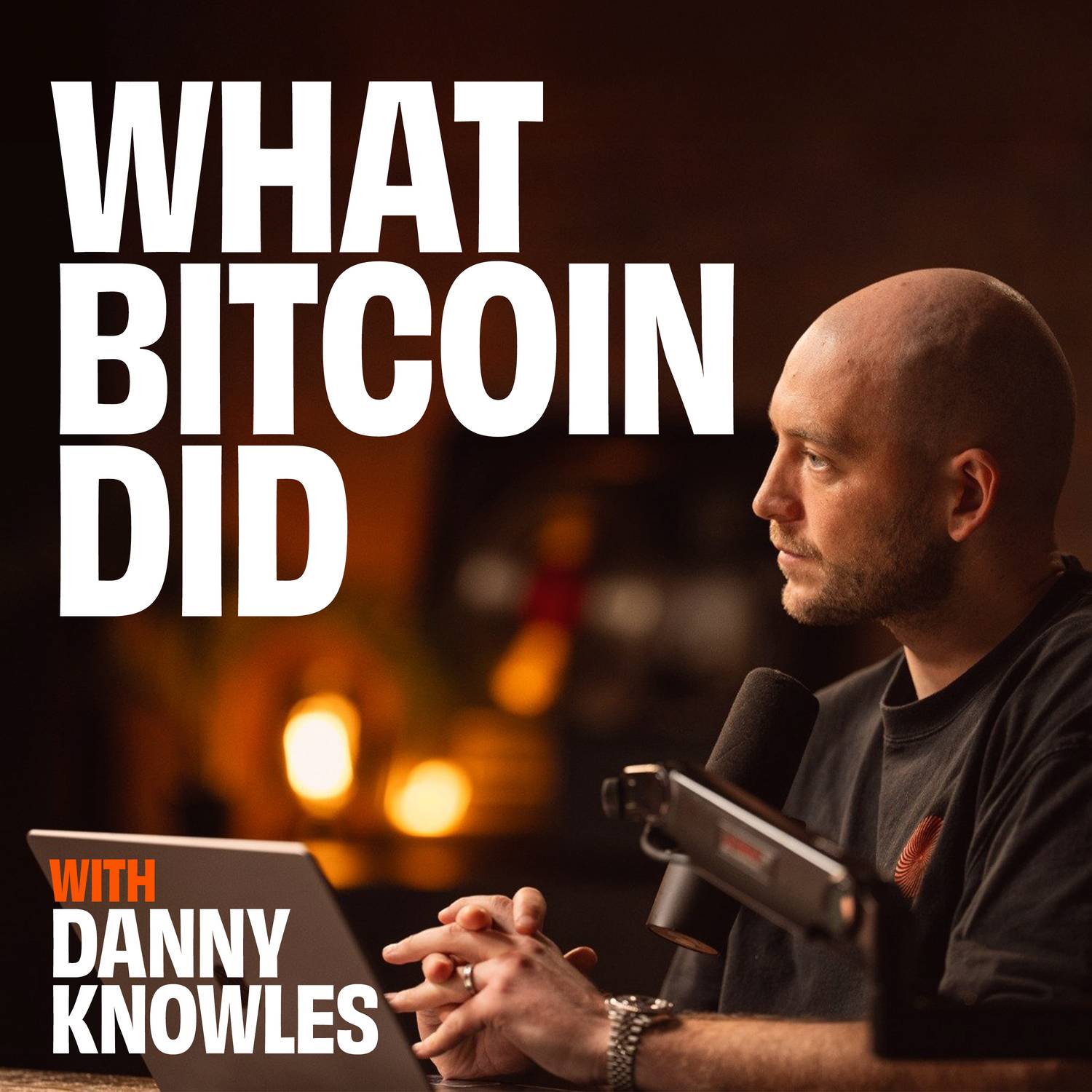
The structural shift enabling this paralysis is fiscal dominance. Lyn Alden on What Bitcoin Did noted the US entered this danger zone around 2018, when deficit spending outside a recession first exceeded total new private bank lending. The government is now the primary engine of money creation, ‘pre-stimulating’ the economy just to stay solvent. Recessions may no longer bring disinflation, but more debasement.

Lyn Alden, What Bitcoin Did:

- Realistically, I would say that it’s somewhat mattered since the global financial crisis.

- But really, I would say since about 2018, 2019, I think it’s been really mattering, which is to say that we’re shifting more and more toward that kind of fiscally dominant environment.

Not everyone sees immediate crisis. On Forward Guidance, Fed Governor Miran argued that AI and deregulation create a persistent disinflationary drag, and that the Fed should ‘look through’ temporary oil shocks. He views the current policy as unnecessarily restrictive.

Consensus, however, points toward accommodation. With a $3 trillion deficit looming and foreign demand for Treasuries at 30-year lows, analysts expect the Fed to protect the bond market’s functionality above all else. The historical template, as Arnold noted, may be the 1940s: yield caps, price controls, and rationing to manage inflation while inflating away debt. The choice isn’t between inflation and stability, but between a functioning bond market and a stable currency. The Fed is expected to choose the bonds.

By the Numbers

  • $1.9 trillionBank loans to non-deposit financial institutionsmetric
  • 7-8%Shadow bank exposure as percent of total bank assetsmetric
  • 15-20%Global energy production through Strait of Hormuzmetric
  • $130Catastrophic oil price thresholdmetric
  • 10Original workers per Social Security retireemetric
  • 3Current workers per Social Security retireemetric

Entities Mentioned

MASTConcept
PalantirCompany
Wall StreetConcept
World Economic ForumCompany

Source Intelligence

What each podcast actually said

What Bitcoin Did
What Bitcoin Did

Peter McCormack

The Debt Crisis Is Already Here | Lyn AldenApr 1

  • Lyn Alden argues the long-term sovereign debt cycle has been mattering since 2018 or 2019, shifting the US into a fiscally dominant environment.
  • US deficit spending became larger than total private bank lending in a non-recession year for the first time around 2018-2019.
  • Alden says the 2019 repo crisis was tied to excessive Treasury debt issuance, forcing the Fed to increase its balance sheet despite no recession.
  • Alden views a closure of the Strait of Hormuz as a DEFCON 5 catastrophe, as 15-20% of global energy production flows through it.
  • She argues energy and fertilizer shortages from a strait closure would hit developing countries hardest, as wealthy nations can outbid them for remaining supplies.
  • Alden states Egypt is already implementing energy rationing measures like early cafe closures due to a tripled monthly natural gas import bill.
  • Luke Groman's benchmark is that oil above $130 per barrel is catastrophic for the global economy, but Alden says it could go far north of that if the strait stays closed.
  • Alden argues high energy prices act as a raw input cost shock that squeezes business margins and household budgets, potentially triggering social unrest.
  • She links sovereign debt crises to increased geopolitical volatility, as indebted hegemons like the US tend to lash out to externalize problems.
  • She states the US social security system has dropped from over 10 workers per retiree at inception to roughly three workers per retiree now.
  • Lyn Alden says countries that print their own currency, like the US, almost never nominally default; they debase their way out of debt through inflation.
  • She argues the current era of fiscal dominance means recessions will feel different, becoming less disinflationary or even inflationary due to pre-stimulus.
  • Alden cites Japan as a case study in managing fiscal dominance through high productivity, foreign asset accumulation, and social cohesion, avoiding worst-case crises.

Also from this episode:

Banking (2)
  • Lyn Alden states US banks have $1.9 trillion in loans outstanding to non-deposit financial institutions like shadow banks and private credit funds.
  • That $1.9 trillion in shadow bank exposure represents about 7-8% of total US bank assets, which Alden argues is not large enough to tank the banking system on its own.
Immigration (1)
  • Alden connects immigration policy debates in developed nations to debt and demographic issues, as governments try to fix top-heavy entitlement systems.
AI & Tech (4)
  • Alden identifies AI as the primary potential source of productivity growth to offset money printing, focusing on automating white-collar services.
  • The speed of AI job displacement is critical; if slow over generations, it's manageable, but rapid displacement over a decade could be devastating.
  • Alden believes AI will likely exacerbate the two-speed economy, benefiting adopters and asset owners while leaving others behind, increasing wealth inequality.
  • She sees a high likelihood of Universal Basic Income proposals gaining traction if AI displacement accelerates, to stem potential social unrest.
History (1)
  • Alden states the fiat system as we know it only dates to the 1970s, and its monopoly was built on the gap between fast telegraph transactions and slow gold settlements.
BTC Markets (3)
  • She argues Bitcoin ended the era of no fast settlement alternative, providing a structural challenge to the centralized fiat monetary monopoly.
  • For portfolio allocation, Alden's baseline is that holding zero Bitcoin is the wrong number, suggesting 5% as a reasonable starting point.
  • She advises buying scarce assets like Bitcoin, gold, and quality equities at reasonable prices, warning they can still have lost decades if bought at manic valuations.

#732: The Iran War Escalation with Mel MattisonApr 1

  • Mattison states oil is the key driver of inflation, impacting transportation, plastics, fertilizers, and goods movement.
  • Mattison warns a protracted Iran war with oil at $90-$150 could lead to 6-7% inflation and 1970s-style stagflation.
  • Mattison forecasts the ultimate solution to war-induced economic damage will be massive, coordinated global central bank liquidity injection.
  • Mattison argues Bitcoin must decouple from its tight software correlation with stocks and act as a store-of-value liquidity asset.
  • Mattison is holding cash and puts, waiting for a market capitulation event like a 3-4% down day in the S&P before deploying.
  • Mattison added gold strategically when it touched its 200-day moving average near $4,100, expecting a major rally post-crisis.
  • Mattison warns the Fed cannot Volcker-style hike rates into war-induced inflation without collapsing tax receipts and the sovereign bond market.
  • Mattison predicts the U.S. may need WWII-style tools like explicit yield curve control to manage blowout deficits and lack of foreign treasury buyers.
  • Mattison suggests private credit losses could infect banks and require a Fed bailout facility, leading to straight money printing.

Also from this episode:

War (7)
  • Mattison states the U.S. invasion of Iran lacks a viable military solution, despite American power, similar to how willpower fails against addiction.
  • Mattison argues Iran gains leverage daily and could demand the U.S. leave the Gulf, abandon bases, price oil in yuan, or tax the Strait of Hormuz.
  • Mattison contends Trump's talk of bombing Iranian energy and desalination plants is reckless and ignores Iran's ability to retaliate against Gulf states.
  • Mattison believes the conflict has a tail risk of escalating to a nuclear exchange between Israel and Iran.
  • Mattison suggests Iran may have already weaponized its 60% enriched uranium into a nuclear device since June.
  • Mattison posits a Mossad operation may have manipulated Trump with false intelligence from Netanyahu to launch the war.
  • Bent speculates the Iran war might be a U.S. proxy move to choke China's oil and gas access, slowing its AI race progress.
Markets (3)
  • Mattison says he started buying puts and raising cash after realizing the Iran war was serious, about five to six days after the initial attacks.
  • According to Mattison, the market initially dismissed the Iran conflict, with the S&P trading at 6,800-6,850 days after it began.
  • Mattison's base case remains a year-end market recovery, but only if hard decisions to de-escalate are made within weeks.
Politics (2)
  • Mattison cites George Washington's farewell address, arguing an 'excess of fondness' for Israel makes the U.S. 'to some degree a slave.'
  • Mattison claims powerful U.S. officials, including Jared Kushner, may prioritize Israeli over American national interests.
AI & Tech (1)
  • Mattison believes the AI industry's pressure, as voiced by David Sacks, could force a U.S. exit from the war to avoid disrupting the chip build-out.

Ten31 Timestamp: To Hike or Not to HikeMar 30

  • John Arnold argues the Fed has hit a fiscal ceiling where further rate hikes would threaten Treasury solvency before taming inflation.
  • U.S. government interest expense is already at its limit, preventing a hawkish response even to energy-driven inflation shocks.
  • He contends the 1940s, not the 1970s, is the correct historical analog for the current debt and inflation predicament.
  • In the 1940s, the Fed and Treasury coordinated to peg the 10-year yield at 2.5% instead of fighting inflation with rates.
  • Reported inflation fell to 1% under those controls, then spiked to 15% after their release, allowing debt to be inflated away.
  • Arnold expects the Fed will ultimately choose to protect the bond market's functionality over maintaining currency stability.

Also from this episode:

Markets (2)
  • Spiking volatility in the Treasury market, measured by the 'move index', mirrors levels seen during the 2023 banking crisis.
  • Arnold says leveraged hedge funds in the treasury basis trade face liquidation pressure from this volatility, risking a systemic liquidity crunch.
History (1)
  • The government then managed 1940s inflation with price controls and consumer rationing for a wide variety of goods.
Banking (1)
  • Marty Bent notes Morgan Stanley gating a private credit fund as a sign of modern stress and a potential liquidity crunch.

Fed Governor Miran on Why Inflation Fears Are OverstatedApr 1

  • Fed Governor Moran argues high measured inflation is overstated due to quirks like portfolio management services biasing metrics by 30-40 basis points.
  • Moran dissented in favor of a 25 basis point rate cut, believing the labor market's gradual weakening justifies additional monetary support.
  • The labor market has been on a very gradual cooling trend for about three years, with increasing job search difficulty and unemployment duration.
  • Moran says central banks should look through oil price shocks as their inflationary impact is front-loaded and doesn't affect the economy 12-18 months out.
  • Forward inflation expectations a year, two, and three years out are largely unaffected by recent oil price moves and are lower since the January FOMC meeting.
  • Moran sees no evidence of a wage-price spiral forming due to the cooling labor market and declining wage pressures.
  • Moran cites a Fed staff paper by Cascaldi-Garcia and Iacoviello estimating deregulation will create a 0.3% annual drag on inflation for two years.
  • Moran's own calculation found the deregulatory wave could drag on inflation by about 0.5% a year for the next few years.
  • Moran sees the current policy stance as modestly restrictive and holding the economy back, inconsistent with the macroeconomic backdrop.
  • He views the neutral policy rate as roughly 2.5% to 2.75%, with the current rate about a percentage point above that level.
  • AI's productivity boost unambiguously pushes the neutral rate higher, but other factors like demographic changes are weighing on it.
  • Massive swings in population growth, from a spike to near-flat working-age growth, are a powerful force weighing on the neutral interest rate.
  • Moran notes the U.S. fiscal deficit improved significantly, with a roughly $450 billion annualized decline he attributes largely to tariffs.
  • A key monetary policy channel for supply-side shocks is the output gap - the difference between potential GDP and actual GDP.
  • Deregulation likely expands potential GDP much more than actual GDP because it utilizes existing capital more without driving new investment demand.
  • AI's impact on the output gap is unclear as it creates significant domestic investment demand (e.g., data centers) while also boosting productive capacity.
  • Large global inflows into dollar-denominated stablecoins could significantly weigh on the neutral interest rate, akin to a smaller version of the early 2000s 'global savings glut.'

Also from this episode:

AI & Tech (1)
  • AI is a positive supply shock that increases productive capacity, letting people produce more with fewer inputs.
Regulation (2)
  • Deregulation acts as a persistent positive supply shock by easing production constraints and increasing competition.
  • Moran believes Skinny Master Accounts for stablecoin issuers are an important step toward allowing financial innovation to occur.
Stablecoins (1)
  • Moran's primary thesis is that stablecoins' major growth will come from large pools of global savings currently blocked by capital controls or lacking banking access.

“Single Biggest Risk” Why the Fed Will Break the Economy | Peter St OngeMar 31

  • A Deutsche Bank study identifies the Federal Reserve panicking on oil prices and subsequently hiking rates as the single biggest risk for a recession.
  • Jerome Powell, a lawyer with a private equity background and not an economist, is perceived as being aligned with Wall Street interests.
  • St. Ange explains that bond prices are currently repricing due to market expectations of zero net Fed rate cuts for the year, with a potential for two rate hikes.
  • A $10 increase in oil prices is typically correlated with a 0.2% drop in GDP, 200,000 job losses, and a 0.33% rise in inflation.
  • Peter St. Ange states that the Truflation indicator showed an annual inflation rate of 0.7% before the war, which has since risen to 1.6%.
  • Approximately half of all U.S. mortgages are currently below 3% interest due to the Fed's zero-rate policy during COVID, locking many homeowners into their properties.
  • The Federal Reserve's balance sheet, historically around $1 trillion, surged to $6-7 trillion after 2008 and further to $9-10 trillion during COVID.
  • St. Ange argues that the Fed's actual wealth transfer through monetary policy is closer to 4-6% annually, equating to roughly $1 trillion per year on a $20 trillion economy.
  • During an 18-month period at the start of COVID, one-third to one-fourth of all existing dollars were newly printed, impacting global currencies.
  • Kevin Warsh is considered a 'hard money' advocate, potentially the most stringent since Paul Volcker, whose appointment would likely cause a 'debasement trade' crash.
  • The U.S. economy remained weak for eight years following the 2008 crisis, a central point of Donald Trump's 2016 presidential campaign.

Also from this episode:

Politics (1)
  • Peter St. Ange states that freezing Russian central bank assets was likely the most significant blow to the dollar in 50 years.
AI & Tech (6)
  • St. Ange questions the World Economic Forum's consistent promotion of AI job loss narratives, suggesting it serves as an entry point for universal basic income.
  • A 2014 Oxford study predicted 80 million job losses from AI in 20 years, yet 12-13 years later, the U.S. economy has gained 16 million jobs.
  • The World Economic Forum predicted that half of all jobs would be lost by 2025 due to AI, a narrative St. Ange attributes to promoting universal basic income.
  • Historically, every form of automation, from ancient innovations like writing and fire to modern technologies, has ultimately created more jobs than it destroyed.
  • AI is projected to impact about 20% of jobs, primarily in cubicle roles, rather than the often-predicted 90%, with healthcare, education, and skilled trades being less affected.
  • Palantir's CEO noted that those most vulnerable to AI job displacement are disproportionately female, older, high-income, single Democrats.
Adoption (3)
  • Peter St. Ange predicts that Bitcoin and silver prices will experience a significant jump when the ongoing war concludes.
  • Wall Street banks strongly oppose stablecoins, which, due to regulations like the 'Genius Act,' must be fully backed by cash or treasuries.
  • Stablecoins function as fully-backed, fee-free bank accounts that can pass on about 94% of the yield from their treasury backing, effectively paying around 4% interest.
Business (6)
  • Gold prices have declined by approximately 7% since the war began, with silver falling even more, while Bitcoin's price has risen during the same period.
  • Speculative investors, often called 'hot money' or 'paper hands,' who initially moved into gold and silver, have since shifted capital into Bitcoin.
  • U.S. nationwide real estate prices have declined by about 7%, accompanied by an 18% decrease in home sales last month.
  • Austrian economics defines inflation as an increase in the money supply, distinct from rising prices, which are a consequence of that monetary expansion.
  • Peter St. Ange downplays the petrodollar's significance, emphasizing that over $40 trillion in overseas dollar-denominated assets represents the primary source of dollar demand.
  • In contrast, traditional Wall Street banks offer 0.1% interest on deposits, back only 7-10 cents of each dollar (the rest is bailout), and collect over $100 billion in annual fees.
Culture (1)
  • Widespread music piracy in the 1990s led artists to significantly increase touring, which resulted in a boom for live music performances and ticket prices.
