04-07-2026Price:

The Frontier

Your signal. Your price.

POLITICS

Economists warn debt psychology traps nations in perpetual war

Tuesday, April 7, 2026 · from 3 podcasts
  • National debt acts as a perpetual war tax, disguising military spending as inflation.
  • Politicians exploit public optimism bias about debt to finance endless conflicts.
  • Technological abundance is crashing into a debt-based system built on scarcity.

Perpetual war serves as a capital incinerator, destroying wealth to keep the population dependent. On The Peter McCormack Show, Scott Horton described a self-funding system: arms manufacturers finance pro-war think tanks, media profits from conflict-driven ratings, and taxpayers cover the bill through inflation on a $40 trillion debt. This 'iron triangle' creates an economy where military expansion is the only product with guaranteed demand.

Scott Horton, The Peter McCormack Show:

- Media companies financially benefit from violent conflict, as controversy boosts viewership and ad rates.

- This creates an incentive for them to promote and ensure ongoing conflicts.

Psychological biases enable this system. Hidden Brain's research shows humans treat their future selves as strangers with infinite resources, a trait politicians exploit. The optimism bias leads citizens to accept deferred debt costs while intertemporal discounting makes long-term interest payments feel abstract. This cognitive flaw transforms public debt into a hidden war tax, paid through inflated prices and stagnant wages.

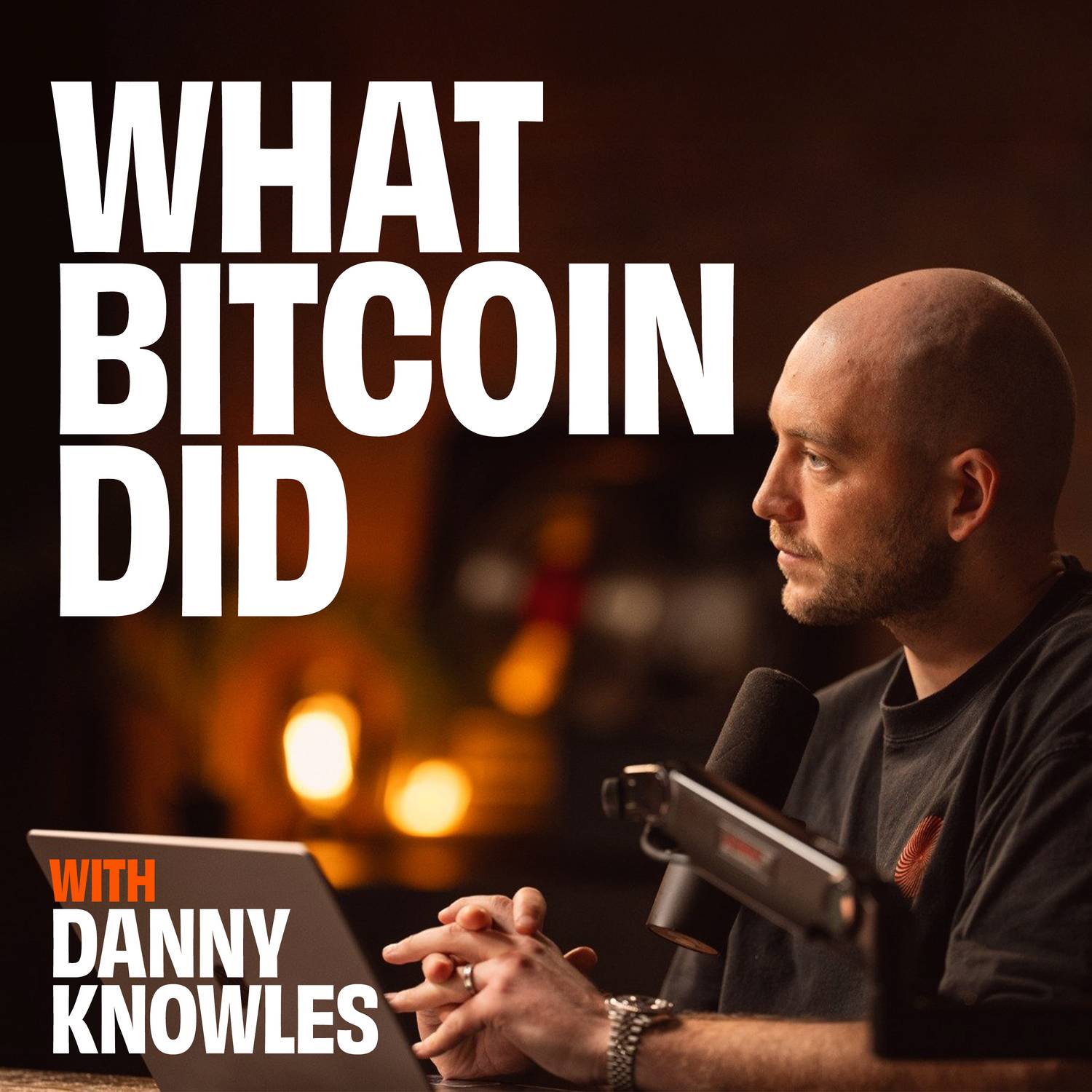
Technological deflation is the system's fatal contradiction. On What Bitcoin Did, Jeff Booth argued that free markets naturally lower prices, making the existing debt bubble mathematically impossible. Central banks print money to fight the abundance technology creates. AI-driven cost collapses will expose the debt model as unsustainable, forcing a binary choice between total state control or a new monetary standard. The perpetual war economy is a desperate attempt to prop up a scarcity-based system against a future of abundance.

By the Numbers

  • $40 trillionUS national debtmetric
  • <$1,000Most people's savingsmetric
  • 2006-2007Iraq War II fever peakmetric
  • 2011US support for rebels beganmetric
  • Summer 2013ISIS state announcedmetric
  • $93 billionConsumer debt growth at end of 2024metric

Entities Mentioned

BitcoinProtocol
FBIConcept
HamasCompany
HezbollahCompany
Irancountry
ISISConcept
Israelcountry

Source Intelligence

What each podcast actually said

#163 - Scott Horton - How Debt, Inflation and War Are All ConnectedApr 7

  • Scott Horton argues that perpetual war, as described in Orwell's 1984, serves to transfer public wealth into military assets, keeping the population desperate and easier to control.
  • Horton points out that the official US national debt is $40 trillion, with interest payments now a larger percentage of the annual national budget than military spending, according to Senator Rand Paul.
  • Horton contends that the rising cost of living due to monetary and price inflation disproportionately affects lower-wage earners, as their wages are the last to adjust, while the CPI downplays real cost increases.
  • McCormack quotes macro analyst Mike Green, who claimed the current war consumed all excess capital, noting that most people had less than $1,000 in savings.
  • Horton asserts that US foreign policy, including decisions like the Iraq War, is heavily influenced by Zionism and the Israel lobby, with figures like David Wurmser and Paul Wolfowitz pushing Israeli interests while assuring W. Bush of American strategic benefits.
  • Horton highlights political ignorance among US officials, citing instances from 2006-2007 where the head of FBI counterterrorism and the House Intelligence Committee chair could not differentiate between Al-Qaeda and Hezbollah.
  • Horton clarifies that Iran's support for Hamas and Hezbollah does not equate to backing Al-Qaeda, as Hamas has historically murdered Al-Qaeda members in Gaza and Al-Qaeda was responsible for 9/11.
  • Horton explains that the US, under W. Bush and Obama, supported Al-Qaeda-linked groups in Syria, including the rebranded ISIS (Islamic State of Iraq and Syria) by 2013, to counter Iranian influence after the Iraq War inadvertently empowered Shiites.
  • Horton describes the 'iron triangle' - arms manufacturers, Congress, and the media - as driving war by hyping conflicts and producing studies justifying military spending, with many think tanks financed by defense firms.
  • Horton claims that the Ukraine war serves as a 'garage sale' for old military hardware, which then necessitates new inventory replenishment for arms manufacturers.
  • Horton states that media companies financially benefit from violent conflict, as controversy boosts viewership and ad rates, creating an incentive for them to promote and ensure ongoing conflicts.
  • Horton discusses how political figures often misunderstand or misrepresent events, such as Mike Huckabee believing Iraq was behind 9/11 or false claims blaming Iran for the USS Cole attack (which was Al-Qaeda).
  • Horton criticizes the common tactic of dismissing criticism of Israel as 'anti-Semitic,' explaining that many people are genuinely inculcated to believe this, making reasoned discussion difficult.
  • Horton expresses hope in the growing anti-war movement, noting that many new voices and organizations are effectively challenging established narratives, making his own contributions feel 'superfluous.'
  • Horton warns that the US military empire's 'bluff has been called' in the Middle East, with bases and economic targets being hit without effective counter-response, leading to an 'escalation trap' where increased force yields diminishing results.
  • Horton references Gareth Porter's 'The Perils of Dominance,' which argues that US overconfidence in its military might in the 1960s led to disastrous interventions like Vietnam, a pattern he sees recurring today.
  • Horton notes that presidents, including Donald Trump, redefine 'war' as 'conflict' to avoid congressional authorization, a precedent set by Obama's actions in Libya.
What Bitcoin Did
What Bitcoin Did

Peter McCormack

Jeff Booth: Everything They Told You About Money Is WrongApr 7

  • Booth posits the natural state of a free market is deflation, driven by entrepreneurs competing to create more value for consumers.
  • He asserts exponential technology growth, specifically in AI, should lead to exponential deflation and abundance, a trend incompatible with inflationary debt-based money systems.
  • Booth forecasts a chaotic period of supply chain shortages and rampant inflation, followed by massive monetary printing to prevent a deflationary collapse that would destroy the current money system.

Also from this episode:

Adoption (6)
  • Jeff Booth argues every individual constructs a personal reality that reinforces their own belief system, making an objective measure like Bitcoin essential for grounding.
  • He differentiates between viewing Bitcoin as a static asset for digital credit and as an emergent monetary protocol, arguing the latter is necessary for it to succeed as a free market tool.
  • Booth contends that digital credit built on top of Bitcoin centralizes control and is binary: it will either be wiped out by the deflationary free market or destroy Bitcoin's potential.
  • He states that agency in the modern system is lost by using fiat money, which can be printed unilaterally, and is regained by participating in the Bitcoin ecosystem.
  • Booth observes a high concentration of INTJ/ENTJ personality types among Bitcoiners, attributing it to their ability to grasp and build upon its abstract, emergent protocol nature.
  • He argues that in a true Bitcoin standard, credit would diminish as a percentage of the economy, replaced by equity investment, as lending 'out of thin air' would fail.
AI & Tech (1)
  • Booth uses the analogy of folding a piece of paper 50 times to reach the sun to illustrate humanity's inability to intuitively grasp exponential growth, a core tenet of his technological deflation thesis.

The Debt TrapApr 6

Also from this episode:

Markets (1)
  • US consumer debt grew by $93 billion at the end of 2024, with half that increase coming from new credit card debt.
Labor (1)
  • One in four Americans with student loans is delinquent, a rate nearly triple the pre-pandemic delinquency rate.
Psychology (13)
  • Research shows younger people exhibit a stronger optimism bias, believing their future financial situation will be better, which can lead to poor decisions like taking on excessive student loan debt.
  • Intertemporal discounting is a bias where people devalue future costs, making deferred payments seem less painful than immediate ones. This underpins marketing for 'buy now, pay later' schemes and long-term loans.
  • Expense prediction bias leads people to underestimate irregular expenses like car repairs and healthcare. We accurately recall regular monthly bills but fail to account for variable costs, causing budget shortfalls.
  • Self-control is not a stable trait but a depletable resource that degrades with fatigue or stress, making people more impulsive with financial decisions later in the day or after complex tasks.
  • Most consumers dramatically underestimate the true cost of compound interest. On a 6%, 30-year $200,000 mortgage, interest totals about $232,000, not the intuitive $12,000.
  • Reward programs exploit our psychology by increasing purchase frequency as customers near a milestone, like a free flight or coffee. For the two-thirds of cardholders who carry balances, these rewards cost thousands in interest.
  • Partition pricing, like listing a product as $50 plus $10 shipping, tricks consumers into encoding only the lower base price in memory, making a $60 total seem cheaper than a $55 all-in price.
  • Automating savings to deduct money before it hits your checking account counteracts the endowment effect, making you less likely to spend it. This principle explains the success of programs like Social Security.
  • Research shows people feel a rise in testosterone after handling money, making them more aggressive, self-focused, and less cooperative or charitable.
  • Marketers exploit cognitive exhaustion during complex purchases like buying a car or house. The 'seizing and freezing' phenomenon makes tired consumers latch onto one piece of information and ignore alternatives.
  • Doubt creates a crucial pause between stimulus and response, allowing for counterfactual thinking and the consideration of alternative interpretations, which is a foundation for exercising free will.
  • Leaders can structure meetings to manage doubt productively by timeboxing discussions, first exploring an idea's virtues before its weaknesses, to avoid premature negativity or overconfidence.
  • In acute emergencies, people fall back on trained habits. Doubt is most valuable afterward for post-mortem analysis, using insights to retrain and prevent future errors.