Price:

BUSINESS

UAE exit shreds OPEC as blockade shatters global oil supply

Friday, May 1, 2026 · from 7 podcasts, 10 episodes
  • The UAE quit OPEC to pump oil for cash, exposing the cartel's collapse as the Strait blockade drains global reserves.
  • A billion-barrel supply hole is forcing $200 oil forecasts, with US Treasury trades hiding the true price spike.
  • US missile stocks are depleted, forcing reliance on Chinese parts for weapons aimed at China.

The global oil market is facing a structural break. The United Arab Emirates announced it will leave OPEC+ on May 1st, a move that shatters the cartel’s price-fixing power amid a billion-barrel supply crisis. Simon Dixon argues on Simon Dixon Hard Talk that the UAE spent years building pipelines and digital payment rails to survive solo, aiming to pump at maximum capacity to salvage its economy from the war’s fallout.

This exit coincides with a catastrophic supply gap. Rory Johnston of Bankless calculates that the Strait of Hormuz closure has wiped 13 million barrels per day from the market, guaranteeing a loss of one billion barrels - nearly 40% of visible commercial stocks in advanced economies. Johnston states $200 oil is the logical outcome of a stockout, not hyperbole.

"Markets are screaming for 'ASAP barrels' through record-breaking backwardation. Buyers are paying massive premiums for immediate delivery because spot markets are effectively empty."

- Rory Johnston, Bankless

The US response has been to manipulate the symptom, not fix the cause. On Breaking Points, Ryan Grim reports the US Treasury is taking short positions on oil futures to artificially suppress prices, losing taxpayer money on trades while funding the war driving the spike. This shell game is paired with currency swap lines - VIP printing presses - to stop allies from dumping US Treasuries and triggering a debt crisis.

"By granting these lines, the US prevents a fire sale of assets like Nvidia and Meta. Mallers argues this choice reveals the government’s terminal strategy: they will always choose currency debasement over a market-driven asset collapse."

- Jack Mallers, The Jack Mallers Show

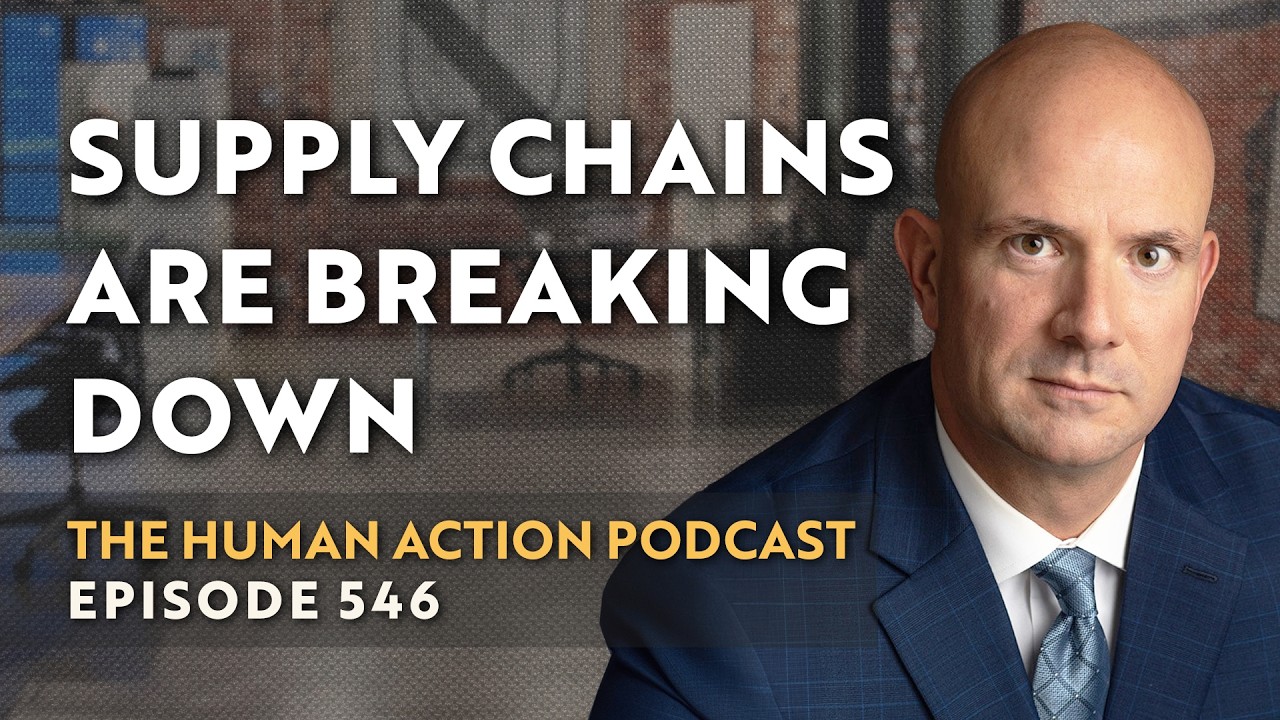
Military leverage is evaporating as fast as the oil. Breaking Points details a hollowed-out arsenal: the US has burned through 40% of its long-range stealth cruise missiles and over 1,200 Patriot interceptors. Replenishment could take six years, compromising defense plans for Taiwan. Luke Gromen notes on the Human Action Podcast that the US military now depends on China to produce missile components, creating a fatal strategic vulnerability.

Diplomacy is stalled. Donald Trump claims Iran is “collapsing,” but, as Grim notes, Tehran’s actual demand is simple: lift the illegal naval blockade before any other talks. Jeffrey Sachs, on The Tucker Carlson Show, warns the only off-ramp is acknowledging Iranian control of the strait to avoid a war that would destroy Gulf infrastructure and trigger global stagflation. The off-ramp remains untaken.


Source Intelligence

- Deep dive into what was said in the episodes

Reiner Pope – The math behind how LLMs are trained and servedApr 29

Also from this episode: (20)

AI & Tech (10)

  • Reiner Pope explains that batch size is the key variable driving the trade-off between inference latency and cost. Batching amortizes the fixed cost of fetching model weights across many user requests.
  • Without batching, serving a large model is uneconomical. Pope states the cost can be a thousand times worse than when batching just two users together.
  • A roofline model for inference time combines compute time and memory fetch time. Compute time scales linearly with batch size, while memory time includes a constant for weights and a term linear in batch size for the KV cache.
  • There is a hard lower bound on inference latency set by the time needed to read all the model's total parameters from memory into the chips, which is independent of batch size.
  • Pope solves for the batch size where compute and memory times are balanced. The formula is batch size >= (Flops / Memory Bandwidth) * (Active Params / Total Params), where the hardware ratio Flops/Bandwidth is ~300.
  • Mixture-of-experts layers use expert parallelism, where different experts are placed on different GPUs. This creates an all-to-all communication pattern that is optimal within a single rack's high-bandwidth scale-up network.
  • Leaving the rack uses a scale-out network about eight times slower than the internal NVLink. This makes crossing rack boundaries for expert parallelism a severe bottleneck.
  • Pope states the primary constraint on increasing rack size is physical: cable density, bend radius, weight, and cooling, not a fundamental technical barrier.
  • Pipeline parallelism, which places different model layers on different racks, is viable for inference because the communication pattern is point-to-point rather than all-to-all, making scale-out latency manageable.
  • Pipelining reduces the memory capacity needed per rack for model weights but does not reduce the memory needed for the KV cache, which becomes the dominant memory consumer.

Models (8)

  • This balance point implies the optimal batch size is approximately 300 times the model's sparsity ratio. For DeepSeek's sparsity of 32/256, this yields a batch size around 2000-3000 tokens.
  • In a scheduled system, a new inference 'train' departs every 20 milliseconds. Worst-case latency for a user is 40ms if they just miss a departure and must wait for the next train to complete.
  • The 20ms schedule is derived from the time to read the entire HBM capacity. For a Rubin-generation system with 288GB HBM and 20 TB/s bandwidth, this is about 15ms.
  • Pope argues increasing sparsity is a pure win for inference cost, as it reduces the active parameters and thus compute time. However, it demands larger batch sizes to amortize weight fetches and consumes more memory capacity.
  • Empirical research on mixture-of-experts shows model quality can increase with sparsity. An older paper found a 64-expert model with 270M active parameters matched the quality of a dense 1.3B parameter model.
  • He presents a heuristic cost model for model development: total cost = pre-training cost + RL cost + inference cost. He conjectures labs roughly equalize these three costs.
  • Applying this model, Pope estimates frontier models are overtrained by a factor of about 100 relative to the compute-optimal Chinchilla scaling law, due to the need to amortize training compute over vast inference usage.
  • Pope reverse-engineers API pricing to deduce system bottlenecks. Gemini charging more for contexts over 200K tokens suggests a memory-to-compute crossover point near that length.

AI Infrastructure (2)

  • Pope argues the value of large scale-up domains like Google's or NVIDIA's Rubin is not primarily memory capacity, but memory bandwidth, which directly lowers inference latency and enables longer context lengths.
  • Output tokens being ~5x more expensive than input tokens indicates decode is memory-bandwidth bound, while pre-fill is compute-bound, as pre-fill amortizes memory costs over many tokens.

4/29/26: Trump Spirals On Iran War, Oil Price Spike, Dystopian AI Car SurveillanceApr 29

  • Donald Trump claimed via Truth Social that Iran is in a 'state of collapse' and asked the US to 'open the Strait of Hormuz' as soon as possible, a statement Ryan Grim and Emily Jashinsky treat as a fantasical production of his mind.
  • According to Grim, Iran's actual proposal was not a formal deal but a demand that the US lift its naval blockade, after which Iran would outline Strait management and then discuss other topics like its nuclear program.
  • Brent crude oil reached $114 per barrel. Grim argues the Treasury Department has been artificially suppressing oil futures through short positions and currency swaps, losing taxpayer money for geopolitical purposes.
  • The UAE announced it will exit OPEC on May 1. Grim notes this is not an immediate blow as the UAE is already producing well below its quota of over 3 million barrels per day.
  • BP's profits more than doubled, beating expectations, with the Iran war cited as boosting oil prices. Grim and Jashinsky note BP's historical role in the 1953 CIA-backed coup in Iran.
  • JPMorgan Chase CEO Jamie Dimon warned of an imminent 'bond crisis' due to a confluence of risks like geopolitics and government deficits, stating 'we don't know what confluence of events causes the problem.'
  • Grim argues extreme wealth concentration makes the economy more vulnerable to crisis, citing that the 'Magnificent Seven' tech stocks comprise 30% of the S&P 500.
Also from this episode: (4)

Regulation (2)

  • A California 'billionaire tax' initiative secured enough signatures for the ballot. In New York, Mayor Adams and Council Speaker Julie Menin are pushing to reduce a tax loophole for high earners to generate nearly $1 billion.
  • The 2021 Infrastructure Investment and Jobs Act requires new cars by 2027 to have technology to passively monitor drivers and prevent operation if impairment is detected, a so-called 'kill switch.'

Politics (2)

  • A fight is underway in Congress over reauthorizing Section 702 of FISA. Grim reports House Democrats, including CBC members, are facing pressure to support reforms after the provision was used to spy on Black Lives Matter protesters.
  • Grim notes House Speaker Mike Johnson previously advocated killing FISA Section 702 but reversed his position after receiving classified briefings, calling it a 'predictable Washington cycle.'

4/28/26: Trump Lashes Out At Iran, UAE Ditches OPEC, JD Thinks Hegseth Lying About WarApr 28

  • Saagar notes the current U.S. red line against Iran focuses solely on keeping the Strait of Hormuz open, a demand detached from prior nuclear or proxy issues. The strait was fully open before the war started on February 27th.
  • Krystal cites an Axios report stating Trump told an advisor the only thing Iranians understand is bombs. She argues Trump undermined ceasefire talks by expanding the naval blockade and canceling negotiations in Islamabad.
  • Saagar reports Brent crude oil has returned to its pre-ceasefire price, indicating Iran's economic strategy is working. He notes Iran may soon fill its oil storage, forcing a critical decision to shut down production.
  • Krystal highlights Secretary Marco Rubio's Fox News interview, where he rejected Iran's new proposal to negotiate only on the Strait of Hormuz while setting aside nuclear talks, calling it unacceptable.
  • Saagar cites a Wall Street Journal report that last week saw the lowest-ever traffic through the Strait of Hormuz due to the U.S. blockade. Only one LNG tanker transited yesterday compared to the usual hundreds.
  • Krystal details a U.S. seizure of the tanker NT Majestic carrying 1.9 million barrels of Iranian oil. An Iranian official condemned the act as piracy and warned of retaliatory strikes on regional oil facilities.
  • Saagar references Jeremy Scahill's report that Iran's strategy rests on three points of leverage: munitions, markets, and the U.S. midterm elections. Iran aims to deny Trump a victory and prolong the conflict.
  • Krystal notes key U.S. allies are breaking ranks. A Japanese tanker secured transit through the Strait, and Germany's chancellor called the war a humiliating disaster for the U.S. with no exit in sight.
  • Saagar reports the UAE announced it will leave OPEC and OPEC+ on May 1st. The move, driven by financial pressure and frustration with Saudi quotas, removes 10-13% of the cartel's total production capacity.
  • Krystal cites an Atlantic report that Vice President JD Vance suspects Defense Secretary Pete Hegseth is misleading Trump about U.S. weapons stockpiles and the war's progress. Vance has raised concerns in closed-door meetings.
  • Saagar details a New York Times report on depleted U.S. munitions: 1,100 long-range stealth cruise missiles, over 1,000 Tomahawks, and 1,200 Patriot interceptors were used. Replenishing stocks could take six years, compromising plans to defend Taiwan.
  • Krystal reports that Secretary Pete Hegseth took Kid Rock on a joyride in Apache helicopters at Fort Belvoir. She frames it as a sign of the administration's misplaced priorities during an ongoing war.
  • Saagar notes the House is voting on a War Powers resolution from Josh Gottheimer to end military action against Iran within 30 days. The only Democratic co-sponsor, Jared Golden, now faces pressure to vote for his own measure.

4/27/26: Iran Threatens Massive Barrage, Germany Says Trump Humiliated By Iran, Oil Shock Officially HereApr 27

  • Krystal reports that US-Iran talks in Islamabad collapsed after Trump canceled his negotiating team's trip, citing Iran's unmet demands and internal leadership confusion.
  • Krystal notes Pakistan was interested in mediation due to its reliance on Qatar for 99% of its natural gas, requiring open Strait of Hormuz access.
  • Krystal notes Israel sent Iron Dome systems and troops to the UAE during the Iran War, indicating the UAE's direct involvement in the conflict.
  • US intelligence suggests Iran laid additional mines in the Strait of Hormuz, with the Washington Post estimating six months to clear them for normal traffic, granting Iran negotiation leverage.
  • An Iranian account warned of launching "the largest missile barrage in history" against Israel and US-allied Arab nations if attacked, highlighting their maintained ballistic missile and drone capabilities.
  • Krystal cites an NBC News report detailing billions of dollars in damage to eleven US military bases, stating the extent was far worse than publicly acknowledged.
  • Saagar reports an Iranian F-5 fighter jet bombed US Camp Buring in Kuwait on February 28, bypassing air defenses, marking the first enemy fixed-wing aircraft strike on a US base since the Vietnam War.
  • Saagar believes the US military is "profoundly less prepared" for conflict after a five-week war, noting low munition stocks and 50% of advanced weapons gone, requiring five to eight years for replacement.
  • Krystal notes a planned IAEA disclosure meeting with Iran on June 13, 2025, which might have revealed a new enrichment site, was pre-empted by US bombings.
  • A Harvard nuclear specialist stated that Iran's nuclear knowledge cannot be bombed away, and new enrichment sites the size of a grocery store can be hidden in mountainous terrain.
  • Krystal cites a Bloomberg report indicating a "billion barrel" oil supply loss is guaranteed due to the Strait of Hormuz closure, more than double the emergency inventories released in February.
  • Rory Johnston believes traders are underestimating the oil shock's impact, as the reality is "too awful to price in," leading to demand destruction spreading globally.
  • Saagar notes national gas prices are around $4.11 per gallon, reaching $6.79 in Los Angeles and nearly $6 across California, with the cheapest at $3.50 in Oklahoma.
  • A Financial Times report indicated average petrol sales in the northeastern US fell 4.3% in March, contrasting with a 0.6% growth during the same period last year, signaling significant demand destruction.
  • Goldman Sachs forecasts the US economy could lose 10,000 jobs per month this year due to the oil shock, with unemployment rising to 4.6% by the third quarter.
  • Krystal reports the German Chancellor criticized the US, stating there's no exit strategy for the conflict and that US leadership is being "humiliated" by Iran's skillful negotiation and strength.
  • Saagar notes that Israel continues to bomb Lebanon, having killed 14 people and injured 37 civilians across southern Lebanon.
Also from this episode: (4)

Diplomacy (2)

  • An Iranian advisor accused Pakistan of lacking credibility as a mediator, asserting it consistently sided with US interests and failed to challenge American positions.
  • Iranian Foreign Minister Arachi embarked on a diplomatic tour including Islamabad, Musket (Oman), and Moscow, which Saagar interprets as a direct message challenging Washington.

Politics (2)

  • Saagar states the US Treasury is defending "US dollar swap lines," which he describes as a bailout for Persian Gulf allies whose economies are being impacted by the war.
  • Krystal notes that Iranian parliamentary speaker Golliboff interpreted these swap lines as preventing disorderly sales of US treasuries and warding off threats of oil transactions being denominated in Chinese yuan.

4/24/26: Trump Floats Endless Iran War, Lebanon Journalist Triple Tap, AI Job LayoffsApr 24

  • Saagar notes that Breaking Points reached number fifteen on YouTube this month, with hosts humorously suggesting their high ranking often correlates with escalating global crises and wars.
  • Crystal highlights Trump's shifting rationale for the Iran conflict, from insisting on a temporary ceasefire due to Iranian division to now implying indefinite engagement, despite his past anti-'Forever Wars' rhetoric.
  • Trump claims he personally kept the Strait of Hormuz closed to prevent Iran from earning $500 million daily, asserting US control over the vital shipping lane.
  • Crystal reports that CBS News estimates 60% of Iran's naval capacity remains intact, challenging Trump's portrayal of a defeated Iranian military.
  • Ryan explains the US strategic goal is to halt Iran's petroleum industry by filling storage, a process that could take 4 to 8 weeks to recover from, and questions if the global economy can endure such disruption.
  • Pete Hegseth's argument that the Strait of Hormuz conflict is primarily a European and Asian problem, not American, is criticized by Emily and Ryan as dishonest, given the interconnectedness of the global economy.
  • Ryan reports that while Iran's government has internal disagreements, its factions are unified in demanding the illegal naval blockade be lifted before any negotiations can resume.
  • Ryan details the killing of Lebanese journalist Amal Khalil by an Israeli drone after she was injured and sought refuge in a home, despite public pleas from the Lebanese government and Red Cross for a ceasefire.
  • Jeremy Lfredo's direct message to the Israeli number that threatened Amal Khalil received a response claiming Khalil was a Hezbollah spy and threatening other affiliated journalists.
  • Crystal connects reports of widespread looting by Israeli soldiers in southern Lebanon, cited by Haaretz, to the logical outcome of a long-term dehumanization project against Palestinians and those resisting Israel.
  • Crystal points out that these mass layoffs come from profitable companies, whose stock prices often rise, worsening wealth inequality as company executives and top shareholders benefit at the public's expense.
  • Crystal argues that ongoing conflicts like the Iran War hinder global cooperation necessary for developing limiting principles and safeguards for AI, similar to how nuclear arms control was achieved.
  • Crystal posits that a 'walk away' strategy for the Iran conflict is unstable, given the need to restore free flow through the Strait of Hormuz, Israel's desire for war, and the tightening global economy.
  • Ryan explains that Congressman Ro Khanna's wealthy wife, with significant family money, is the source of his high stock returns, and Khanna himself has pushed legislation for blind trusts for spouses of Congress members.
Also from this episode: (7)

Diplomacy (1)

  • Crystal attributes the New York Times report on Khamenei Jr.'s health and use of written messages to a US attempt to portray Iran as chaotic, despite no evidence of internal government breakdown.

Labor (2)

  • Emily reports significant layoffs across major tech and retail companies, including Meta (8,000 employees), Nike (1,400 employees), Microsoft (7% US workforce buyouts), Oracle (20,000-30,000 employees), Amazon (16,000 corporate jobs), Block, and Dell (11,000 jobs).
  • Emily notes these layoffs are increasingly driven by AI adoption, not just economic uncertainty, leading to fears of historic unemployment levels for upcoming college graduates.

AI & Tech (1)

  • Crystal warns that the Anthropic product, Mythos, deemed too dangerous for public release, was reportedly accessed by hackers, highlighting the security risks associated with rapid AI development.

Elections (2)

  • Crystal argues that the Democratic Socialists of America (DSA) have found success by running candidates as Democrats, leveraging the party's existing infrastructure rather than building independent parties like the Greens.
  • Crystal believes the Democratic Party's base increasingly aligns with Bernie Sanders's progressive views and critiques of liberal media and leadership, creating an opportunity for a grassroots takeover of the party.

Media (1)

  • Emily clarifies that Pete Hegseth's 'Book of Tarantino' reference was a Pulp Fiction quote, not an invented Bible verse, and was wrongly characterized by some media outlets.

$200 Oil by June?—The Biggest Oil Shock in History | Rory Johnston on The Hormuz CrisisApr 29

  • A billion-barrel supply hole is draining global inventories toward a breaking point.
  • The shale revolution ended supply fears, shifting the industry's focus to demand.

UAE LEAVES OPEC, Is This The End Of Saudi Arabia and Opec Countries? | Market UpdateApr 28

  • The UAE requested an FX swap line from the Federal Reserve, a mechanism Dixon says incentivizes major holders not to sell US Treasuries and equities to prevent US borrowing costs from spiking.
  • The UAE holds $270 billion in dollar cash reserves and $1.4 trillion in total US assets, including Treasuries and infrastructure investments.
  • Dixon views OPEC as a price-fixing cartel that creates illegitimate wealth and artificially inflates energy costs, suppressing alternative energy innovation.
  • He states Saudi Arabia can produce oil for $2-10 per barrel but needs a $70 price to meet its fiscal budget for population welfare, while US producers need $50 to break even.
  • He notes oil currently trades around $170 for physical delivery in some markets despite futures prices, creating a humanitarian impact.
  • Dixon's analysis ties key financial thresholds to potential de-escalation: 30-year Treasury yields at 5%, 10-year yields at 4.5%, and WTI oil futures approaching $115.
Also from this episode: (6)

Diplomacy (2)

  • Simon Dixon says the UAE's exit from OPEC must be viewed alongside its normalization with Israel, BRICS membership, integration into China's CIPS, and role as a sanctions circumvention hub for Iran.
  • Dixon states the UAE leads Project mBridge for the BIS, a CBDC network linking Saudi Arabia, UAE, Hong Kong, China, and Thailand to facilitate gold trade.

Protocol (1)

  • The UAE is the world's third-largest Bitcoin mining country, following Iran and Russia, and positioned itself as the Middle East's crypto hub.

Politics (3)

  • Dixon argues an FX swap line lets a country print local currency to exchange for new dollars from the Fed, increasing US national debt and inflation while securing dollar liquidity.
  • A primary sanctions circumvention route involves exchanging dollars for gold, shipping it via the Strait of Hormuz to Shanghai for yuan credits, then using that yuan for Chinese exports or Iranian oil.
  • Dixon argues the current crisis is manufactured to create a global reset, transferring wealth to the financial-industrial complex, military budgets, and the surveillance state.

Mailbag Monday: Live From The Bitcoin ConferenceApr 28

  • He states Bitcoin outperformed traditional assets in the last seven crises, including COVID, the Russia-Ukraine war, and the U.S. banking crisis, due to its hybrid nature of technology and fiat liquidity.
Also from this episode: (10)

Protocol (8)

  • Jack Mallers argues the primary catalyst for Bitcoin adoption is the world realizing fiat money is broken, accelerated by geopolitics like the Strait of Hormuz closure and threats to the petrodollar.
  • Mallers cites the Pentagon telling Congress that clearing the Strait of Hormuz could take six months, implying prolonged oil price inflation and global supply chain stress.
  • He presents the U.S. granting a currency swap line to the UAE as a definitive choice to debase the dollar rather than let asset prices fall, validating the Bitcoin thesis of currency debasement.
  • Mallers frames the U.S.'s $40 trillion debt as a hole where losses must be realized, positioning Bitcoin as a way for individuals to opt out of that future wealth confiscation.
  • Mallers dismisses near-term quantum computing threats to Bitcoin, arguing hardware progress is orders of magnitude behind software and that the developer community is actively working on solutions.
  • He explains that running a Bitcoin node is critical for individual sovereignty, as it allows anyone to validate consensus rules and vote on Bitcoin's monetary properties, irrespective of their wealth.
  • Mallers defines Bitcoin's trustlessness as achieving final settlement without a trusted intermediary, which gold cannot do digitally, though its future acceptance depends on free-market salability.
  • He cites rising societal disorder - including a 6.4% increase in overall cancers and a 20% rise in brain tumors - as evidence of structural flaws that better money could help fix.

BTC Markets (2)

  • He notes that most of Strike's business volume comes from older wealth holders transferring assets into Bitcoin, not younger skeptics who lack significant capital.
  • Mallers says Bitcoin lending rates are high because institutional capital is expensive; cheaper rates would require a peer-to-peer market like Strike's planned 'yield on cash' product.

Jeffrey Sachs on the Real Origins of the Iran War and the Coming Economic DevastationApr 24

  • Jeffrey Sachs warns the unstable situation around Iran could escalate into a regional or world war, amplified by a global economic crisis caused by the Strait of Hormuz closure.
  • Sachs states that the Strait of Hormuz closure, which handles 20% of the world's energy and 30% of its fertilizer, is a key driver of the escalating global economic crisis.
  • Sachs details the severe impact of the conflict on Iran, citing "tens of billions of dollars" in damages and thousands of casualties, including "160 schoolgirls" reportedly killed by Palantir's AI system.
  • Sachs attributes US animosity toward Iran to the 1953 CIA-led overthrow of Prime Minister Mossadegh, who sought to nationalize Iranian oil, and the subsequent 1979 Islamic Revolution, which ended US control.
  • Sachs argues that the US has waged an "economic war" against Iran since 1980, arming Saddam Hussein, assassinating leaders, and using financial sanctions to destroy its economy for over 46 years.
  • Sachs states that Israel's 1996 "Clean Break Strategy" aimed for military dominance by overthrowing seven Middle Eastern governments that supported Palestinian militancy, rather than accepting a Palestinian state.
  • Sachs claims the US has been instrumental in six of the seven wars outlined in Israel's Clean Break Strategy, costing the US "$5 to $10 trillion" and destabilizing Libya, Sudan, Somalia, Lebanon, Syria, and Iraq.
  • Sachs argues that Trump's motivation for war with Iran includes revenge for the 1979 revolution and a desire to seize Iran's oil, believing he could execute a swift "decapitation" operation similar to Venezuela.
  • Sachs believes Israel is "committing suicide" by pursuing extreme violence, alienating global opinion and violating international law, while relying on potentially unsustainable "unending, unconditional" US support.
  • Sachs predicts that an escalated Gulf war would cause physical destruction of energy infrastructure, leading to global stagflation, marked by soaring oil and food prices, as detailed in his 1982 book, *The Economics of Worldwide Stagflation*.
  • Sachs warns that the combination of war in West Asia and a potential "super El Nino" could trigger unprecedented political and economic destabilization globally, surpassing shocks seen since World War II.
  • Sachs highlights Congress's failure to uphold its Article 1 constitutional duty to declare war, observing that most Republicans and Democrats have voted against exercising oversight over current conflicts.
Also from this episode: (4)

Diplomacy (1)

  • Sachs asserts that Iran has not pursued nuclear weapons, as confirmed by US intelligence, but sought a 2015 UN Security Council-backed treaty, the Joint Comprehensive Plan of Action (JCPOA), for monitoring in exchange for sanction relief.

Religion (1)

  • Sachs explains that traditional rabbinic Judaism, prevalent from "400 AD to 1970," historically advised Jews to live peacefully in their current locations, a stark contrast to modern religious Zionist calls to return to the Holy Land.

History (1)

  • Sachs notes that early secular Zionists like Theodore Herzl sought a Jewish state for national reasons, not religious ones, even considering alternative locations like Uganda for settlement.

Politics (1)

  • Sachs criticizes the US government's degraded decision-making, contrasting it with the deliberative "XCOM" during the Cuban Missile Crisis, noting current decisions are primarily Trump's, influenced by Netanyahu's "fanatical and wrong" agenda.
Human Action Podcast

Human Action Podcast

Luke Gromen on the Strait of Hormuz and Supply Chain CollapseApr 24

  • Luke Gromen, founder of FFTT LLC, a macro-thematic investment research firm, aggregates public data to identify economic bottlenecks, which are situations that cannot continue due to constraints.
  • Gromen argues that a prolonged closure of the Strait of Hormuz would be fatal to the global and US economies due to critical shortages of oil, gas, sulfuric acid, fertilizer, and rare earths.
  • Gromen predicted a nonlinear breakdown in supply chains by mid-April following the conflict, noting that even a single missing component can halt product manufacturing in a globalized, highly levered world.
  • Gromen criticizes policymakers' and markets' complacency regarding supply chain breakdowns, suggesting a cynical motive to maintain market calm and avoid seeking unfavorable peace terms for the US.
  • The initial minimal market reaction to the Strait of Hormuz closure was short-lived, with oil prices rapidly exceeding $110 a barrel before policy interventions.
  • Secretary Bessant unsanctioned Russian and Iranian oil in sequence after prices surged past $110, an action Gromen describes as a desperate attempt to loosen supplies despite strategic conflicts.
  • Gromen suggests politically connected entities may have front-run oil markets, citing a $500 million short position after a Trump tweet about Iran and a $950 million short position before a ceasefire announcement.
  • The "blockade of the blockades" by the US was likely an optics move to manage perceptions and provide leverage, as strategically, Iran was winning by simply maintaining the closure.
  • Gromen believes China's potential cutoff of rare earth exports to the US ended the war, as the US military cannot produce interceptor missiles without Chinese rare earths.
  • Dr. Murphy noted that the US is a net importer of crude oil, refuting the idea that it could easily replace supplies cut off by a Strait of Hormuz closure.
  • Gromen asserts China holds leverage over the US due to dominance in rare earths and electrical equipment, resulting from a patient long-term investment strategy while the US engaged in unproductive wars.
  • Gromen notes that a quorum of US military components are made in China, creating a strategic vulnerability if the US requires China to produce missiles aimed at itself.
  • Luke Gromen argues the weaponization of the dollar through sanctions, like kicking Iran out of SWIFT in 2012, has strategically backfired by pushing Russia and China together to develop alternatives.
  • China responded by launching its China International Payment System (CIPS) by 2015, which is more comprehensive than SWIFT, handling messaging, settlement, and full payment services.
  • China has established offshore yuan clearing banks in major gold hubs globally (London, Switzerland, Dubai, Singapore, Hong Kong) and has tested the e-yuan in oil and gold markets.
  • Gold has already supplanted Treasuries as the largest reserve asset for global central banks on an adjusted basis, signifying a shift away from dollar-denominated reserves at gold's current value.
  • To obtain yuan for trade, countries must sell dollars, buy gold, and then sell that gold to China for yuan, a system already in place for transactions with nations like Iran.
  • For four of the past five months, non-monetary gold has been the United States' largest single export, primarily destined for China, Hong Kong, Switzerland, and Gulf countries.
  • Gromen suggests this gold outflow indicates China may have already activated a switch, demanding gold for critical goods like rare earths instead of dollars or Treasuries.
  • Gold limits government and central bank power, an insight famously shared by Alan Greenspan before his tenure as Fed Chair, as gold prevents unlimited debt and financialization.
Also from this episode: (3)

Business (1)

  • Even if the Strait of Hormuz reopens quickly, physical constraints in restarting plants, like those for aluminum, mean serious disruptions would continue for months, worsening daily if closure persists.

Politics (2)

  • China viewed the US response to the 2008 financial crisis, particularly quantitative easing and devaluation, as a 'financial attack' on their US bond holdings.
  • China ceased buying US bonds in late 2013, instead recycling dollars into hard assets like mines and ports globally, and committed to dominating future industries through its Made in China 2025 initiative.