AI agents erase software moats and shift value to physical scarcity
- AI agents destroy the economic value of code, making traditional software ventures uninvestable.
- The resulting super-abundance forces capital into scarce assets like Bitcoin and energy infrastructure.
- Nvidia and startups are building the security and desktop layers for corporate agent adoption.
Jensen Huang compared OpenClaw to Linux, but the analogy undersells the upheaval. AI agents are not just a new platform; they are erasing the economic foundation of software itself. Naval declared pure software 'uninvestable' for venture capital because any application can now be hacked together instantly and scaled by autonomous agents. The terminal value of companies like Salesforce and Adobe is collapsing into what macro investor Jordi Visser calls a 'SaaSpocalypse.'
This isn't about better tools for developers. It's about the end of development as a scarce skill. 'Vibe coding' - using natural language to command AI - has expanded software creation from 0.1% to maybe 3% of the population, according to Naval. The activation energy is gone. The professional ceiling remains, but the floor has risen so high that the traditional software moat is worthless.
'Pure software is uninvestable for venture capital now because it can be hacked together instantly and agents will soon build scalable versions.'
- Naval, Naval
The value is shifting violently to scarcity. Visser argues AI produces such an abundance of code and intelligence that investors are fleeing to the only things that cannot be replicated: atoms and math. He positions Bitcoin as the cleanest expression of this 'scarcity portfolio,' a hedge against the deflationary pressure of AI on everything digital. This thesis is spreading as agentic engineering dismantles the knowledge economy.
On the ground, the transition is messy. Armin Ronacher found that AI-generated code lacks a human's pain feedback loop. 'Senior engineers say no to avoid future complexity pain, but agents and junior engineers empowered by agents say yes,' accelerating codebase bloat. Mario Zechner built his minimalist, self-modifiable agent Pi because corporate tools like Claude Code became unreliable, changing system prompts with every release and breaking deterministic workflows.
'AI-generated code lacks a human's pain feedback loop. Senior engineers say no to avoid future complexity pain, but agents and junior engineers empowered by agents say yes.'
- Armin Ronacher, The Pragmatic Engineer
The enterprise is moving past experiments. Nathaniel Whittemore reported that Nvidia’s launch of Nemo Claw aims to provide the hardened security layer CIOs demand, wrapping the agentic stack in a policy-based sandbox. Meanwhile, a new wave of 'AI computers' from startups like Manis and Adaptive are shifting agents from cloud chat windows to the local desktop, where they can automate tedious tasks on a user's own machine.
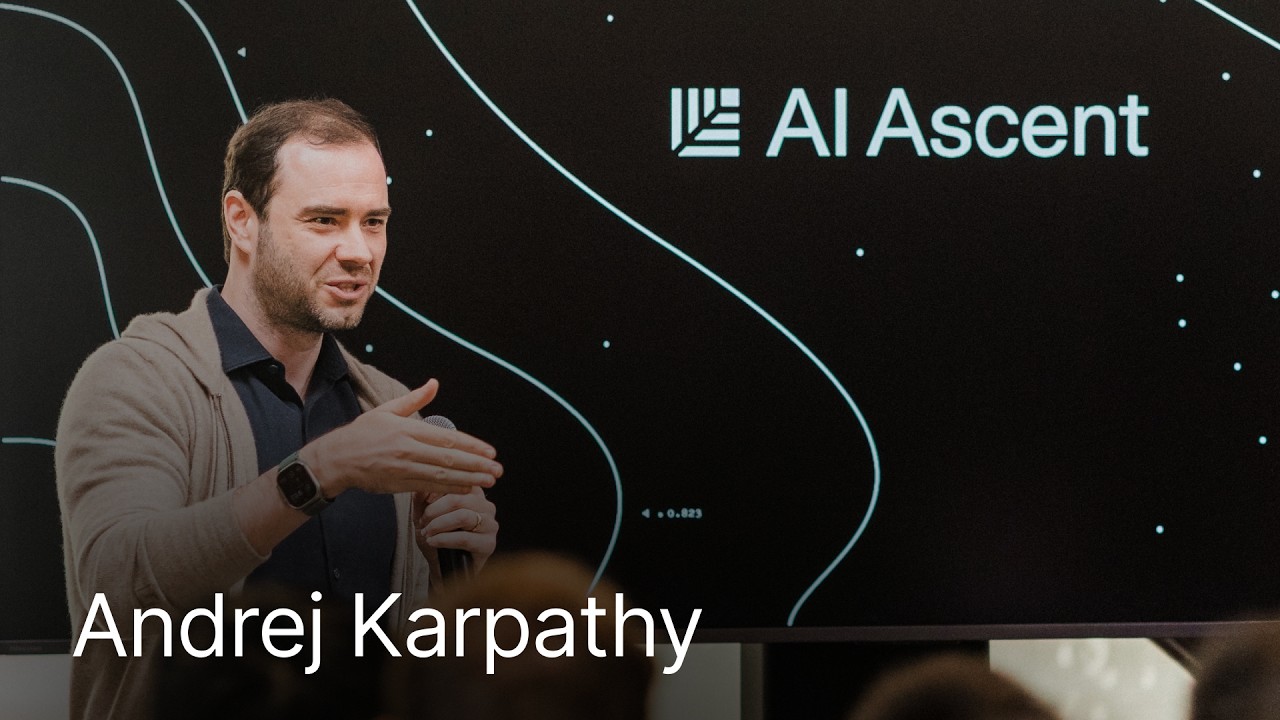
Andrej Karpathy frames the next phase as 'agentic engineering.' The human role shifts from writing syntax to directing a fleet of 'intern entities' and designing the architecture they implement. The bottleneck becomes taste and oversight, not execution. He argues future infrastructure must be built for agents, not humans, prioritizing 'sensors and actuators' over user interfaces.
The consensus across venture, engineering, and macro circles is clear: software as an investable asset class is over. The capital is already rotating into the physical and cryptographic layers that AI cannot copy. The SaaSpocalypse has begun.
Source Intelligence
- Deep dive into what was said in the episodes

Nathaniel Whittemore
How Harness-as-a-Service Will Change Agents • Apr 30
- Nathaniel Whittemore argues OpenClaw’s release in Q1 2025 marked a 'second moment' for AI by proving agent viability and triggering widespread experimentation with agentic systems across businesses.
- Kevin Simbach claims OpenClaw transformed agents from technical demos into accessible tools after the Opus 45 and 46 releases, demonstrating user demand for actionable work over simple chat.
- Perplexity CEO Arvin Shrinabas argues the full AI agent potential requires a computer’s complete canvas to bridge local files and cloud systems, a design pattern echoed by Manis and Adaptive with their new desktop apps.
- Manis introduced a desktop app called 'My Computer' for local task automation like organizing files and building Mac apps, citing the limitation of cloud-only agent sandboxes.
- Adaptive launched 'Adaptive Computer', an always-on personal AI agent for automating business software tasks, featuring 'encoded memory' to learn and replicate user workflows.
- Whittemore's Enterprise Claw program saw a roughly even split between participants choosing OpenClaw versus other agent platforms, indicating enterprise demand exists even before mature tooling.
Also from this episode: (5)
Enterprise (1)
- Nvidia CEO Jensen Huang stated every global software company now needs an OpenClaw strategy and introduced Nemo Claw, an enterprise-grade toolkit adding security guardrails and sandboxing to the OpenClaw project.
Open Source (1)
- The competitive response includes simplified forks like Nanobot and secure self-hosted versions like Ironclaw, while Notion launched custom agents and Perplexity rebuilt its product as a full agentic system called Computer.
AI & Tech (3)
- The Wall Street Journal reports OpenAI is refocusing on enterprise productivity, with applications chief Fiji Simo stating the company must abandon 'side quests' like consumer apps to counter competitive threats.
- OpenAI integrated sub-agents into Codeex, allowing parallel task delegation. Greg Brockman noted GPT-5.4's API adoption hit 5 trillion tokens daily within a week, reaching a $1 billion annualized net new revenue run rate.
- Critic Dwayne OnX argues OpenAI’s GPT-5.4 fails at UI design and lacks aesthetic judgment, requiring explicit design file inputs to produce acceptable work.
How To Build a Personal Agentic Operating System • Apr 25
- Nofar Gaspar developed the Agent OS training program to help users build a platform-agnostic agentic operating system, emphasizing that optimal AI results require a deliberate underlying system, not just individual tools.
- The Agent OS is designed for knowledge work - strategy, communication, operations, decision-making, and research - areas where professionals can leverage AI systems beyond just coding applications.
- Nofar Gaspar notes that agentic tools like Cursor, Claude Code, and OpenClaw are converging in capabilities, making the underlying personal system more critical than the specific tool choice.
- The Agent OS is built from human-readable text files, ensuring portability; users can switch or add new AI tools by simply pointing them to the same foundational folder of files.
- The first layer, 'Identity,' defines the agent's persona and rules; Nofar Gaspar recommends having an AI interview the user with around 15 questions to draft this file, aiming for an initial 70% accuracy that can be refined over three weeks.
- The 'Skills' layer comprises reusable instruction sets for repeated workflows, like meeting prep or daily briefs, which Nofar Gaspar estimates knowledge workers have 20 to 30 patterns for.
- 'Connections' enable agents to interact with real-world systems like email or calendars. Nofar Gaspar strongly recommends starting with read-only access for a few weeks due to daily incidents of agents misusing write permissions.
- The final layer, 'Automations,' allows agents to run tasks unsupervised, but carries significant risk; only automate trusted workflows, produce drafts for review, and always maintain logs.
- Nofar Gaspar argues that building the Agent OS creates compounding returns; while the first agent might take a weekend, subsequent agents built on the established system can be created in an afternoon, inheriting existing knowledge.
Also from this episode: (3)
Models (2)
- 'Context,' the second layer, supplies specific personal and organizational knowledge that models lack, serving as an on-demand library of 3-5 focused, single-page files that are regularly updated.
- 'Memory' is a crucial and rapidly evolving layer in AI tools; Nofar Gaspar advises users to understand their tool's memory limitations and consider adding specialized memory structures like decision logs or relationship context.
Safety (1)
- 'Verification' involves quick checks (3-5 under a minute) to prevent erroneous outputs and periodic audits to maintain system relevance, as an un-audited OS has an estimated shelf life of eight weeks.

Mastering AI Video Marketing w/ Magnific CEO Joaquín Cuenca Abela | AI Basics • Apr 30
Also from this episode: (8)
AI Infrastructure (4)
- Joaquin Cuenca Abela demonstrates that Magnific can produce a cinematic, post-apocalyptic launch video concept from scratch in 24 hours using only text prompts, character creation, and logo modification.
- Magnific integrates third-party state-of-the-art models, including from Google, alongside proprietary upscaling and skin-enhancer models, to provide users with the best available creative output.
- Jason Calacanis estimates a professional 5-minute launch video could cost $50k-$100k, while Joaquin states Magnific's generation cost is roughly 10 cents per second, or about $1 per second factoring in multiple attempts.
- Joaquin argues AI video tools raise both the creative ceiling and floor, enabling projects that were previously too expensive to get greenlit while also empowering smaller teams and individual creators.
Enterprise (1)
- Joaquin says Magnific's customer base spans from Hollywood studios and large marketing departments to small creative teams, with exponential growth in Hollywood adoption for production and pre-visualization.
AI & Tech (3)
- Gal Gadot told Jason Calacanis that AI tools allow film productions to cut costs by two-thirds, letting actors focus on performance and enabling a potential Cambrian explosion of new content.
- Joaquin believes AI will match the creativity of some humans but cannot replicate human individuality, predicting increased demand for people who can inject their unique experiences and storytelling into projects.
- Joaquin notes that while AI can already localize static ads across languages and cultural details, generating hundreds of localized video variants remains error-prone and requires better steering and validation systems.
Drill pickle: oil prices still misjudge shock • Apr 30
Also from this episode: (14)
Energy (6)
- The current oil supply shock is the largest in history, with a 13 million barrel per day deficit from the Strait of Hormuz closure, far exceeding the 3 million barrel per day disruption feared from the Russia-Ukraine war.
- Oil prices around $125 per barrel are misleadingly low because buffers absorbed the initial shock. These included a pre-war market surplus, increased Gulf exports before conflict, and the release of rich countries' strategic petroleum reserves.
- Hidden demand destruction in developing nations is masking the true deficit. Cooking oil and petrochemical feedstock shortages in Asia and Africa have already rationed consumption outside major tracked markets.
- Mathieu Favas argues oil prices must rise further to ration consumption in rich countries as buffers deplete, forcing a contraction in demand for gasoline, diesel, and jet fuel.
- Reopening the Strait of Hormuz would not provide immediate relief. Restarting production, repositioning tankers, and refining crude would take three to four months before markets normalize.
- The UAE's departure from OPEC matters for the future. It could export more post-crisis and may encourage other members to leave, potentially leaving Saudi Arabia alone to manage production cuts.
Markets (1)
- Financial markets react asymmetrically to oil news. Prices fell $10 on a false reopening announcement but rose only $5 when it was retracted, partly due to algorithmic traders reacting to headlines over fundamentals.
Politics (3)
- Polls indicate the French populist right, the National Rally, is the only certainty for the 2027 presidential runoff, with Marine Le Pen or Jordan Bardella as its candidate.
- Sophie Pedder says the French centre and left are fragmented with no clear frontrunner to oppose the National Rally, risking a final choice between political extremes.
- Succession for Macron's centre hinges on a rivalry between former prime ministers Édouard Philippe, currently leading in polls, and Gabriel Attal, who leads Macron's Renaissance party.
Elections (2)
- A July 7th court appeal ruling will determine if Marine Le Pen can run for president; if banned, Jordan Bardella will lead the National Rally ticket.
- Sophie Pedder notes French presidential polls 12 months out are historically unreliable, with half of the last six elections failing to predict the final runoff candidates.
Sports (2)
- Brazil's football team qualified fifth in South America for the expanded 48-team World Cup, winning only eight of its 18 qualification matches.
- Brazil holds the best men's World Cup record with 76 victories in 114 matches and is the only country to have played in all 22 tournaments.
Sequoia Capital
Andrej Karpathy: From Vibe Coding to Agentic Engineering • Apr 29
- Karpathy states that OpenClaw's installation exemplifies software 3.0. Instead of a complex bash script, you copy-paste instructions for an agent, which uses its intelligence to adapt to the environment and debug issues.
- Karpathy distinguishes vibe coding, which raises the floor for all programmers, from agentic engineering, which preserves professional software quality standards while using agents to accelerate development.
- Karpathy suggests hiring for agentic engineering should involve a large, practical project like building a secure Twitter clone and then stress-testing it with adversarial agents, not puzzle-solving.
- Karpathy argues that as agents handle more implementation, human skills like aesthetic judgment, taste, system design, and oversight become more valuable, not less.
Also from this episode: (9)
Models (7)
- Andrej Karpathy defines software 1.0 as explicit rules, software 2.0 as learned weights, and software 3.0 as programming via prompting and the LLM context window as a lever over an interpreter.
- Karpathy says his MenuGen app, which uses OCR and an image generator to illustrate menus, is rendered obsolete by software 3.0. The raw approach is to give a menu photo to Gemini with NanoBanan and get a directly annotated image.
- Karpathy argues LLMs enable new applications, like automated knowledge base creation from documents, which couldn't exist before because there was no code to reframe unstructured data.
- Karpathy posits that future computing could invert the current architecture. Neural networks would become the host process, with classical CPUs serving as co-processors for deterministic tasks.
- Karpathy's verifiability framework holds that LLMs excel in domains where outputs can be verified, like code and math, because frontier labs use reinforcement learning with verification rewards during training.
- Karpathy cites the 'car wash' problem as current jaggedness: state-of-the-art models can refactor a 100k-line codebase but incorrectly advise walking 50 meters to a car wash.
- Karpathy notes that GPT-4's chess capability improved significantly from GPT-3.5 not just from scaling, but because a large amount of chess data was added to its pre-training set.
AI & Tech (2)
- Karpathy describes current infrastructure as built for humans, not agents. His pet peeve is documentation that tells a human what to do instead of providing text to copy-paste directly to an agent.
- Karpathy endorses a tweet stating 'you can outsource your thinking but you can't outsource your understanding.' He sees LLM knowledge bases as tools to enhance, not replace, human understanding.

Naval
On Vibe Coding • Apr 29
- In December 2025, coding agents reached an inflection point with Claude Opus 4.5, making them feel like fast, free junior programmers that can solve thorny problems.
- These agents operate within a Unix shell environment, giving them native access to Unix commands, file systems, cron jobs, and spawning tasks. This makes them effective for text-based command execution.
- Naval declares pure software is uninvestable for venture capital now because it can be hacked together instantly and agents will soon build scalable versions. He says VC must look to hardware, network effects, and AI model training.
- Having multiple AI agents review code in a pull request council leads to groupthink. Naval finds they rarely contradict a user's leading opinion because they lack theory of mind and are designed to please.
- Naval built a bug reporting system where Claude automatically reviews reports every 24 hours and proposes fixes. This reduces his role to final gatekeeper, previewing a future of agent-driven, user-collaborative software maintenance.
Also from this episode: (6)
Coding (2)
- Naval built a personal app store that lets him oneshot custom apps like a workout tracker, which then appear on his phone. He notes Apple's device keying prevents wide distribution but allows apps for friends and family.
- Vibe coding expands software creation from 0.1% of the population to maybe 3%, Naval estimates. It requires a clear vision and basic computer understanding, but eliminates team compromises and activation energy.
AI & Tech (4)
- Coding is easier to train AI on than creative writing because it offers vast data and easy verification through compilation and tests. Domains with sparse data or subjective quality, like creative writing, remain human opportunities.
- State-of-the-art context windows are about one million tokens, but as codebases grow, models lose the plot. This forces the human operator to guide architecture and debugging, preventing hacks and preserving features.
- Naval uses different AI models for different strengths: Claude for visual artifacts and meeting his level, ChatGPT as the all-around OG, Gemini for search and YouTube access, and Grok for unneutered truth and technical problems.
- Naval argues conversational AI agents will make dedicated phone interfaces obsolete, eroding Apple's software advantage. He says Apple's reliance on Google's Gemini for AI is a strategic mistake that will cap its long-term growth and market value.

The Pragmatic Engineer
Building Pi, and what makes self-modifying software so fascinating • Apr 29
Also from this episode: (10)
AI & Tech (6)
- Mario Zechner built Pi because he wanted a simple, stable agent after Claude Code became unreliable. He reverse-engineered Claude Code and found its system prompts and tool definitions changed with every release, breaking his workflows.
- Pi is a minimalist, self-modifiable coding agent. Its core provides read, write, edit, and bash tools with extensive hooks, allowing users to ask Pi to modify its own TUI, add features like MCP support, or tailor it for specific workflows like game development.
- Armin Ronacher interviewed over 30 engineering teams and found AI agent adoption exploded after holiday breaks like Christmas 2024. He says adoption requires a two-to-three week learning period that is difficult during normal work sprints.
- Armin Ronacher argues AI-generated code lacks a human's pain feedback loop. Senior engineers say no to avoid future complexity pain, but agents and junior engineers empowered by agents say yes, accelerating codebase bloat and deterioration.
- Non-engineers like product managers now directly submit AI-generated pull requests. Armin Ronacher cites cases where marketing teams modify websites and sales teams build non-existent features into demos that land in repositories.
- Both hosts argue the real value of AI agents is automating tedious work to free up human time for design and polish, not maximizing token output. They say the current hype pushes for unsustainable speed at the cost of quality and engineer well-being.
Coding (4)
- Mario Zechner auto-closes all first-time pull requests to filter out AI-generated spam. His GitHub workflow posts a comment asking for a human-written issue; agents ignore the comment, but humans respond, earning future PR privileges.
- Mario Zechner believes MCP is overly complex and non-composable for developer tasks, favoring CLI-like code execution. He argues agents are creative with CLI pipes but MCP servers that dump entire API specs create useless tool sprawl.
- Armin Ronacher warns the industry's 'dark factory' approach of deploying armies of agents with vague specs will produce low-quality software. The output quality is bounded by the mediocre training data the models use to fill specification gaps.
- Armin Ronacher sees a future reckoning where engineering teams realize they cannot maintain their codebases without AI providers, creating dangerous vendor lock-in. He expects this dependency and its cost to become a major industry conversation.

UAE LEAVES OPEC, Is This The End Of Saudi Arabia and Opec Countries? | Market Update • Apr 28
- The UAE is the world's third-largest Bitcoin mining country, following Iran and Russia, and positioned itself as the Middle East's crypto hub.
Also from this episode: (10)
Diplomacy (2)
- Simon Dixon says the UAE's exit from OPEC must be viewed alongside its normalization with Israel, BRICS membership, integration into China's CIPS, and role as a sanctions circumvention hub for Iran.
- Dixon states the UAE leads Project mBridge for the BIS, a CBDC network linking Saudi Arabia, UAE, Hong Kong, China, and Thailand to facilitate gold trade.
Fed (1)
- The UAE requested an FX swap line from the Federal Reserve, a mechanism Dixon says incentivizes major holders not to sell US Treasuries and equities to prevent US borrowing costs from spiking.
Macro (2)
- The UAE holds $270 billion in dollar cash reserves and $1.4 trillion in total US assets, including Treasuries and infrastructure investments.
- Dixon's analysis ties key financial thresholds to potential de-escalation: 30-year Treasury yields at 5%, 10-year yields at 4.5%, and WTI oil futures approaching $115.
Politics (3)
- Dixon argues an FX swap line lets a country print local currency to exchange for new dollars from the Fed, increasing US national debt and inflation while securing dollar liquidity.
- A primary sanctions circumvention route involves exchanging dollars for gold, shipping it via the Strait of Hormuz to Shanghai for yuan credits, then using that yuan for Chinese exports or Iranian oil.
- Dixon argues the current crisis is manufactured to create a global reset, transferring wealth to the financial-industrial complex, military budgets, and the surveillance state.
Business (2)
- Dixon views OPEC as a price-fixing cartel that creates illegitimate wealth and artificially inflates energy costs, suppressing alternative energy innovation.
- He states Saudi Arabia can produce oil for $2-10 per barrel but needs a $70 price to meet its fiscal budget for population welfare, while US producers need $50 to break even.

Has Bitcoin Bottomed? Jordi Visser on AI, Inflation, and Moats • Apr 27
- Jordi Visser argues that AI accelerates wealth distribution problems, which have grown since the personal computer era, by disrupting human intellect and physical labor, making Bitcoin an inevitable and chosen scarcity asset in this new paradigm.
- Jordi Visser observes that the current Bitcoin cycle is distinct from previous ones because altcoins have not reached their 2021-2022 highs, suggesting a reshaping of the crypto market reminiscent of the post-dot-com bubble era.
- Jordi Visser asserts that Bitcoin's strongest historical performance, with annualized returns of 247%, occurred when year-over-year CPI was above three-month bills and the Fed was on hold or easing, a regime he believes the market is rapidly approaching.
- Jordi Visser uses a diverse AI tool stack daily, including Perplexity, Gemini, ChatGPT, GROQ, and Claude, to conduct rapid research and generate content, highlighting the significant productivity gains for individuals.
Also from this episode: (10)
BTC Markets (2)
- David Hoffman notes that while many cycle investors on Bankless remain bearish on crypto's short-term bottom, Jordi Visser holds a bullish outlook, believing Bitcoin has already bottomed and that the current crypto winter will be the mildest ever.
- Jordi Visser describes Bitcoin's recent price action as an 'IPO' event, involving a significant distribution from early holders to new buyers, including ETFs, which have continued to accumulate during price dips.
AI & Tech (3)
- Jordi Visser predicts that artificial intelligence and inflation will drive investors toward a 'scarcity portfolio,' ultimately concluding with Bitcoin and other assets possessing similar properties, due to a massive economic transition.
- Jordi Visser explains that AI is destroying the moats of abundance-based software businesses, leading to a 'SaaSpocalypse' where companies like Salesforce and Adobe see profits eroded as AI creates super abundance, making their terminal value questionable.
- Jordi Visser states that AI acts as the new quantitative easing (QE), enabling companies to reduce labor while growing, contrasting with traditional QE which aimed to keep businesses alive by maintaining credit flow.
AI Infrastructure (2)
- Jordi Visser identifies a 'compute shortage' as a critical current issue, as AI adoption rates have outpaced the supply of data centers and necessary hardware, potentially slowing companies' ability to replace labor and impacting margins.
- Jordi Visser's portfolio is heavily weighted towards 'scarcity assets' supporting the AI infrastructure, including memory stocks like Micron and Pure Storage, chip-related companies like Marvell, and raw material producers like silver miners and Brazilian mineral companies.
Macro (2)
- Jordi Visser forecasts a period of inflation driven by underinvestment in physical infrastructure like power and chips needed for AI, alongside rising commodity prices for copper, silver, and energy, despite AI's long-term deflationary potential.
- Jordi Visser notes that year-over-year CPI is currently 3.3%, predicting it will reach 3.6% or higher after the next print in early May, potentially surpassing 4% due to filtering effects from rising diesel and plastic prices.
Markets (1)
- Jordi Visser argues that the S&P 500 will likely remain near current levels a decade from now, despite a doubling of the economy, as AI disrupts public companies and shifts value creation to a decentralized world of entrepreneurs.