Brian Armstrong replaced 14% of Coinbase's workforce with 'AI-native pods.' He set a target for 50% AI-written code and fired engineers who refused tools like GitHub Copilot. Armstrong claims small teams with AI outpace full departments, but host David Bennett argues the one-person-team model ignores human psychology and siloes information.
"A single senior developer using agents can now outproduce a team of fifty traditional workers."
- Mario Zechner, David Ondrej Podcast
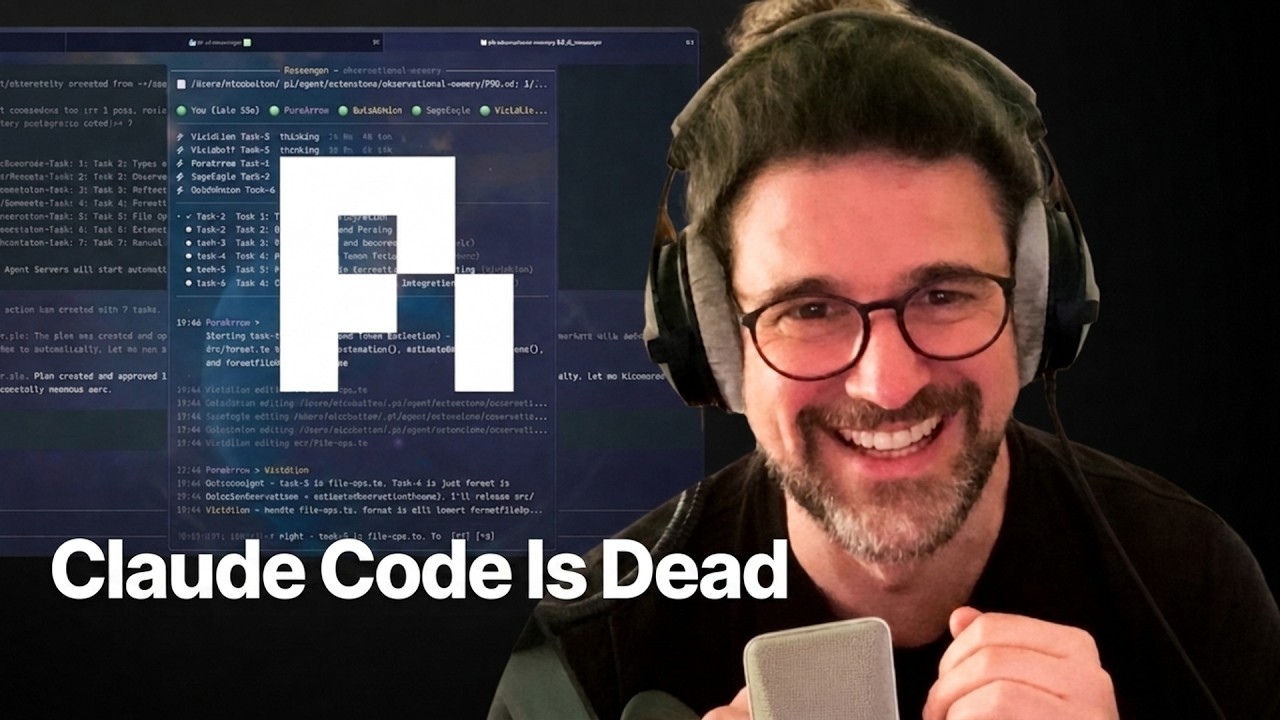
Mario Zechner built his own agent, Pi, to escape the bloat of commercial tools. He says most perceived model degradation comes from messy UI updates, not the models themselves. Total control over the system prompt ensures reliability. For him, 'total slop' code that saves time beats perfect code that takes all day.
This shift makes high-level architectural thinking more valuable than syntax. Zechner warns agents are trained on 'shitty code' and will suggest outdated architectures by default. The human must act as the architect. His wife, a linguist, quintupled her scientific output by using agents to write Python scripts without learning the language.
Nathaniel Whittemore notes CEOs use AI narratives as an 'easy alibi' for layoffs while core markets crater. Robinhood saw a 47% dip in crypto trading revenue. The media swallowed the AI story, ignoring pandemic overhiring. Axios questioned it.
Enterprise coding agents are draining compute. OpenAI shuttered its Sora app and walked from a Disney deal. Anthropic committed $200 billion to Google Cloud over five years - over 40% of Google's $462 billion backlog. Meta bets $145 billion on consumer AI, integrating a shopping agent into Instagram by Q4.
"The focus on 'AI native pods' and managers as 'player-coaches' provides a futuristic gloss to a standard cost-cutting exercise."
- Nathaniel Whittemore, The AI Daily Brief
The SAS apocalypse is here. When an agent can build a bespoke tool for pennies, per-seat software subscriptions plummet. Whittemore says markets stopped asking if AI would work and started fearing it worked too well. Startups like Pulsia hit $6 million in revenue with one founder and zero employees.
The question is how far the cull goes.