Stablecoins extend dollar dominance as gold overtakes Treasuries
- Dollar stablecoins vacuum global liquidity into US Treasuries, acting as digital eurodollars.
- Gold has overtaken Treasury bonds as the world's top reserve asset by weight.
- Governments are swapping monetary engines mid-flight to avoid sovereign debt collapse.
The dollar isn't dying. It's being digitized, securing America's financial hegemony through stablecoins while the rest of the world turns to gold.
Peruvian Bull, writing for Danny Knowles’ What Bitcoin Did, sees stablecoins as 'crypto eurodollars' accelerating a $200 trillion offshore dollar market. Borrowers outside the US must sell local currency to buy dollars to service interest, creating perpetual demand. Stablecoins turn that cycle into a vacuum for Treasury bonds, lowering US interest rates and extending spending power.
"By turning the global south into a buyer of US debt, stablecoins effectively lower domestic interest rates and extend the US government’s spending power."
- Peruvian Bull, What Bitcoin Did
The structural demand is clear: foreign ownership of net US Treasury issuance collapsed from 71% between 2008 and 2015 to just 15% from 2015 to 2022, according to Bull. JP Morgan is proposing digitized deposit stablecoins, signaling institutional adoption.
But the global collateral system is splitting. Vince Lanci, speaking on Marty Bent's TFTC, argued gold has overtaken US Treasuries as the world's top reserve asset by weight. The ECB confirmed gold now represents 27% of global reserves, while Treasuries fell to 22%. Lanci said this admission signals desperation as BRICS nations build a parallel system of vaults and gold repo markets.
"Gold markets are now pricing based on dollar strength and Fed rate expectations again, after two years of decoupling."
- Vince Lanci, TFTC
Stablecoins offer the US a more efficient tool for exporting inflation and deepening its grip on emerging markets, extending the dollar's dominance. Meanwhile, Gold offers the rest of the world an asset beyond Washington's reach.
The system is undergoing a controlled takedown. Lanci compares it to swapping a car's engine at 80 mph. The legacy fiat engine is failing under sovereign debt; a new one - CBDCs, AI productivity, and hard-asset collateral - is being installed in real-time. Governments need this new plumbing to sustain the Ponzi of social obligations amid demographic shifts and technological overreach.
Source Intelligence
- Deep dive into what was said in the episodes

How Re is Rebuilding the $1T Reinsurance Market with Stablecoins | Karn Saroya & Avichal Garg • Jun 18
- Karn Saroya argues reinsurance offers returns tied to physical events like hurricanes, structurally decoupled from market sentiment and Fed policy.
- Re operates with a Bermuda Class IGI license. The innovation is the funding rail, using stablecoins for global liquidity while retaining traditional actuarial models to price real-world risk.
Also discussed on this episode: (3)
Protocol (1)
- Avichal Garg says tokenizing these risks lets stablecoin holders access insurance-linked securities previously reserved for massive institutional funds.
AI & Tech (2)
- Re replaces the back office of incumbent reinsurers like Swiss Re. Smart contracts handle capital coordination and enable real-time reserve auditing, cutting massive administrative overhead.
- This hybrid model solves the trust problem in RWAs by combining licensed underwriting with decentralized settlement, moving money faster than the legacy banking system.
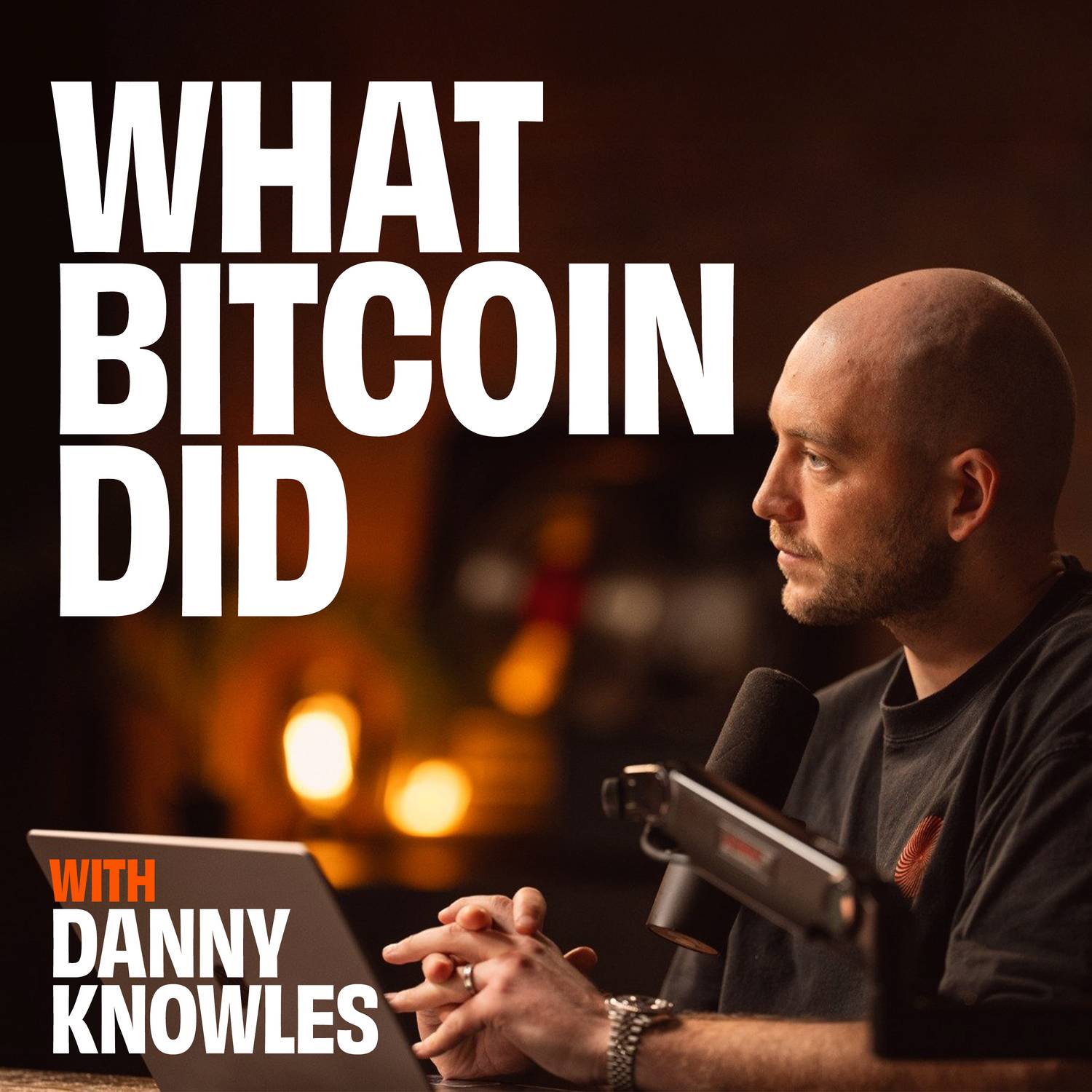
Danny Knowles
The Dollar Endgame Is Not What You Think | Peruvian Bull • Jun 17
- Roberto says US Treasury debt ownership by foreigners collapsed: they bought 71% of net issuance from 2008-2015, but only 15% from 2015-2022.
- Roberto cites Brent Johnson's stablecoin analysis, arguing digital eurodollar rails increase dollar velocity and generate front-end treasury demand.
- Roberto observes JP Morgan is proposing digitized deposit stablecoins, signaling institutional adoption but maintaining centralized control.
Also discussed on this episode: (16)
Macro (10)
- Roberto argues the dollar's status as the sole global currency issuer forces the US into a liquidity paradox: print excessively or starve global trade.
- Roberto cites Japan as the monetary policy pioneer, noting it invented QE in March 2001, QQE in September 2013, and yield curve control in 2016.
- Roberto states Japan's debt-to-GDP ratio stands at 263%, with private debt at 120%, making growth impossible without financial repression.
- Roberto says Japan's QQE saw the Bank of Japan become the top shareholder in 70 Nikkei firms and own 10% of total Japanese stock market capitalization.
- Roberto argues the yen carry trade, worth $4-5 trillion plus derivatives, exploded when Fed hikes widened the rate differential, pushing yen to 160.
- Roberto notes Japan spent $120 billion on currency interventions and lifted yield curve control caps, but hiking rates now to combat weakness is unsustainable.
- Roberto claims the eurodollar market, including derivatives, exceeds $200 trillion, embedding massive dollar demand that perpetuates the system.
- Roberto points to a Heisenberg report finding 54 of 55 nations above 120% debt-to-GDP hyperinflated or defaulted; Japan is the sole exception.
- Roberto describes Japan's lost generation: cultural homogeneity and central bank sedation via zero rates eviscerated entrepreneurial spirit and birth rates.
- Roberto notes US interest expense is $1.2 trillion annually, consuming 24% of federal tax receipts and rivaling defense spending.
Protocol (3)
- Roberto believes Bitcoin solves Triffin's dilemma because its decentralized issuance lets any nation earn or trade it without censorship.
- Roberto argues stablecoins have centralized control akin to CBDCs, making them vulnerable to censorship like Iran's frozen payments.
- Roberto believes Bitcoin adoption as currency requires both its superior attributes and a repellent force from fiat collapse.
Markets (1)
- Roberto explains the Dollar Milkshake theory: dollar strength persists because capital flows chase US stock market returns, creating an artificial buoy.
Banking (1)
- Roberto contends central banks have more tools than just QE to create liquidity without immediate CPI inflation, citing the BTFP and SLR exemption.
Fed (1)
- Roberto says Fed Chair Warsh faces a paradox: he cannot lower rates and shrink the balance sheet long-term, as past attempts triggered market crashes.

Marty Bent
#757: The Treasury Is Failing You with Vince Lanci • Jun 13
- Vince Lanci says the ECB is pushing this news now because they fear dollar stablecoins will undermine the Eurozone's monetary control and their planned digital euro.
- Vince Lanci notes stablecoins present a privacy risk; a digital euro wallet would expose Bitcoin purchases to the ECB, while a dollar stablecoin could allow transactions beyond their control.
- Marty Bent points to equity stakes in critical industries as quasi-nationalization under wartime footing, suggesting creeping authoritarianism in the U.S. to compete with China.
- Vince Lanci says gold markets are now pricing based on dollar strength and Fed rate expectations again, after two years of decoupling. He expects gold to move higher as the Fed won't truly fight inflation.
- Vince Lanci predicts persistent inflation from the FIFA World Cup and U.S. semi-quincentennial spending, echoing the post-1976 Philadelphia bicentennial inflationary period.
Also discussed on this episode: (7)
Macro (4)
- Vince Lanci argues the global financial system runs on collateral, not currency. The transition from gold to U.S. Treasury securities as collateral underpinned Bretton Woods and its breakdown.
- The ECB revealed gold has overtaken U.S. Treasuries as the top reserve asset, with gold at 20.27% and Treasuries at 22%. Vince Lanci believes this signals a shift in trusted collateral.
- China and BRICS nations are establishing vault networks to allow gold to be used as High Quality Liquid Asset collateral, enabling countries to repo their gold for infrastructure projects.
- Lanci sees a controlled takedown of the Treasury-centric system underway, likening it to swapping an engine while the car is moving. The shift is to a multipolar collateral world backed by diverse assets.
Politics (1)
- Marty Bent highlights that governments overreach as they lose popular authority, citing Hannah Arendt. He sees state power weakening from decentralized tech, leading to harder enforcement.
Protocol (2)
- Vince Lanci argues gold cannot be controlled permanently, citing China's valuation over Treasuries. He thinks Bitcoin faces the same co-optation attempts via futures markets and ETFs.
- Marty Bent says Bitcoin offers peace of mind as an asset outside central bank control, though on-ramps can be compromised. Overreach by governments will create black markets where Bitcoin thrives.