Mark Carney halts US trade talks over sovereignty demands
- Mark Carney halted trade negotiations after Washington demanded veto power over Canada's foreign commerce.
- Canada will levy counter-tariffs on $27 billion in targeted US goods while sparing crude oil exports.
- President Trump responded by threatening 50 percent tariffs on Canadian automotive and steel imports.
Mark Carney drew the line at sovereignty. The Canadian Prime Minister walked away from trade negotiations with Washington after 48 hours of escalating American demands.
The collapse came after American negotiators, led by Commerce Secretary nominee Howard Lutnick, introduced sweeping 11th-hour mandates. On The Daily, New York Times reporter Matina Stavis Gridnev detailed how Washington demanded veto power over Canada’s future foreign trade deals, automatic tariff matching against third nations like Brazil, and the dismantling of "Buy Canadian" procurement rules. The White House also insisted Ottawa scrap regulations requiring streaming platforms to promote French-language content in Quebec and eliminate domestic dairy quotas.
Accepting the terms meant political suicide for Ottawa. Hal Hodson reported on The Intelligence from The Economist that conceding on Quebec's language laws would empower provincial separatists, while restricting third-party trade destroys Ottawa's push to diversify away from American reliance. Rather than capitulate, Carney accepted an immediate hit of $20 billion in new US tariffs on Canadian steel, aluminum, and autos, threatening 90,000 domestic jobs.
Canada's response is surgical. Ottawa announced dollar-for-dollar counter-tariffs set for September 8, targeting $27 billion in imports from politically sensitive US swing states, including Kentucky bourbon and manufacturing from Ohio and Michigan. Crucially, Carney explicitly exempted Canadian crude oil exports. On The Intelligence, Hodson noted that Alberta supplies over half of US oil imports; throttling energy flows would alienate Western provinces planning an independence referendum while spiking US consumer inflation.
The failure in negotiations highlighted dysfunction inside Washington's executive apparatus. According to Ryan Grim on Breaking Points, Howard Lutnick bypassed official diplomatic channels to deal directly with Carney before talks imploded. Meanwhile, reporting on The Daily revealed President Donald Trump routinely dismissed official trade figures provided by Lutnick, relying instead on aide Natalie Harp to search online via Google for alternative numbers to justify trade policy.
Washington responded by hardening its stance. President Trump threatened up to 50 percent tariffs on Canadian automobiles, automotive parts, and steel starting January 1, 2027. Amid the escalating rhetoric, Trump even quipped on Truth Social about renaming Lake Ontario to "Lake America" - a provocation Canadian officials immediately dismissed.
Carney is now betting that American voters crack before the Canadian economy does. On The Daily, Gridnev highlighted that 76 percent of Canadians support Carney's decision to walk away, giving Ottawa bipartisan political cover. The Prime Minister is using that mandate to launch direct industry bailouts and convene global sovereign wealth funds in Toronto to build new trade corridors with South America's Mercosur block.
The gamble hinges on time. Carney is betting border-state inflation will force Washington to back down before Canada's economic pain becomes unbearable.
Source Intelligence
- Deep dive into what was said in the episodes
Adam Curry
1898 - "Goofy Foot" • Aug 27
- The Trump administration plans to implement 50 percent tariffs on Canadian automotive and steel imports starting January 1st. In retaliation, Canada announced 15 percent to 50 percent tariffs on 27 billion dollars worth of US goods starting September 8th.
- Donald Trump proposed changing the name of Lake Ontario to Lake America on Truth Social amid escalating trade tensions with Canada. Canadian officials rejected the rhetorical provocation, stating they would always refer to the body of water by its original name.
Also discussed on this episode: (10)
Elections (2)
- The US Supreme Court issued a six to three ruling allowing the Trump administration to proceed with restricting mail-in ballots. The order pauses an injunction against a March 2026 executive order directing the Postal Service to filter ballots using a federal citizenship database.
- Matt Long explains that Texas maintains strict mail-in voting laws, including a mandate for physical postmarks on ballots. He notes that the state permits mail-in ballots for any resident over the age of sixty-five who requests one.
Trade (1)
- Donald Trump announced a deal to import up to 300,000 metric tons of ground beef tariff-free, promising retail prices 25 percent below current market rates. The announcement immediately caused cattle futures to drop.
Markets (1)
- An anonymous regenerative rancher notes that the cattle market operates on an 11-year cycle and was currently in its twelfth year of high prices. He argues the market was already due for a natural downward correction before government intervention.
Iran (1)
- Treasury Secretary Scott Bessent launched Operation Economic Outcast to completely block Iranian oil revenue and freeze facilitators out of the US dollar system. China rejected the policy immediately, and CIA Director John Ratcliffe subsequently made an unannounced trip to Moscow.
Energy (1)
- The Trump administration is negotiating with Venezuela's interim government to acquire an ownership stake in the country's oil reserves, which would double US reserves. Matt Long supports reclaiming these assets, which were originally built by American oil companies.
Regulation (2)
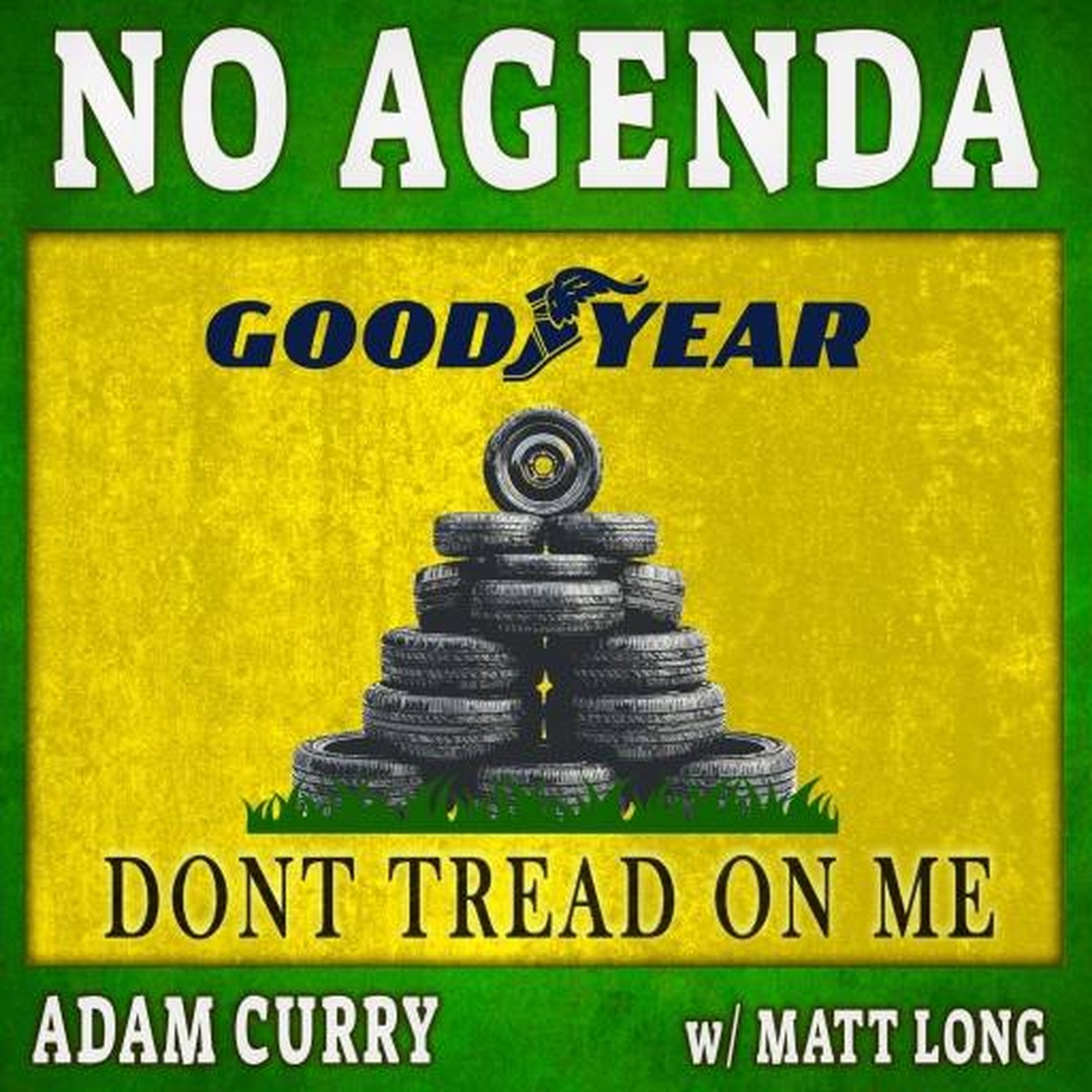
- The California Energy Commission approved the Replacement Tire Efficiency Program, which requires replacement tires to meet a maximum rolling resistance coefficient of 9.0 by 2029. This regulation will outlaw approximately 70 percent of tires currently sold in the state.
- Goodyear and Dunlop formally opposed California's new tire efficiency rules, citing concerns over significantly higher consumer costs. Meanwhile, competitors Michelin and Bridgestone supported the regulations and agreed to assist with their implementation.
Immigration (1)
- The Trump administration is codifying a 103,000 dollar H-1B visa fee to fund ICE and immigration courts. Additionally, the State Department plans to revoke up to 200,000 tourist and business visas from foreigners currently seeking asylum.
Europe (1)
- Adam Curry argues the geopolitical fracturing of the Eurovision Song Contest could signal the eventual dissolution of the European Union. Spain, Ireland, and the Netherlands have withdrawn from broadcasting the event due to polarization surrounding Israel's participation.

8/25/26: Bessent Threatens Blowing Up Global Finance, Canada Trade War Begins, SCOTUS Mail In Decision • Aug 25
- Donald Trump threatened to raise tariffs on Canadian automobiles, parts, and steel to fifty percent starting January 1, 2027. Canadian Prime Minister Mark Carney rejected the administration's terms, highlighting that Canada is the largest foreign customer for American-made vehicles.
- Ryan reports that Commerce Secretary nominee Howard Lutnick bypassed official channels to negotiate directly with Canadian Prime Minister Mark Carney, ultimately blowing up the trade talks. Lutnick's firm, Cantor Fitzgerald, has actively profited by purchasing tariff refund rights.
Also discussed on this episode: (11)
Iran (1)
- US Treasury Secretary Scott Bessent announced a zero leakage sanctions campaign targeting Iran's oil revenue. Ryan argues Bessent's threat to sanction major foreign banks trading with Iran would collapse the global financial system, leaving the administration's threats empty and vague.
War (1)
- VA Secretary Doug Collins stated the US has defeated Iran militarily and must now target their money. Saagar and Ryan argue this rhetoric reveals the Trump administration has exhausted its realistic military options and is desperately trying to avoid a regional escalation trap.
Macro (2)
- Treasury Secretary Scott Bessent plans to use buybacks and short term debt issuance to suppress long term bond yields. Journalist Charles Gasparino reported Bessent wants to scare bond vigilantes who are attempting to push the ten year Treasury yield to five percent.
- Billionaire investor Stanley Druckenmiller publicly criticized Treasury Secretary Scott Bessent's bond market intervention strategy. Druckenmiller warned that once markets believe the Treasury is defending a specific price, every yield increase becomes a test of official resolve requiring larger operations.
Energy (2)
- The United States has hit its lowest level of crude oil inventory in a half century, holding only forty-one days of supply. Ryan attributes this vulnerability to ongoing strategic reserve drawdowns, Panama Canal shipping bottlenecks, and Canadian wildfire disruptions.
- Wildfires in Canada's oil sands region threaten to curtail Midwest refinery operations. Because Canada exports over four million barrels of crude oil daily to the US, Ryan warns these supply disruptions hit the domestic energy market at the worst possible time.
Diplomacy (1)
- Secretary Rubio rescinded Syria's designation as a state sponsor of terrorism while maintaining a strict blockade on Cuba. Ryan highlights that three and a half million Cubans currently lack running water due to the ongoing US embargo.
Elections (4)
- The Supreme Court stayed a lower court injunction, allowing Trump's executive order on mail-in voting to temporarily stand. Lower courts previously ruled the order unconstitutional because the Constitution explicitly grants states the authority to administer elections.
- Trump's contested executive order directs the Department of Homeland Security to generate citizen lists for states to purge non-citizens from voter rolls. The order also threatens local election officials with federal prosecution if they fail to comply.
- Pennsylvania Governor Josh Shapiro stated that the Supreme Court's stay does not validate the underlying constitutionality of Trump's executive order. Shapiro vowed to fight the administration in court, asserting that Donald Trump does not run Pennsylvania's local elections.
- Saagar notes that roughly eight million non-citizens entered the US over a three-year period, driving voter integrity concerns. Ryan counters that systematic non-citizen voting is virtually non-existent because registered citizens already fail to vote in high numbers.

Canada Is Done With Trump • Aug 25
- Canadian Prime Minister Mark Carney abruptly ended trade negotiations with the United States, choosing a prolonged trade war over a deal he deemed unfair. Carney argued the American proposals threatened Canadian sovereignty and key national industries.
- US negotiators demanded veto power over Canadian trade agreements with third parties, such as Brazil. Matina Stavis Gridnev reports that Washington wanted Ottawa to automatically match any US tariffs imposed on external trading partners.
- The United States pressured Canada to scrap policies requiring streaming platforms to promote French-language content in Quebec. Additionally, Washington demanded the elimination of Canada's protectionist dairy quotas and the termination of its Buy Canadian public procurement program.
- Canada walked away after US negotiators refused to guarantee that agreed-upon tariff rates would remain stable. American officials insisted on retaining the unilateral right to revise or increase tariffs on Canadian goods at will.
- Mark Carney argues that American global hegemony has fractured, requiring traditional allies to pursue strategic autonomy rather than rely on nostalgic partnerships. He asserts that countries must adapt to this rupture by expanding independent, multilateral trade networks.
- To cushion the domestic economy from US tariffs, Mark Carney plans to deploy public funding, industry bailouts, and tax relief. The government will also host a massive global investment conference in Toronto to attract non-American capital.
- Canadian public opinion overwhelmingly favors the trade walkout, despite deep anxieties about the long-term economic fallout. An Angus Reed poll indicates broad bipartisan backing for Mark Carney's refusal to capitulate to the Trump administration.
- Canada's retaliatory tariff strategy surgically targets exports from politically sensitive US swing and red states, such as Kentucky bourbon and Ohio manufacturing. Mark Carney hopes this targeted economic pain forces Republican constituencies to pressure the White House.
- Mark Carney has explicitly ruled out weaponizing Canadian energy exports, which represent the largest single source of US energy imports. Disrupting this supply would trigger severe inflation and risk turning the American public permanently against Canada.
Also discussed on this episode: (2)
Elections (1)
- The US Supreme Court issued a preliminary ruling allowing the Trump administration to restrict mail-in voting ahead of the midterms. Liberal justices dissented, warning that the decision threatened to inject chaos and uncertainty into the upcoming elections.
Iran (1)
- Treasury Secretary Scott Besson announced an extensive economic offensive against Iran, replacing military action with aggressive financial sanctions. The measures penalize international entities enabling Iranian oil sales, with the explicit goal of destabilizing the regime.
Natalie Harp’s Devotion to Trump • Aug 24
- Donald Trump uses Natalie Harp to bypass official administration channels and data. During tariff discussions, Trump dismissed actual trade figures presented by Commerce Secretary Howard Lutnick and ordered Harp to search Google for alternative numbers.
- Trade negotiations between the United States and Canada collapsed after the Trump administration introduced late-stage terms. Canadian Prime Minister Mark Carney suspended the talks, stating Canada is effectively at war with the United States.
- United States tariffs of up to 50 percent on Canadian auto, aluminum, and steel went into effect. Canada plans to retaliate with dollar-for-dollar reciprocal tariffs on September 8th.
Also discussed on this episode: (4)
Elections (2)
- Natalie Harp serves as a 35-year-old assistant to Donald Trump, earning a $150,000 taxpayer salary. Maggie Haberman reports that Harp sits inside the Oval Office to provide Trump with fringe media and draft social media posts.
- During Donald Trump's post-presidency, Natalie Harp ran after his golf cart in Scotland and slept in a locker room at Bedminster. Maggie Haberman reports these behaviors and Harp's highly personal letters alarmed the Secret Service.
Health (1)
- Before entering Donald Trump's inner circle, Natalie Harp worked at One America News. At the 2020 Republican National Convention, she credited Trump's Right to Try legislation with saving her from terminal bone cancer.
Social Media (1)
- Natalie Harp acts as an information filter for Donald Trump by sourcing fringe media online. Maggie Haberman attributes highly controversial social media posts, including a racially offensive video depicting the Obamas, to material Harp brought directly to Trump.

Elbows up, again: a US-Canada trade flare-up • Aug 24
- Hal Hodson reports that trade negotiations between America and Canada collapsed at the last minute due to late US demands. These included tariff exemptions for heavy trucks, restrictions on Canada's external trade deals, and weaker protections for French language rights.
- Hal Hodson states that the resulting US tariffs hit $20 billion of Canadian exports and threaten 90,000 jobs. In response, Canadian Prime Minister Mark Carney plans to implement dollar-for-dollar retaliatory tariffs on September 8th.
- Hal Hodson argues that Mark Carney cannot easily retaliate using Alberta's massive oil exports to America. Alberta supplies over half of US oil imports, and disrupting this trade would anger Albertans ahead of a crucial provincial referendum on remaining in Canada.
Also discussed on this episode: (7)
Elections (1)
- Hal Hodson explains that accepting US demands to weaken French language protections would have been politically toxic for Mark Carney in Quebec. The concession would hand a major political advantage to the separatist Parti Québécois ahead of upcoming provincial elections.
Labor (3)
- Moeka Iida highlights the struggles of Japan's employment ice age generation, who entered the workforce between 1993 and 2004. This Gen X cohort remains trapped in low-paying, insecure jobs after a decade-long hiring freeze followed the early 1990s economic bubble burst.
- Moeka Iida explains that Japan's rigid labor laws protect older workers while forcing younger applicants into precarious irregular contracts. The ratio of job openings to college applicants plummeted from nearly three to less than one by the year 2000.
- Moeka Iida warns that the ice age generation's low lifetime earnings will trigger a retirement crisis. Because Japan's pension system relies on lifetime earnings, an influx of impoverished elderly citizens risks overwhelming the state's poorly adapted welfare system.
History (1)
- Citing historian Jeremy Black, Richard Cockett defines totemic sieges as battles of civilizational significance. The 1683 Ottoman siege of Vienna halted Islamic expansion into Europe, while the failed 1836 defense of the Alamo became a foundational American cultural myth.
War (2)
- Richard Cockett notes that utilitarian sieges are defined by strategic importance and massive scale. During World War II, the siege of Leningrad lasted over two years and claimed up to 1.5 million civilian lives, nearly half of the city's pre-war population.
- Richard Cockett highlights the 1565 Great Siege of Malta as an exceptionally brutal strategic conflict. Only 500 Knights Hospitaller held the island for four months against 40,000 Ottoman troops, with both sides resorting to decapitations and psychological warfare.