03-16-2026Price:

The Frontier

Your signal. Your price.

POLITICS

Trump Loses the Strait, Market Bets He Cuts Losses

Monday, March 16, 2026 · from 3 podcasts, 5 episodes
  • Iran holds the decisive leverage in the conflict by controlling the Strait of Hormuz, forcing global powers to negotiate with Tehran directly.
  • Trump's contradictory statements and constrained military strikes signal strategic defeat, with analysts describing him as entering a 'desperation phase'.
  • Financial markets are pricing in a short, sharp conflict, betting on Trump's pragmatic destruction doctrine rather than a prolonged war.

Donald Trump is losing a war he started. The strategic prize, free passage through the Strait of Hormuz, is controlled by Iran. When Trump begged China and France to send warships to help reopen it, Quincy Institute analyst Trita Parsi heard the sound of a strategy collapsing. Parsi argues Trump is in the desperation phase of a conflict he cannot win.

Proof is in the diplomacy. India and European powers are now negotiating directly with Tehran for safe passage, bypassing Washington. Iran decides which ships sail. This gives Tehran leverage it hasn't had in decades, leverage Parsi doubts they'll surrender without major concessions. On Breaking Points, Saagar Enjeti noted that Iran shows no sign of opening the strait, a clear strategic choice.

Trump's military actions reveal his weakness. He bombed military targets on Iran's critical oil terminal but intentionally spared the export infrastructure. Parsi interprets this restraint as a forced pullback, likely due to internal warnings about a suicidal global economic contraction. Iran immediately retaliated by striking a UAE oil depot, demonstrating its strategy of inflicting economic pain.

The Pentagon is selling inaction as strategy. Spokesperson Pete Hegseth celebrated high-volume strikes while admitting the U.S. Navy won't escort commercial tankers through the strait, calling this refusal shaping operations. This triumphalist tone clashes with reality. The world's most powerful navy is conceding a global oil chokepoint.

Markets are betting Trump will take the off-ramp. Oil prices dropped sharply after he hinted the conflict would end soon. On All-In, Brad Gerstner framed the Trump doctrine as pragmatic destruction over democratic nation-building. The dominant bet is on limited goals: degrade threats, save face, get out.

The risk is an escalatory faction pushing for more, ignoring how Iran's horizontal power structure makes it resilient to decapitation strikes. For now, the money says this is a short shock, not another forever war.

Trita Parsi, Breaking Points:

- You're seeing the words of a man who actually has been defeated and who knows it.

- This is the desperation phase of this war at this point.
Entities Mentioned

Fox NewsCompany

Source Intelligence

What each podcast actually said

1851 - "Mork & Mimi"Mar 15

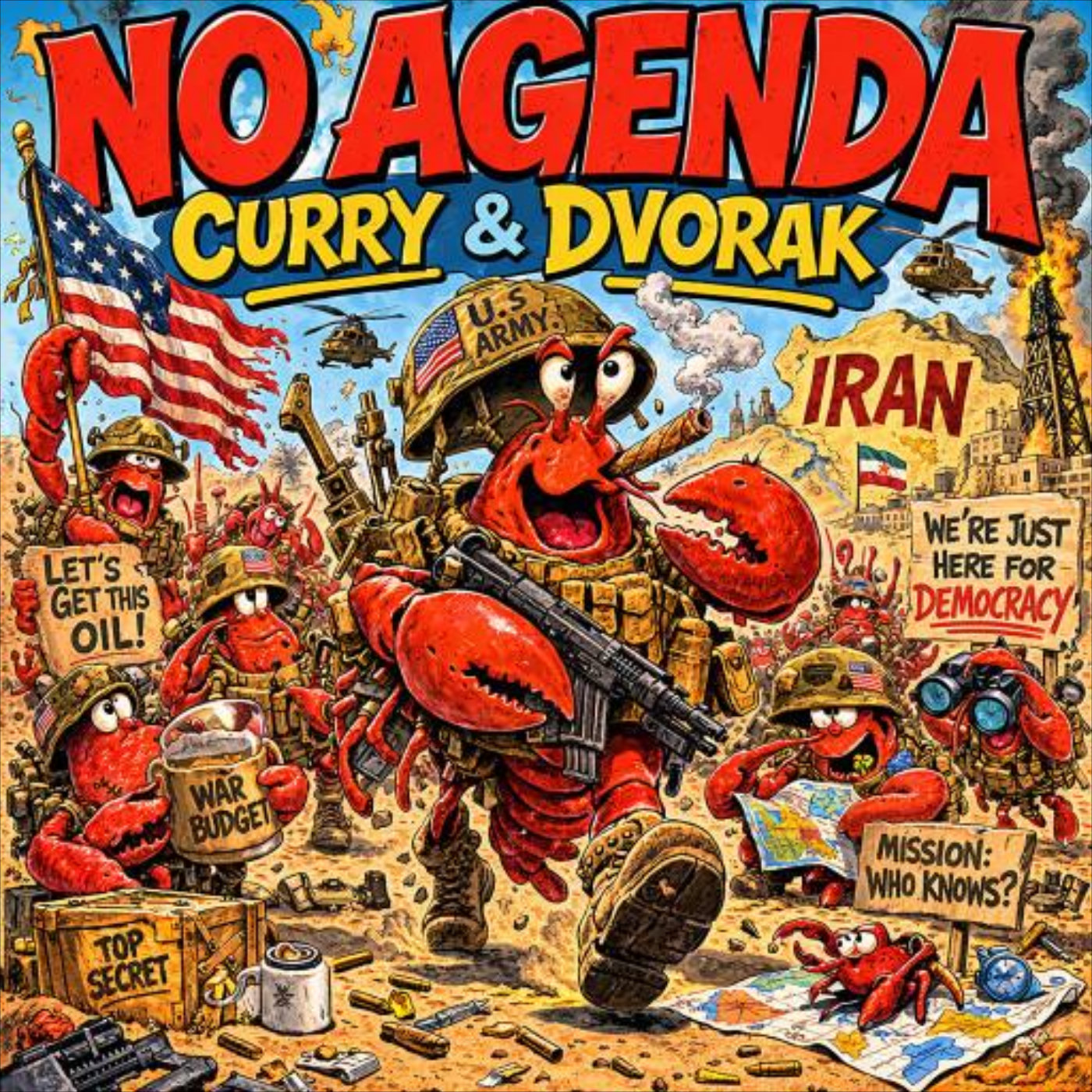
  • Adam Curry and Mimi Smith-Dvorak deconstructed war coverage, including a U.S. tanker crash in Iraq, rising oil prices, and the easing of Russian oil sanctions.
  • The No Agenda Show highlighted a supercut of politicians and pundits repetitively using the phrase 'short-term pain for long-term gain' to justify the conflict's economic and human costs.

Also from this episode:

Media (6)
  • A 1988 interview in which Donald Trump threatened to seize Iran's Karg Island, its primary oil export hub, has resurfaced in media coverage of the 2026 U.S.-Iran conflict.
  • Fox News host Brian Kilmeade confronted Trump with the decades-old threat on air, a clip analyzed by the No Agenda Show.
  • Trump dismissed Kilmeade's question as foolish, rhetorically asking what fool would answer whether he would still seize the island.
  • Trump pivoted from the Iran question to boasting about his prescient 2000 call to kill Osama bin Laden, which he claims was ignored until after 9/11.
  • The hosts critiqued media factual sloppiness with a segment on the misidentification of a historic California bar, the Hotsy Totsy Club.
  • Co-host John C. Dvorak is recovering from heart surgery; Adam Curry reported Dvorak sounded unusually upbeat during a hospital call and is expected to be released soon.

3/14/26: TRUMP KNOWS HE’S DEFEATED! Begs Other Countries to Rescue USMar 14

  • Trita Parsi of the Quincy Institute argues Trump is in a 'desperation phase' of the Iran conflict, where his contradictory rhetoric reveals a leader who knows the U.S. strategic objective of controlling the Strait of Hormuz has been defeated.
  • Parsi claims Iran holds decisive leverage because its operational control over the Strait of Hormuz has forced major economies like India and France to negotiate safe passage directly with Tehran, bypassing Washington.
  • According to Parsi, Iran's ability to dictate terms to global powers represents a significant shift, granting Tehran more leverage than it has had in decades, which it is unlikely to surrender without major concessions.
  • Trump's constrained military strikes, which hit Iranian military targets on Karg Island but spared its oil infrastructure, are interpreted by Parsi as a forced pullback and a clear sign of weakness to Tehran.
  • Parsi speculates Trump's restraint was likely due to internal warnings that escalating against Iran's oil infrastructure would trigger a 'suicidal' global economic contraction.
  • The economic shock from the conflict is already global, with Asian nations curtailing school and work days due to fuel shortages, a situation Parsi's colleague warns could escalate into a COVID-scale economic contraction.
  • Leaks from U.S. military officials to the Wall Street Journal, criticizing a president who ignored warnings Iran would close the strait, reveal an administration trying to distance itself from a failed strategy.

3/14/26: BREAKING: TRUMP ATTACKS OIL ISLAND, MARINES CALLED IN, 5 US PLANES HITMar 14

  • Trump bombed Iran's Carg Island terminal, which handles 90% of its oil exports, but intentionally spared the export infrastructure to create a leverage point over the Strait of Hormuz.
  • Saagar Enjeti says the strategic gamble avoids immediately removing a million barrels from the global market, giving Trump a lever to demand Iran opens the strait.
  • Iran retaliated by striking a major oil depot in the UAE, a direct move to drive up global oil prices through economic escalation.
  • Analyst Robert Pape describes Iran's asymmetric strategy as an escalation trap, designed to inflict economic pain through a prolonged conflict.
  • The conflict has already degraded US military assets, with five Air Force refueling planes damaged in an Iranian strike on a Saudi base.
  • The Pentagon is deploying over 2,000 Marines and considering sending destroyers to escort tankers, a major step analysts see as moving toward a potential ground invasion.
  • Saagar Enjeti argues the logic of escalation favors Iran, as each US military step is met with asymmetric countermeasures designed to strain the global economy and political will.

3/13/26: US Plane Crash In Iraq, Michigan Attack, Munitions Deplete, Brad Lander Joins & MORE!Mar 13

  • Pentagon spokesperson Pete Hegseth framed the U.S. Navy's refusal to escort commercial oil tankers through the blockaded Strait of Hormuz as a deliberate strategic choice, calling it 'shaping operations.'
  • Hegseth claimed the U.S. was executing 'the highest volume of strikes' over Iran while simultaneously boasting about an unfair fight against the Iranian military.
  • Hegseth described Iranian leaders as 'hiding like rats,' a characterization contradicted by footage aired on Breaking Points showing President Ebrahim Raisi marching unprotected through Tehran streets near an Israeli strike.
  • Commentator Ryan Grim argued the U.S. strategy of targeting leaders is a strategic blindness, as Iran has a deep, horizontal power structure with a pre-planned succession chain six or seven people deep.
  • Grim compared the U.S. focus on decapitation strikes to Iran assassinating a U.S. governor and declaring mission accomplished, suggesting the regime is far more resilient than the 'kill the bad guy' narrative allows.
  • The Pentagon's triumphalist rhetoric about strikes and shaping operations obscures the material failure of the world's most powerful navy ceding control of the critical global oil chokepoint at the Strait of Hormuz.
  • Krystal and Saagar analyzed that the 'shaping' appears primarily focused on shaping a public narrative of control and deliberate sequencing, rather than achieving a tangible strategic objective on the ground.

Iran War, Oil Shock, Off Ramps, AI's Revenue Explosion and PR NightmareMar 13

  • The swift $30 drop in oil prices after President Trump hinted the Iran conflict would end soon revealed the market's dominant bet on a short conflict, not a prolonged war.
  • Brad Gerstner described the Trump doctrine as pragmatic destruction over democratic nation-building, focused on degrading threats to American security without the goal of spreading democracy.
  • A strategic release of 400 million barrels of petroleum is being used as a firebreak against sustained oil price spikes resulting from the conflict.
  • David Sacks warned that an escalatory faction could push for further conflict after seeing a degraded Iran, risking tit-for-tat attacks on Gulf energy infrastructure.
  • The market view assumes limited U.S. goals in the conflict: degrade threats, save face, and exit, rather than engaging in prolonged nation-building.

Also from this episode:

Markets (1)
  • Goldman Sachs updated its economic forecast to raise core PCE inflation expectations and lower GDP growth, accounting for both direct oil costs and the confidence shock from the conflict.