03-16-2026Price:

The Frontier

Your signal. Your price.

CULTURE

Why the Internet Feels Broken and the Media Doesn't Help

Monday, March 16, 2026 · from 3 podcasts
  • The internet's decline is not nostalgic griping but the result of a designed economic shift where platforms extract value from users, a process critics call 'enshittification'.
  • Media analysis shows political and war coverage often relies on recycled, unexamined clichés, creating a feedback loop that fails to inform.
  • Together, these trends point to a cultural problem of fatalism, where both our information tools and our information sources feel designed to disappoint.

The digital public square is a trap, and the newsstand is full of slogans.

On The Ezra Klein Show, Cory Doctorow diagnosed the internet's rot as a feature, not a bug. He argues the shift from user empowerment to corporate extraction was deliberate. Platforms first attract users, then abuse them for business customers, and finally squeeze everyone for shareholders. The feeling that things are broken and unfixable is the point of this enshittification cycle.

This sense of a degraded environment extends to media itself. The No Agenda Show deconstructs war coverage, highlighting the mindless repetition of political justifications like 'short-term pain for long-term gain.' Their analysis suggests media often functions as a megaphone for unexamined narratives, from decades-old Trump quotes to misidentified locations, rather than a tool for clarity.

These aren't separate problems. A media landscape reliant on cliché thrives on platforms optimized for engagement over understanding. Both systems discourage the belief that improvement is possible.

Resisting this requires rejecting the idea that it's inevitable. For the internet, that means breaking platform monopolies. For media, it means deconstructing the narratives. The alternative is accepting a world where our primary channels for information and connection are designed to let us down.

Cory Doctorow, The Ezra Klein Show:

- And now when I see bad things on the internet, I'm like, this is by design and it cannot be fixed because you would be violating the rules if you even tried.

Entities Mentioned

Fox NewsCompany

Source Intelligence

What each podcast actually said

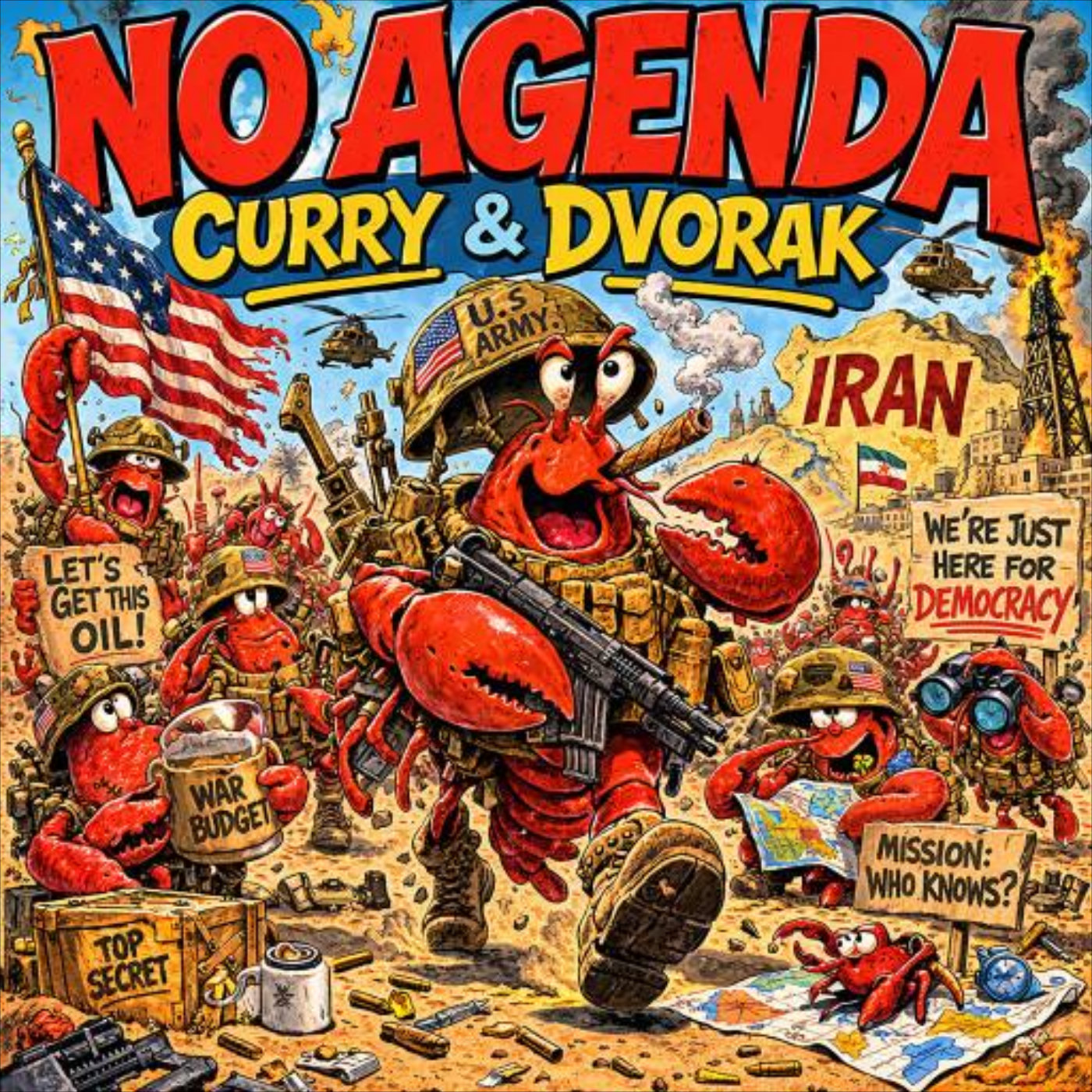
1851 - "Mork & Mimi"Mar 15

  • A 1988 interview in which Donald Trump threatened to seize Iran's Karg Island, its primary oil export hub, has resurfaced in media coverage of the 2026 U.S.-Iran conflict.
  • Fox News host Brian Kilmeade confronted Trump with the decades-old threat on air, a clip analyzed by the No Agenda Show.
  • Trump dismissed Kilmeade's question as foolish, rhetorically asking what fool would answer whether he would still seize the island.
  • Trump pivoted from the Iran question to boasting about his prescient 2000 call to kill Osama bin Laden, which he claims was ignored until after 9/11.
  • Adam Curry and Mimi Smith-Dvorak deconstructed war coverage, including a U.S. tanker crash in Iraq, rising oil prices, and the easing of Russian oil sanctions.
  • The No Agenda Show highlighted a supercut of politicians and pundits repetitively using the phrase 'short-term pain for long-term gain' to justify the conflict's economic and human costs.
  • The hosts critiqued media factual sloppiness with a segment on the misidentification of a historic California bar, the Hotsy Totsy Club.
  • Co-host John C. Dvorak is recovering from heart surgery; Adam Curry reported Dvorak sounded unusually upbeat during a hospital call and is expected to be released soon.

What Trump Didn’t Know About IranMar 14

  • Tim Wu defines platform extraction as an economic process where monopolistic platforms capture wealth far beyond the value they provide to users.
  • Cory Doctorow labels the user-facing result of platform extraction 'enshittification', a systematic degradation of quality as value shifts from users to business customers and then to shareholders.
  • The broken feeling of the internet stems from a deliberate structural shift from user empowerment to corporate control, not nostalgia for an earlier era.
  • Cory Doctorow contrasts early internet optimism, where bad features felt like bugs to be fixed, with current fatalism, where poor quality is accepted as an unchangeable design choice.
  • According to Doctorow, resisting platform decay requires rejecting technological determinism and the belief that abusive platform behavior is an inevitable stage of market capture.

Also from this episode:

Big Tech (1)
  • Platforms now lock users in as assets, leading to a centralized economic model where they ultimately serve shareholders first and users last.
Regulation (1)
  • Real change, as outlined by Wu and Doctorow, necessitates breaking platform monopolies to restore competitive pressure that forces companies to treat users well.

#2468 - Luke GrimesMar 13

  • Luke Grimes told Joe Rogan that performing music live triggers a deeper fear than acting, despite his two-decade career in film and television.
  • Grimes said a music manager cold-called him on the Yellowstone set to offer a record deal, which he initially refused before accepting two years later after his father's death.
  • Grimes argued that the relentless touring schedule is incompatible with family life for someone his age, calling it a young man's game.
  • Grimes and Rogan attributed Yellowstone creator Taylor Sheridan's freakish productivity to a late-bloomer's drive, comparing it to a Rocky-style ambition that never eased up after success.
  • Grimes said he loves the creative process of writing songs and being in the studio, contrasting it with his fear of live performance.
  • Grimes views his persistent stage fright as proof he's still sane, accepting the nerves as part of his cautious approach to his second act in music.

Also from this episode:

Business (1)
  • Grimes described the touring business model as financially brutal, requiring three back-to-back shows to cover crew and bus costs, making stopping economically unfeasible.