03-17-2026Price:

The Frontier

Your signal. Your price.

POLITICS

Media wars shape voter reality while the internet decays

Tuesday, March 17, 2026 · from 3 podcasts
  • Media deconstructors and politicians alike battle over war narratives, using old clips and political clichés to frame conflict and leadership.
  • The feeling that both the internet and politics are 'broken' stems from deliberate design shifts that prioritize extraction and conflict over user and civic value.
  • Practical governance, according to figures like Josh Shapiro, requires separating moral clarity on hate from policy debate and being open to changing one's mind.

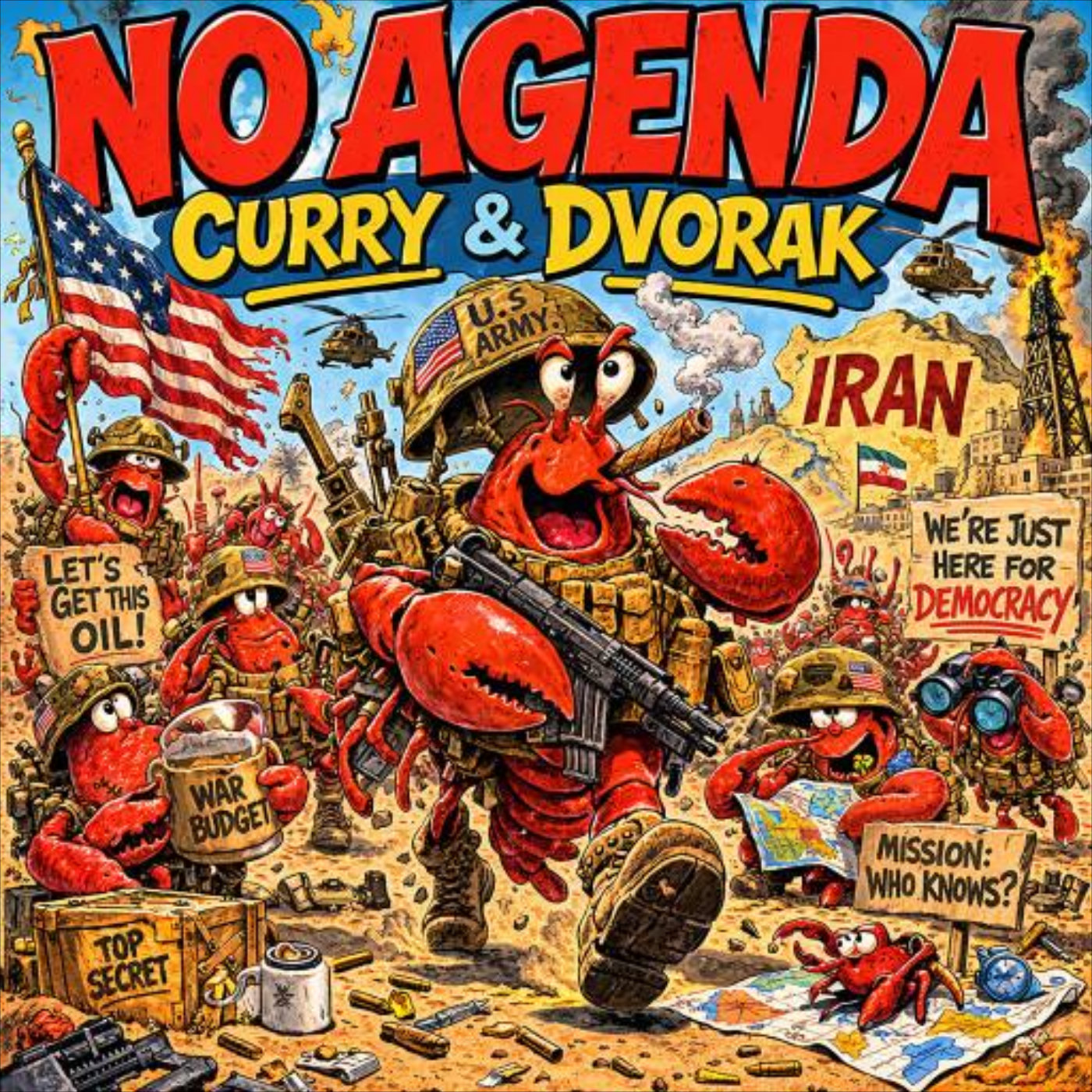
Media narratives aren't just reporting on wars and elections; they are the battlefield. On No Agenda, a 1988 clip of Donald Trump threatening Iran's oil island became a 2026 talking point, used to question his consistency. The show framed this within a supercut of politicians repeating 'short-term pain for long-term gain,' a cliché used to sell conflict.

This media environment shapes the political reality leaders must navigate. Pennsylvania Governor Josh Shapiro told Pod Save America that the 'slash and burn' politics dominating social media accomplish nothing. His alternative is to separate clear condemnation of anti-Semitism and Islamophobia from nuanced policy debate on Gaza, arguing one requires moral clarity, the other room for disagreement.

Shapiro’s personal evolution on the death penalty, prompted by his son’s question, underscores a broader need for malleable conviction. It's a rebuke to a political and media culture that punishes changing one’s mind. This rigidity mirrors the user experience on today's internet, which critics argue is also broken by design.

Tim Wu and Cory Doctorow, on The Ezra Klein Show, diagnosed this decay not as nostalgia but as 'enshittification.' Platforms systematically degrade quality to extract value, shifting benefits from users to shareholders. The resulting fatalism - that problems are baked-in and unfixable - parallels the political despair Shapiro identified in a generation whose worldview is defined by Trump-era division.

The fight in both realms is against a sense of inevitability. It requires restoring competition to break platform monopolies and, in politics, rejecting performative conflict for pragmatic problem-solving. The media narratives that shape war coverage and election campaigns are symptoms of these deeper structural failures.

Cory Doctorow, The Ezra Klein Show:

- I think when I was a lurker on the early internet and I saw things that sucked, I would think someone's going to fix this and maybe it could be me.

- And now when I see bad things on the internet, I'm like, this is by design and it cannot be fixed because you would be violating the rules if you even tried.
Entities Mentioned

Fox NewsCompany

Source Intelligence

What each podcast actually said

1851 - "Mork & Mimi"Mar 15

  • A 1988 interview in which Donald Trump threatened to seize Iran's Karg Island, its primary oil export hub, has resurfaced in media coverage of the 2026 U.S.-Iran conflict.
  • Fox News host Brian Kilmeade confronted Trump with the decades-old threat on air, a clip analyzed by the No Agenda Show.
  • Trump dismissed Kilmeade's question as foolish, rhetorically asking what fool would answer whether he would still seize the island.
  • Trump pivoted from the Iran question to boasting about his prescient 2000 call to kill Osama bin Laden, which he claims was ignored until after 9/11.
  • Adam Curry and Mimi Smith-Dvorak deconstructed war coverage, including a U.S. tanker crash in Iraq, rising oil prices, and the easing of Russian oil sanctions.
  • The No Agenda Show highlighted a supercut of politicians and pundits repetitively using the phrase 'short-term pain for long-term gain' to justify the conflict's economic and human costs.
  • The hosts critiqued media factual sloppiness with a segment on the misidentification of a historic California bar, the Hotsy Totsy Club.
  • Co-host John C. Dvorak is recovering from heart surgery; Adam Curry reported Dvorak sounded unusually upbeat during a hospital call and is expected to be released soon.

Josh Shapiro Is Calm but Not CoolMar 15

  • Josh Shapiro sees his children's entire political framework, apart from his own fatherhood, as defined by the cruelty and division of the Donald Trump era.
  • Shapiro argues a leader's job is to solve problems and deliver results, not to generate social media noise, saying yelling and screaming accomplishes nothing.
  • Shapiro reversed his long-held support for the death penalty after confronting practical flaws in the justice system and hearing from victims' families.

Also from this episode:

Politics (3)
  • Shapiro insists on separating universal condemnation of anti-Semitism and Islamophobia from the nuanced policy debate over Israel and Gaza, to prevent false charges of bigotry.
  • The final catalyst for Shapiro's reversal on the death penalty was his young son asking a simple moral question he could not answer.
  • Shapiro believes good politics requires being open to changing your mind based on new evidence, human impact, and moral questioning.

What Trump Didn’t Know About IranMar 14

  • The broken feeling of the internet stems from a deliberate structural shift from user empowerment to corporate control, not nostalgia for an earlier era.
  • Cory Doctorow contrasts early internet optimism, where bad features felt like bugs to be fixed, with current fatalism, where poor quality is accepted as an unchangeable design choice.

Also from this episode:

Business (2)
  • Tim Wu defines platform extraction as an economic process where monopolistic platforms capture wealth far beyond the value they provide to users.
  • Cory Doctorow labels the user-facing result of platform extraction 'enshittification', a systematic degradation of quality as value shifts from users to business customers and then to shareholders.
Big Tech (1)
  • Platforms now lock users in as assets, leading to a centralized economic model where they ultimately serve shareholders first and users last.
Regulation (2)
  • According to Doctorow, resisting platform decay requires rejecting technological determinism and the belief that abusive platform behavior is an inevitable stage of market capture.
  • Real change, as outlined by Wu and Doctorow, necessitates breaking platform monopolies to restore competitive pressure that forces companies to treat users well.
