03-18-2026Price:

The Frontier

Your signal. Your price.

POLITICS

Trump and FCC threaten treason charges over war coverage

Wednesday, March 18, 2026 · from 2 podcasts
  • The Trump administration is threatening broadcasters with treason charges and license revocation for their coverage of the Iran conflict.
  • This escalation mirrors historical wartime censorship but targets an already unpopular war, raising the stakes for domestic dissent.
  • A resurfaced 1988 interview shows Trump's long-standing aggressive posture toward Iran, framing the current conflict within a decades-old rhetoric.

President Trump and his FCC chair are moving to punish the press for its war reporting. Trump has accused major networks of treason, claiming verified footage of the conflict is AI-generated fake news. He publicly backed FCC Chair Brendan Carr’s threat to revoke the broadcast licenses of outlets airing what he calls “hoaxes and news distortions.”

Saagar Enjeti on Breaking Points connected this directly to Israeli lobby talking points. He noted the administration is labeling specific, documented images as fabrications. This narrative control extends to the Pentagon, where officials have publicly criticized networks for their headlines.

Enjeti framed this as a dangerous historical pattern. Every major American war has seen expanded state censorship under the banner of patriotism. The critical difference now is that the Iran war begins with majority public disapproval. This unpopularity may drive an even more aggressive crackdown to manage dissent.

The threats specifically target licensed broadcasters, but the intended chilling effect aims to reshape the entire media landscape. This escalation coincides with the media revisiting Trump’s long-standing hawkishness on Iran. A 1988 interview where he threatened to seize Iranian oil infrastructure has resurfaced, highlighting the continuity of his rhetoric.

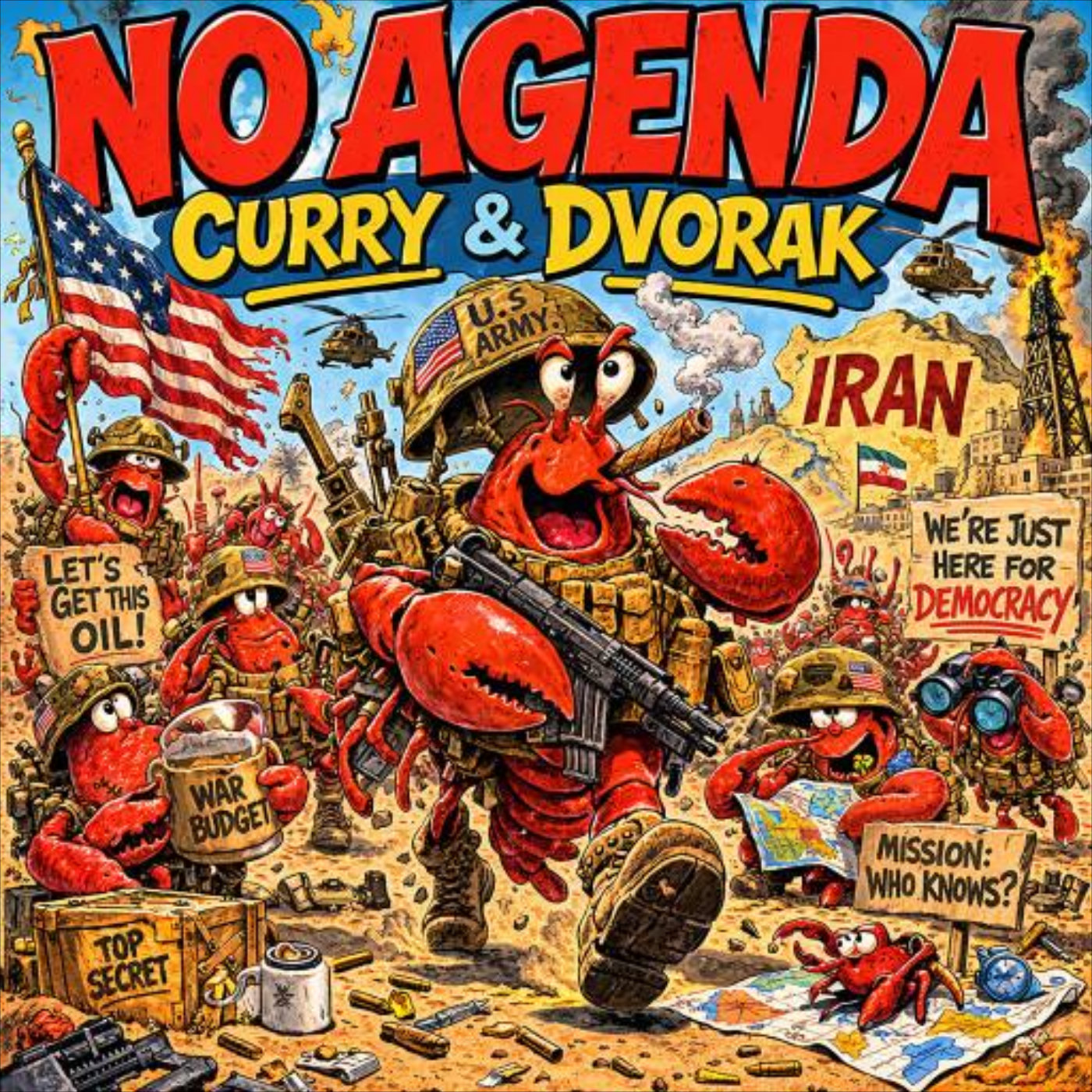
As the No Agenda Show highlighted, the administration and its media allies are simultaneously deploying familiar justifications for the war’s costs, leaning on the old political cliché of “short-term pain for long-term gain.”

The convergence of an old threat and new censorship marks a significant intensification of domestic political tension.

Saagar Enjeti, Breaking Points:

- This is why it is so dangerous actually for us here at the home front.

- And in those cases, many of those wars were much more popular crystal than this one is today.
Entities Mentioned

CNNCompany
FCCCompany
Fox NewsCompany
New York TimesCompany

Source Intelligence

What each podcast actually said

3/16/26: Trump Threatens Media w/Treason, Tucker CIA Referral, David Sacks Warns Israel May Nuke IranMar 16

  • Donald Trump is accusing U.S. media outlets of treason and collusion with Tehran for their reporting on the war with Iran, claiming verified footage is AI-generated fakery.
  • FCC Chair Brendan Carr is threatening to revoke the broadcast licenses of news organizations he deems 'unpatriotic' for running what he calls 'hoaxes and news distortions'.
  • Saagar Enjeti connects Trump's narrative directly to Israeli lobby talking points, noting the president repeated claims that a New York Times photo from an Iranian funeral was AI-generated.
  • Pentagon spokesman Pete Hegseth criticized CNN for reporting the war had 'widened,' arguing the headline should instead declare Iran defeated.
  • Saagar Enjeti argues this represents a historical pattern where state surveillance and censorship expand under the guise of patriotism during major American wars, from the Civil War to Iraq.
  • Enjeti warns the current situation is uniquely dangerous because the Iran war begins with majority public disapproval, which he says may prompt an even more aggressive government crackdown on dissent.
  • The primary regulatory target is broadcast networks with FCC licenses, but the goal is to exert a broader chilling effect across the entire media information environment.

1851 - "Mork & Mimi"Mar 15

  • A 1988 interview in which Donald Trump threatened to seize Iran's Karg Island, its primary oil export hub, has resurfaced in media coverage of the 2026 U.S.-Iran conflict.
  • Fox News host Brian Kilmeade confronted Trump with the decades-old threat on air, a clip analyzed by the No Agenda Show.
  • Trump dismissed Kilmeade's question as foolish, rhetorically asking what fool would answer whether he would still seize the island.
  • Trump pivoted from the Iran question to boasting about his prescient 2000 call to kill Osama bin Laden, which he claims was ignored until after 9/11.
  • Adam Curry and Mimi Smith-Dvorak deconstructed war coverage, including a U.S. tanker crash in Iraq, rising oil prices, and the easing of Russian oil sanctions.
  • The No Agenda Show highlighted a supercut of politicians and pundits repetitively using the phrase 'short-term pain for long-term gain' to justify the conflict's economic and human costs.
  • The hosts critiqued media factual sloppiness with a segment on the misidentification of a historic California bar, the Hotsy Totsy Club.
  • Co-host John C. Dvorak is recovering from heart surgery; Adam Curry reported Dvorak sounded unusually upbeat during a hospital call and is expected to be released soon.