04-21-2026Price:

The Frontier

Your signal. Your price.

POLITICS

Iran blockade lifts Bitcoin as oil hits $95

Tuesday, April 21, 2026 · from 4 podcasts, 5 episodes
  • Strait of Hormuz closure pushes oil to $95, but Bitcoin rises 9% as markets pivot to digital settlement.
  • US seizes Iranian tanker, escalating brinkmanship ahead of stalled Islamabad talks.
  • Charles Schwab launches Bitcoin trading, cementing institutional shift amid stablecoin legal risks.

Iran’s blockade of the Strait of Hormuz is no longer just a threat to oil - it’s accelerating Bitcoin’s evolution into a geopolitical settlement rail. While Brent crude jumped $10 to $95 a barrel after US Marines seized the Iranian tanker Tosca, Bitcoin rose 9% in the same window, outperforming gold, which fell 4%. The divergence signals a shift: Bitcoin is being priced not as a speculative asset but as infrastructure for a world fragmenting beyond the dollar.

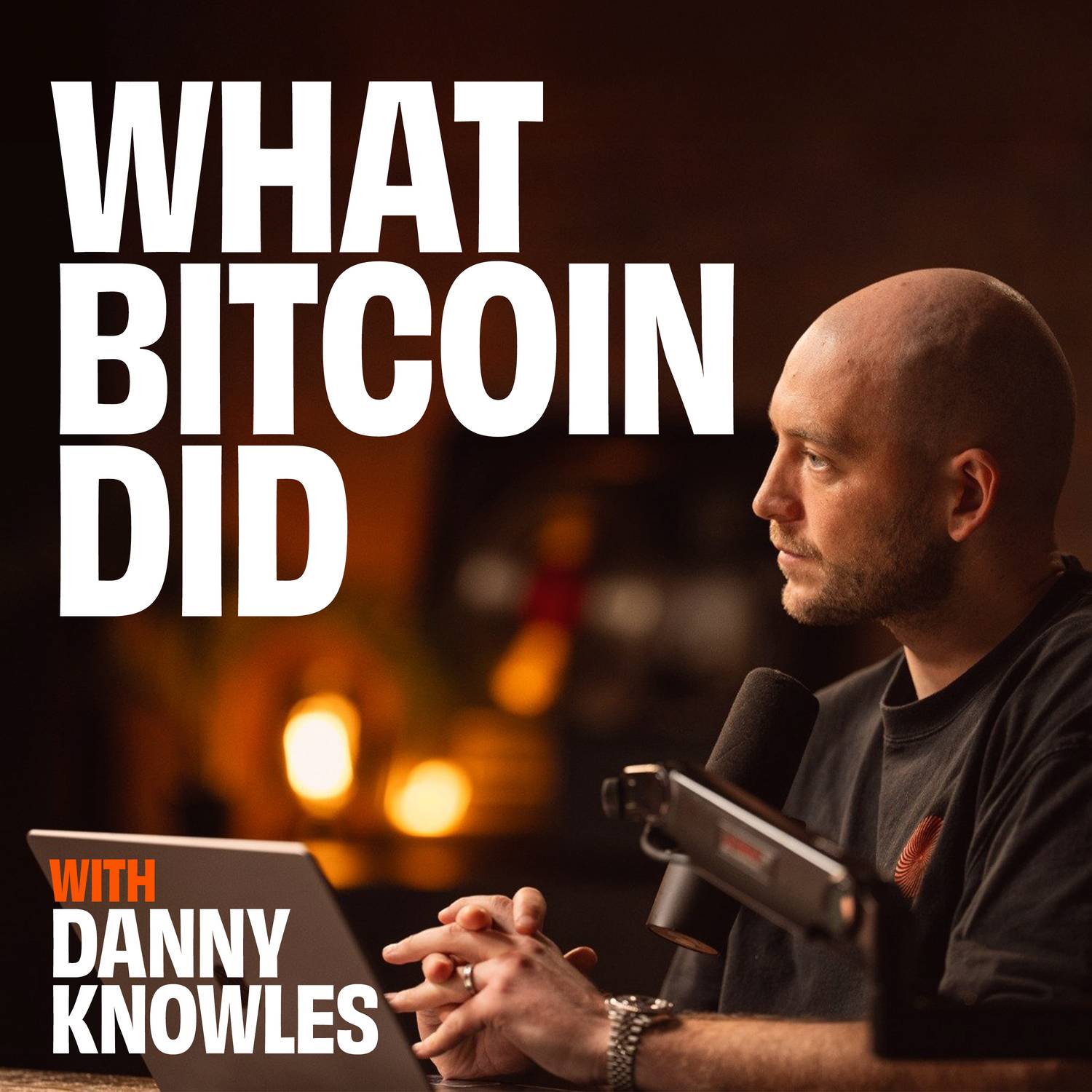
Jeff Ross, a fund manager, argues the US is already in World War III, a slow-motion conflict rooted in 2008 when China began exiting the dollar system. Now, with Iran reportedly demanding Bitcoin or yuan for oil transit, the petrodollar’s dominance is cracking. "This is the end of global hegemony," Ross said on What Bitcoin Did. The Treasury, he adds, is now steering monetary policy, sidelining the Fed by manipulating the yield curve to fund massive deficits.

"The US is spending more on debt interest than on its military. That’s the historical signal of imperial decline."

- Jeff Ross, What Bitcoin Did

The US strategy is economic strangulation. By blocking any ship using Iranian ports, the Trump administration aims to cut off hard currency flows. But Iran has counters. It’s using floating storage and Asian credit lines to endure, while the IRGC threatens to retaliate by attacking neutral shipping. Shashank Joshi of The Economist warns this could push oil to $150 by late April. The goal isn’t military victory but outlasting US political tolerance, especially ahead of midterms.

Meanwhile, Charles Schwab is rolling out direct spot Bitcoin and Ethereum trading to millions of retail clients, using Paxos for custody and charging just 20 basis points. This "second touch" - professional investors re-engaging via trusted institutions - marks a structural shift. David Bennett of Bitcoin And calls it the arrival of the "guy on the street" investor, one who won’t self-custody but will create a permanent bid.

"Bitcoin is no longer a tech proxy. It’s a geopolitical instrument. When bonds weaken, it holds."

- David Bennett, Bitcoin And

The contrast with stablecoins is stark. Circle faces a $285 million class-action lawsuit for failing to freeze USDC stolen in the Drift Protocol hack. Tether, by contrast, froze funds and pledged $127.5 million toward recovery. The split exposes a core tension: regulated stablecoins must choose between compliance and neutrality. Bitcoin, held in private keys, avoids the dilemma entirely.

Source Intelligence

- Deep dive into what was said in the episodes

All Roads Lead to BitcoinApr 21

  • Jack Mallers notes Bitcoin's price at $76,080, placing its market cap above $1.5 trillion, and it is 39.7% down from its all-time high of $126,160.
  • Mallers describes the ongoing Middle East conflict as having no clear resolution, impacting global supply chains with the Strait of Hormuz remaining effectively closed.
  • The US Navy intercepted an Iranian cargo ship, Tausa, in the Gulf of Oman, blowing a hole in its engine room for refusing orders, citing US Treasury sanctions against the vessel for prior illegal activity.
  • Jack Mallers claims Iran's strategy is to destabilize the US financially through monetary means, not military, targeting the US debt-laden financial system via energy market disruption and inflation.
  • Former Treasury Secretary Hank Paulson stated the US needs an "emergency break the glass plan" for its Treasury market, highlighting the danger if the Fed becomes the sole buyer of government debt amid rising interest rates.
  • Mallers observes a historic divergence between the S&P 500 reaching all-time highs and consumer sentiment hitting all-time lows, attributing this gap to policies that debase currency and inflate assets.
  • Mallers believes current market volatility is artificially suppressed by engineered market structure where political headlines trigger systematic trading by quant funds, leading to asset purchases and lower VIX levels.
  • Treasury Secretary Scott Bessant expressed confidence in falling core inflation despite the Iran war and called for the Federal Reserve to cut interest rates, advocating for Kevin Warsh to replace Jerome Powell as Fed Chair.
  • Jack Mallers announced his engagement, sharing his philosophy that family, like Bitcoin, represents being part of something bigger and lasting longer than oneself, emphasizing love, community, and purpose.
  • Strike has lowered minimums for its lending and Bitcoin line of credit products, now offering as low as $5,000 for lines of credit and $10,000 for term loans, and launched its line of credit in Texas and Colorado.
  • Mallers expresses confusion regarding MicroStrategy's financing strategy, noting its focus on Bitcoin conviction rather than business profitability, questioning how it sustains perpetual preferred obligations with high dividends.
Also from this episode: (6)

Business (1)

  • China's exports sharply slowed in March, missing forecasts, while its silver imports reached a multi-year high, indicating global supply chain disruptions impacting even major manufacturing economies.

Macro (2)

  • The UAE is seeking a currency swap line with the US, which Luke Groman interprets as a concession request from the US to maintain the petrodollar system, or risk the UAE transacting oil in CNY or other currencies.
  • US consumer delinquencies are at their highest level since 2017, posing a significant risk to the US economy which relies heavily on consumer spending, making it vulnerable to unemployment from AI.

Trade (1)

  • China's CIPS payment system, effectively a gold-backed alternative to the dollar, saw increased volume in March, which Mallers suggests is linked to Iranian oil trade.

AI & Tech (1)

  • The CEO of Anthropic, a creator of Claude, warns AI is rapidly progressing from a high school student's intelligence to a college student's, posing a risk of widespread entry-level white-collar job replacement.

Banking (1)

  • Strike completed its first proof of reserves for its lending product, aiming to provide transparency for customers whose collateral is held for credit loans, with plans for segregated addresses visible on the blockchain.

Now boarding: America seizes an Iranian shipApr 20

  • Greg Karlstrom explains that Iran's foreign minister, Abbas Aragchi, tweeted the Strait was open subject to IRGC coordination and potential tolls, which is Iran's established position, not a full reopening.
  • Oil prices, specifically Brent crude, initially dropped to $85 a barrel last week due to market misinterpretation of Aragchi's tweet, but later jumped by $10 a barrel.
  • Negotiations between the US and Iran are scheduled for Tuesday in Islamabad, with US Vice President J.D. Vance leading the American delegation, though Iran's attendance is uncertain.
  • Saturation in large cities means 70% of KFCs and 60% of McDonald's in China are within a 10-minute bicycle ride of another location.
  • Many global fast food chains in China, including McDonald's (owned by Cidic Capital) and Yum China (KFC/Pizza Hut), are now predominantly backed by large local Chinese investors.
  • Local investors provide the capital for expansion into smaller, riskier markets, but challenges persist, including a lack of suitable real estate and competition from cheaper, locally tailored Chinese brands.
Also from this episode: (12)

War (5)

  • US forces fired upon and seized the Iranian-flagged Motor Vessel Tosca in the Strait of Hormuz, enforcing a blockade just before the existing ceasefire with Iran was set to expire on Wednesday.
  • Greg Karlstrom identifies three potential Iranian responses: direct attacks on US warships, attacks on commercial vessels in the Gulf for domestic retaliation, or negotiation to end the mutual blockade.
  • The US views its recent action in the Strait as evening out the situation, arguing Iran failed to reopen it as supposedly agreed, and expects it to provide leverage in upcoming talks.
  • A Russian drone struck Chernobyl's New Safe Confinement (NSC) on February 14, 2025, piercing the protective dome; the NSC was installed 10 years ago to isolate the site for a century.
  • Balthazar Lindauer, EBRD director, calls the drone damage 'very significant,' stating the NSC is now 'useless' as its hermetic seal is lost, though a maintenance garage reportedly saved Reactor 4 from a direct hit.

Diplomacy (1)

  • While the US has dropped its demand for Iran to never enrich uranium, its request for a prolonged moratorium remains a significant point of contention in negotiations.

Energy (1)

  • The New Safe Confinement (NSC), built for $1.6 billion by 45 nations and orchestrated by the EBRD, stands 108 meters tall, 250 meters wide, and 150 meters long.

Other (5)

  • Following the strike, visible flames were extinguished in two hours, but smoldering between the NSC's internal and external layers burned for weeks, gutting about half of the internal membrane.
  • Engineers decided to fix the New Safe Confinement in place, rather than moving it, due to the high risk of leaving the unstable original sarcophagus unprotected.
  • The estimated repair cost for the NSC is 500 million euros, a figure expected to rise, and Rafael Mariano Grossi of the IAEA warns that radioactive release risks will grow without repairs.
  • Sunday marks the 40th anniversary of the 1986 Chernobyl nuclear accident.
  • Don Wineland notes that global fast food chains like McDonald's, KFC, and Starbucks are now rapidly expanding into rural Chinese cities, such as Handtuan, as major cities are saturated.

Shipping forecast: will America’s blockade work?Apr 14

Also from this episode: (11)

War (10)

  • Shashank Joshi says America's new military strategy against Iran is a blockade on all ships from Iranian ports or coastal waters, enforced impartially by US Central Command to meet international legal requirements.
  • Joshi notes the US previously seized 10 tankers linked to Venezuela in the last six months, showing its capacity for enforcement. The blockade's aim is to sever Iran's economic lifeline and force negotiations on its nuclear program.
  • Joshi argues Iran survived oil exports below 400,000 barrels per day in 2020 and can endure a new blockade using floating storage and credit lines. He doubts the blockade will bring Iran to its knees quickly.
  • Joshi warns Iran will likely retaliate by attacking neutral shipping, trapping Gulf oil supply and potentially pushing Brent crude futures to $150 a barrel by late April.
  • Joshi states the blockade will affect ships from adversaries like China and allies including Pakistan, Thailand, France, and Turkey, creating a diplomatic crisis for the US and risking further escalation.
  • Joshi speculates Iran feels it won the first round of hostilities by surviving and controlling the Strait of Hormuz. He believes Iran will try to outlast Trump, betting on rising oil prices and US midterm elections in seven months.
  • Tom Gardner reports Burkina Faso's President Ibrahim Traoré, a 38-year-old military officer in power since a 2022 coup, is implementing a 'total war' scorched earth campaign against jihadists that Human Rights Watch says constitutes war crimes.
  • Gardner says a new Human Rights Watch report documents over 1,800 civilian deaths in 57 attacks, which are likely just the tip of the iceberg. The junta stands accused of ethnic cleansing against the Fulani minority.
  • Gardner explains Traoré's strategy relies on tens of thousands of poorly trained volunteer defense forces, who now outnumber the official army by more than double and have ethnicized the conflict by targeting Fulani communities.
  • Gardner argues the government's actions are counterproductive, driving more people to the jihadists. Jihadist movements in Burkina Faso are growing faster than in neighboring Mali and Niger, yet Traoré's strategy remains popular in areas distant from the fighting.

Business (1)

  • John Fasman reports US sparkling water sales are up 70% from 2019 according to Mintel. Joseph Priestley developed carbonation in 1767, and Johann Schwepp later commercialized it.

Retail: Round 2 | Bitcoin NewsApr 17

  • Citi Group analysis found that a portfolio allocation split between gold and Bitcoin improves returns in bond bull markets and provides resilience during bear steepening cycles tied to fiscal concerns.
  • Citi analyst Alex Saunders noted Bitcoin has risen 9% over the past two months while spot gold declined 4%, and that Bitcoin often outperforms gold when bond markets weaken.
  • The narrative that Iran would require Bitcoin-based tolls for oil shipments through the Strait of Hormuz, attributed to an Iranian energy union official, was repeatedly amplified by global media, shifting Bitcoin's perception toward a geopolitical instrument.
  • The U.S. government moved 8 Bitcoin linked to the 2016 Bitfinex hack, worth $606,000, to Coinbase Prime, raising questions about its intended destination despite court-mandated restitution to Bitfinex.
  • The U.S. government holds seized cryptocurrency valued at about $24.5 billion, which it said would form part of a national strategic Bitcoin reserve.
  • Circle faces a class action lawsuit from Drift Protocol investors who lost $285 million in an April 1 exploit, accusing the firm of failing to freeze stolen USDC during an eight-hour cross-chain transfer window.
  • Tether committed up to $127.5 million and other partners $20 million to help recover funds from the Drift Protocol hack, with CEO Paolo Arduino positioning Tether as more responsive than Circle.
  • TRM Labs data shows around $141 billion in stablecoin transactions last year were linked to illicit activity, and investigator ZachXBT documented approximately $420 million in suspicious USDC flows since 2022 that went unblocked.
  • SEC Chair Paul Atkins launched an official podcast, signaling a regulatory shift toward cooperation, with the agency dismissing high-profile crypto cases and seeing enforcement actions fall 22% and monetary relief drop to $2.7 billion from $8.2 billion.
  • Charles Schwab is launching direct spot Bitcoin and Ethereum trading for retail clients through its Schwab Crypto platform, with Paxos handling sub-custody and a transaction fee of 20 basis points.
  • In the Roman Storm acquittal hearing, the defense argued only 15% of Tornado Cash's transaction volume during the contested period was illicit, questioning what threshold constitutes criminal intent.
  • A security researcher discovered sophisticated counterfeit Ledger Nano S Plus devices on a Chinese marketplace, featuring tampered hardware and firmware designed to steal seed phrases via a malicious Ledger Live app.
  • David Bennett reported a bot attack caused Fountain's API to backlog Podcast Index with 500,000 polling requests, preventing his last two episodes from distributing and cratering his download numbers.
Also from this episode: (3)

War (2)

  • Iranian Foreign Minister Syed Abbas Aragotchi declared the Strait of Hormuz 'completely open' for the remaining one week of the ceasefire, which sent West Texas Intermediate crude down nearly 10% to $85.90 a barrel.
  • The U.S. and Iran are negotiating a plan that includes the U.S. releasing $20 billion in frozen Iranian funds in return for Iran giving up its stockpile of enriched uranium.

BTC Markets (1)

  • Bitcoin derivatives data shows funding rates on perpetual futures have remained negative for over six weeks, indicating persistent bearish positioning that historically precedes upward breakouts as short sellers cover.
What Bitcoin Did
What Bitcoin Did

Danny Knowles

This Is The End Of The Dollar System | Jeff RossApr 17

  • Jeff Ross, a fund manager, argues the 100-day moving average is a key technical resistance level for Bitcoin. He notes Bitcoin was rejected at that level in late October and mid-January 2025, and saw another tentative cross on the day of recording.
  • Ross expects Bitcoin's bear market to persist, predicting one more leg down to sub-$60k levels. He bases this on negative momentum, tightening liquidity, and a strengthening dollar, though he acknowledges a recent dollar break lower could support risk assets.
Also from this episode: (7)

Macro (3)

  • He outlines a 'three burners' macro framework: liquidity, manufacturing PMI, and leverage. Ross sees the 'liquidity blob' expanding due to U.S. fiscal war spending, a recovery in the ISM Manufacturing PMI above 50, and a resurgence in bank lending.
  • Ross forecasts a multipolar end to U.S. dollar hegemony, with oil increasingly traded in yuan and gold. He interprets U.S. inaction over yuan-based Strait of Hormuz payments as tacit acceptance of this new reality, marking the end of the petrodollar system.
  • He references a historical theory that a hegemon's decline begins when its debt interest payments exceed military spending, a threshold the U.S. has now crossed.

Inflation (1)

  • Ross believes the U.S. is entering a period of 'structural inflation' in the 3-6% CPI range, driven by costly onshoring of manufacturing and military buildup. He argues this environment necessitates eventual yield curve control, a form of financial repression that erodes citizen purchasing power.

War (1)

  • He asserts the U.S. is already in World War III, a conflict seeded in 2008 and marked by proxy wars. Ross predicts a U.S. move to seize Iran's Karg Island to control the Strait of Hormuz, aiming to pressure Iran and gain leverage over China, which is dependent on oil imports.

Fed (1)

  • He views the Federal Reserve as currently irrelevant, 'neutered' by the Treasury, and expects it to become a tool for yield curve control only when war borrowing overwhelms private demand for U.S. debt.

AI & Tech (1)

  • Ross argues AI-driven 'jobless recovery' will create a desperate white-collar class, necessitating a wealth redistribution like UBI. He claims this is not socialist dogma but a pragmatic response to humans competing against superior AI, citing potential civil unrest.