Bitcoin governance fight erupts as capital flees to AI IPOs
- Bitcoin's institutional pillars are cracking: MicroStrategy issued $1.7B in perpetual dividends, forcing potential Bitcoin sales.
- The selloff isn't a rejection of Bitcoin but a capital rotation into AI bets like SpaceX and Anthropic.
- A BIP110 soft fork, framed as a defense against 'spam,' is a governance flashpoint over who defines valid transactions.
The institutional facade propping up Bitcoin's price is showing its first structural fault lines. MicroStrategy has sold Bitcoin and taken on a massive new financial burden.
On The Jack Mallers Show, Jack Mallers detailed the company’s pivot from zero-coupon debt to 'perpetual preferred' shares. These come with an annual $1.7 billion cash dividend obligation. To pay it, MicroStrategy must sell Bitcoin, dilute shareholders, or cut the dividend - a trilemma with no good outcome if Bitcoin’s price stagnates. ‘It creates a zero-sum game for the capital stack,’ Mallers argued.
The selloff pressure is real. Spot Bitcoin ETFs have seen $1.7 billion in outflows over four consecutive weeks. On TFTC, James Check noted newer buyers are locking in $1 billion in daily losses. Yet the cause isn't panic over Bitcoin’s fundamentals. Mallers and Check both see a straightforward capital rotation: investors are using Bitcoin as the most liquid asset to raise cash for anticipated AI IPOs from SpaceX, Anthropic, and OpenAI. ‘Bitcoin isn't failing; it's being used as a piggy bank,’ Mallers said.
'Bitcoin is currently the underowned, forgotten asset. This neglect is a de-risking event in disguise.'
James Check, TFTC: A Bitcoin Podcast
While Wall Street liquidates, a civil war is brewing inside the protocol itself. The fight over BIP110 - a proposed soft fork to filter transaction types - has become a proxy battle for Bitcoin’s future identity. On Bitcoin Audible, Guy Swan argued that restricting low-value ‘spam’ is a technical necessity to preserve the chain’s monetary utility. He suggested opponents use the language of ‘censorship resistance’ to protect on-chain JPEG storage at the expense of the payment network.
The opposition sees a power grab. On What Bitcoin Did, Mr Hodl warned the proposal's 55% miner activation threshold is a radical departure from the 90-95% standard used for upgrades like Taproot. He called it a ‘55 percent attack’ that could co-opt the network with a slim majority, potentially driven by legal pressure on U.S. mining pools. Data analyst Wicked points to sparse signaling, with a peak of only seven BIP110 signaling blocks in one period, suggesting any support is shallow or rented.
'A narrow majority could effectively hijack the protocol... This would prove Bitcoin is no longer decentralized but can be co-opted by a small group of lawyers and pool operators.'
Mr Hodl, What Bitcoin Did
These tensions - institutional fragility, capital flight, and internal governance battles - are converging. The market is punishing financial over-engineering, as seen with MicroStrategy trading below its Bitcoin-adjusted net asset value. The capital is chasing the next secular trend in AI, leaving Bitcoin to face its own ideological reckoning over what it’s for.
Source Intelligence
- Deep dive into what was said in the episodes

Hormuz Schmooze | Bitcoin News • Jun 9
- Michael Saylor argues Bitcoin needs disciplined expansion through banks, corporate treasuries, credit markets, and capital markets rather than relying solely on spot ETF inflows.
- Spot Bitcoin ETFs posted weekly net outflows of $1.4B, $1.26B, and $1B in the last three weeks of May, with the current week's outflows at $1.4B.
- MicroStrategy sold 32 Bitcoin to fund preferred stock dividends, its first sale since 2022.
- Analyst Lacey Zhang said Bitcoin may be closer to clearing its leverage episode after an $1.8B liquidation wave and deeply negative funding rates.
- Nikolai Sondergaard of Nansen said exchange flow data suggests participants are using Bitcoin's bounce to reduce exposure, not add positions.
- The full text of the American Reserve Modernization Act (HR 8957) mandates a 20-year lockup for Bitcoin deposited into a federal strategic reserve, with sales capped at 10% every two years afterward.
- Maritime service platform Hormuz SAFE in Iran claims to accept Bitcoin and Lightning payments for services like marine insurance and emergency response.
- A Chinese court sentenced a man to 10 years and 9 months in prison for stealing 107 Bitcoin, ruling that Bitcoin meets China's legal definition of property.
- Coinbase's John D'Agostino claimed institutional investors and Middle Eastern family offices view the Bitcoin price drop as an accumulation opportunity, not a reason to panic.
- MicroStrategy purchased an additional 1,550 Bitcoin for $101M at approximately $65,000 per coin, days after selling a smaller amount.
- Bitcoin's hash rate fell to 854 exahashes per second as price declines forced some miners offline.
- Bitcoin price fell to $59,099, marking a more than 50% decline from its all-time high near $126,000.

Bitcoin Audible
Roundtable_021 - The Fight is Never Over • Jun 9
- Simple Steve's data analysis shows two distinct Bitcoin usage communities. A data/inscription community conducts transactions averaging 50 cents with time preference under 10 minutes, while a monetary community spends $50-$100 on average and holds coins for up to a year.
- Guy Swan cites a story where Claude AI recovered a Bitcoin wallet locked for 11 years. The user fed his entire college computer files into Claude, found a deleted wallet file, and cracked the password 'lol420.[ __ ] the police.!*:)'.
- Bitcoin Mechanic argues most Bitcoin mining operates at a loss as an infrastructure cost, not a for-profit enterprise. He cites public mining company losses and irrational BitAxe purchases as evidence miners are willing to subsidize security.
- Guy Swan discussed MicroStrategy's financial position, noting it is trading below its Bitcoin-adjusted Net Asset Value. He says if calculated using a proper numerator, the MNAV ratio is around 0.88, not the 0.98 Saylor presents.
- Bitcoin Mechanic notes public miners like Mara and Riot operate at significant losses. American Bitcoin Corp reported a cost of $90,000 to mine one Bitcoin when liabilities are included, despite Bitcoin trading near $70,000.
- The group discussed Greg Maxwell's opposition to BIP 110, with Bitcoin Mechanic stating Maxwell uses flawed arguments like spam filters ruining fee estimation. Mechanic claims Maxwell refuses to retract points proven wrong, showing a lack of intellectual rigor.
- Jeffrey offered a steelman argument for opponents of restricting taproot: the 'OP_IF' bug enabling inscriptions is a minor mistake. Keeping it provides on-chain activity, and the spam may be naturally priced out by fees, making a corrective fork not worth the effort.
- Ocean Pool has grown to become a top-eight Bitcoin mining pool by hash rate. Bitcoin Mechanic expects significant new BIP 110 hash rate to join Ocean soon, fueling momentum for the soft fork.
- Guy Swan discusses the societal impact of technology, arguing decentralized peer-to-peer systems like Bitcoin and the early internet are the only forces that sustainably undermine centralized authority by removing points of informational control.
Also discussed on this episode: (3)
BTC Markets (1)
- The hosts critique financial news coverage of Bitcoin ETFs, noting reports of 'huge inflows' or 'record outflows' merely describe past price action. Guy Swan likens this to steering a car by looking out the back window.
Startups (1)
- The group observes that successful movements often hinge on a single trusted leader to maintain focus, citing examples like Linux and the co-option of movements like Turning Point USA after its founder stepped back.
AI & Tech (1)
- Guy Swan and Jeffrey discuss technological empowerment, noting local LLMs like a 32B parameter model on a MacBook can provide compressed internet access. They argue AI and automation lower the cost of accessing information and production means.

Is $LIT Cheap? | Will Price and Flip • Jun 9
Also discussed on this episode: (9)
AI & Tech (6)
- Will Price and Flip argue that AI agents need decentralized keys to own property, not just converse. Centralized API keys defeat crypto's purpose, while seed phrases are a security nightmare.
- Lit Protocol uses Distributed Key Generation to split a private key across a network. This allows any AI to sign transactions only when pre-programmed conditions are met.
- Flip says this shifts the industry from asset storage to conditional logic. The primary blockchain users will soon be software, not people, requiring this secure middleware.
- The custody model is moving from hidden seed phrases to programmable MPC, argues Flip. The next web requires a permissionless security stack, not gated institutional solutions.
- Lit's architecture combines MPC with Trusted Execution Environments like Intel SGX. The hardware protects computation, while the MPC ensures no single node sees the secret.
- Will Price says the $LIT token thesis is a 'backbone' play for an intent-centric future. As users express goals instead of manually bridging assets, they need solvers with secure signing authority.
Coding (2)
- This infrastructure reduces user friction. Users can log in with email or social accounts while maintaining self-custody through the network's background key management.
- Lit is a cross-chain, chain-agnostic utility layer. It generates industry-standard ECDSA and EdDSA keys, letting it sign transactions on any network like Bitcoin, Ethereum, or Solana.
Agents (1)
- The network captures value as demand for automated signing grows. The volume of signatures needed scales with the adoption of AI agents and smart accounts as dominant user interfaces.
ROLLUP: Bitcoin’s Confidence Game | Bitmine’s ETH Bet | Token Rotation | U.S. Perps • Jun 5
- David Hoffman says MicroStrategy operates a 'confidence game' that hinges on its stock trading at a premium to its underlying Bitcoin. The entire model depends on the market funding Saylor's levered Bitcoin acquisition loop.
- Ryan Sean Adams notes the strategy’s primary risk is the collapse of the stock premium. If MicroStrategy trades at its Net Asset Value, the ability to issue low-cost debt and equity for new Bitcoin purchases evaporates.
- David Hoffman cites Bitmine’s shift to Ethereum staking and AI compute as a sign of a structural mining crisis. Miners find greater returns by repurposing their energy contracts for AI or Proof-of-Stake validation than from Bitcoin hashing.
- Hoffman calls this the 'Hamptonization' of miners, where the SHA-256 arms race yields diminishing returns. This pivot toward selling compute to the highest bidder could slow Bitcoin's hash rate growth over the long term.
Also discussed on this episode: (2)
Markets (1)
- Ryan Sean Adams argues capital is rotating away from the 'zero-sum' Solana memecoin casino toward assets with programmatic yield like Ethena and EigenLayer. This signals a market shift from pure speculation to a search for protocol revenue.
AI & Tech (1)
- The move toward Ethereum's 'productive' financial protocols validates its focus on building a utility layer. Memecoins provided speculative liquidity in the bear market, but the current rotation suggests a maturing cycle.

Jack Mallers
Bitcoin Selloff Explained: Capital Rotation & Strategy Deep Dive • Jun 9
- The Strait of Hormuz remains closed, disrupting global supply chains and threatening the oil market.
- Jack Mallers believes the true price of oil could be north of $200 a barrel if strategic reserves deplete, potentially curtailing demand and causing a recession.
- Spot Bitcoin ETFs have seen $1.7 billion in outflows over four consecutive weeks, which Mallers interprets as a capital rotation into major upcoming IPOs like SpaceX, Anthropic, and OpenAI.
- Mallers argues that Bitcoin's price volatility acts as a 'functioning smoke alarm' for global fiat liquidity, signaling stress from Middle East conflict, bond market weakness, and large IPOs.
- Mallers dismisses altcoins as regulatory and informational arbitrages, citing the Zcash inflation bug as evidence of their inherent risk versus Bitcoin's secure, simple design.
- MicroStrategy holds about 4% of all Bitcoin that will ever exist, with 845,000 BTC valued at $53.4 billion against a debt and preferred equity stack of $22 billion.
- MicroStrategy's capital structure has four competing stakeholder groups: Bitcoin holders, debt holders, preferred equity holders, and common equity holders.
- MicroStrategy's 'Stretch' perpetual preferred equity requires about $1.7 billion in annual cash dividend payments, creating a significant financial drag the company must fund without operational cash flow.
- Mallers explains MicroStrategy faces a trilemma: it must sell Bitcoin, issue more common stock, or cut preferred dividends to meet its $1.7 billion annual obligation.
- Mallers argues MicroStrategy's path-dependent model assumes perpetual Bitcoin price appreciation; a prolonged bear market or flat price could strain its ability to please all four stakeholder groups simultaneously.
- Strike is launching volatility-proof Bitcoin-backed loans with no liquidation clause, funded by higher interest rates that pay for hedging instruments.
- Strike is developing interest-bearing cash accounts paid in Bitcoin and sub-accounts for family or savings, with plans to launch later this year.
Also discussed on this episode: (1)
Markets (1)
- Mallers asserts Stretch perpetual preferreds are not cash equivalents because they lack maturity, trade on an open market, and carry significant price risk.

Marty Bent
#755: The Bottom Is In with James Check • Jun 8
- James Check analyzes the current Bitcoin price drop as a 'time pain' capitulation, distinct from the 'price pain' event in February. He notes this sentiment feels as dire as the 2015 bear market.
- On-chain data shows realized profit locked in is as low as it was after the FTX collapse, despite the price being four times higher. Long-term holders are inactive, while recent buyers are locking in losses approaching $1 billion daily.
- James Check views MicroStrategy's sale of 32 Bitcoin as a signal to creditors, not a distressed liquidation. He argues it de-risks the market by providing clarity, though it 'slays the sacred cow' of never selling Bitcoin.
- Check's probabilistic model places Bitcoin's bottoming zone between the true market mean at $78k and the realized price at $55k. He defines 'deep value' as below $70k (the Q20 level) and advises dollar-cost averaging over trying to time the bottom.
- Both hosts see AI as a liquidity vacuum drawing capital from Bitcoin and other assets. Check compares it to the .com bubble, noting the massive private sector stimulus for data centers and hardware will eventually peak, potentially leaving Bitcoin as an underowned asset.
- James Check argues the broader crypto ecosystem is facing an 'extinction-level event.' He says product-market fit has narrowed to perpetual swaps and stablecoins, with natural buyers absent for most tokens, unlike Bitcoin.
- James Check analyzes stablecoins like Tether as undeniable successes in dollarizing parts of the global economy. He argues this supports US dollar hegemony and will be encouraged by US regulators, per the Clarity Act.
- Check's long-term monetary thesis is that weaker fiat currencies will collapse into the US dollar first, aided by stablecoins. Eventually, savers will seek sounder assets like Bitcoin as they recognize the dollar's own governance flaws.
Also discussed on this episode: (3)
Startups (1)
- Check highlights the massive attack surface in DeFi and smart contract platforms, citing recent hacks like Kelp DAO. He argues the risk has shifted from 'return on capital' to 'return of capital,' making serious capital wary.
AI & Tech (1)
- Marty Bent describes building a persistent AI memory system for TFTC, using knowledge graphs to store business context like every transcript and newsletter. This internal 'intelligence layer' improves operational efficiency.
Digital Sovereignty (1)
- Both hosts warn that social media algorithms on platforms like X create feedback loops that amplify users' current mood, whether extreme doom or euphoria. They advise developing mental resilience to avoid these sentiment ditches.
#754: 15% Inflation Is Coming Back with Chris Martenson • Jun 6
- Gridless open-sourced a solar-powered Bitcoin miner for small farmers in Africa, allowing them to monetize excess energy and bootstrap local electricity grids.
- A 'Bitcoin After Hours' ETF filing proposes an active fund that only holds Bitcoin during hours when U.S. markets are closed, a response to observed price volatility around market opens and closes.
- Marty Bent and Matt Odell argue daily 10 a.m. Bitcoin price dumps are executed by firms like Jane Street, which then accumulate the asset at lower prices. Jane Street reportedly holds $2.5 billion in IBIT shares and is a major owner of IBIT call options.
- Matt Odell says a new Indian CBDC live with partner banks includes programmable spending controls, limiting subsidies to approved merchants and specific geographic areas.
- Australia is implementing digital ID and biometric verification for social media access under the guise of child protection, a move the hosts argue is a Trojan horse for universal surveillance.
- A new U.S. border proposal would require foreign tourists to submit five years of social media history, ten years of email addresses, phone numbers, IP data, and biometrics including DNA.
- Blockstream researchers Jonas Nick and Mikel Kudenov published a paper on hash-based, quantum-resistant signature schemes for Bitcoin, exploring trade-offs for a potential new address type.
- The hosts view Farcaster's pivot from a social-first protocol to a wallet-first service as a sign its initial $1 billion valuation, backed by firms like Paradigm and A16Z, was misplaced.
- Zeus wallet released version 0.12.0 beta with new features including a master wallet connect, circular rebalance tool, and battery saver detection.
- Carvana's stock chart shows a roughly 40x return from mid-2023 to the present, which the hosts cite as an example of extreme market performance.
- Matt Odell's new website, bitcoinproducts.com, aims to be a curated directory for Bitcoin-only products like wallets and services.
- A new interactive tool called rawbit.io allows users to visually build and understand Bitcoin transactions, with lessons covering scripts, multisig, and timelocks.
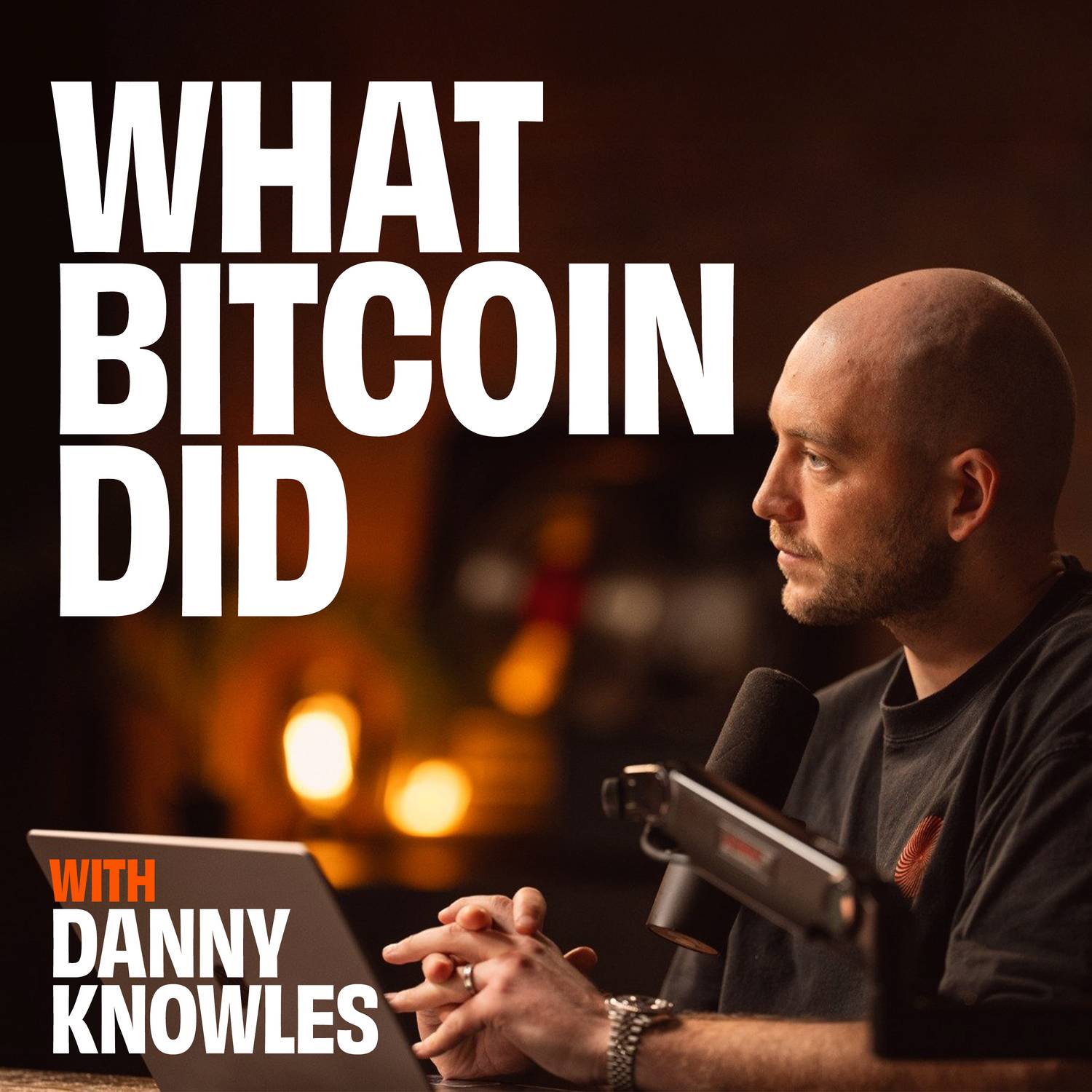
Danny Knowles
Why BIP110 Won’t Change Bitcoin | Mr Hodl & Wicked • Jun 4
- Mr Hodl argues BIP110’s 55% activation threshold constitutes an attack on Bitcoin’s network, contrasting it with SegWit's 95% threshold, and says proving Bitcoin can be co-opted by a slim majority would be catastrophic for its value proposition.
- Wicked built a dashboard tracking BIP110 signaling, showing sparse support with a peak of only seven signaling blocks in one period, which he attributes partly to rented hash power from entities like Peer-to-Peer Money and Store of Value.
- Mr Hodl contends Bitcoin has no singular community but a fragmented ecosystem of traders, miners, and various online groups, arguing that the concept of a unified 'Bitcoin community' is a misleading narrative used by BIP110 proponents.
- Both hosts view running a non-contributing Bitcoin node as a net drain on the network, advising users to at least port forward port 8333 to help bootstrap new nodes or connect a wallet to become a meaningful economic actor.
- Wicked explains that BIP110's mandatory signaling period starts at block height 961,632, but the fork would quickly fall behind the legacy chain due to low hash rate, making activation and chain survival highly unlikely.
- Mr Hodl recounts the 2017 UASF for SegWit, noting it had overwhelming economic support and was a response to miners weaponizing BIP9, a scenario he argues is fundamentally different from BIP110's lack of broad backing.
Also discussed on this episode: (2)
BTC Markets (2)
- Wicked believes Michael Saylor's recent sale of a tiny fraction of MicroStrategy's Bitcoin stack is a 'nothing burger' and possibly a market inoculation tactic, not a signal of a major selling strategy shift.
- Mr Hodl expresses skepticism about the exact size of MicroStrategy's Bitcoin holdings, questioning whether it truly owns the reported 850,000 BTC and criticizing its lack of a public proof of reserves.

The Big Freeze | THE BITCOIN BRIEF 82 • Jun 4
- The U.S. Treasury seized roughly $1 billion in Iran-linked cryptocurrency, with Tether freezing $344 million in USDT from two Tron addresses after Chainalysis identified them as Iranian military wallets.
- The 'Mine in America Act of 2026' proposes a federal certification for miners, requiring them to phase out hardware from foreign adversaries like China by 2030 and disclose full ownership details. Certified miners get access to government grants and capital gains exemptions.
- A Core Lightning denial-of-service vulnerability allowed remote attackers to crash nodes by sending an all-zero TXID during channel opening. The bug was fixed in version 26.0.4.
- Burak proposed 'Cube', a Bitcoin L2 combining Arc-style timeout trees and BitVM-style disprovable computation to enable trustless smart contracts without protocol changes.
- A pseudonymous claimant sued in New York Supreme Court to gain legal title to 3.8 million dormant Bitcoin using lost-and-found property statutes, despite not holding the private keys.
- The full text of the U.S. Constitution was inscribed onto the Bitcoin blockchain in an $83 transaction, creating a permanent, censorship-resistant record.
- Eclair 0.14.0 released with finalized support for channel splicing, Taproot channels, and zero-fee commitments, cementing splicing as a core Lightning Network feature.
- Sparrow Wallet 2.5.0 added full support for receiving and sending silent payments, including for air-gapped hardware wallets, and integrated a public Electrum server for scanning.
- Q overhauled the Seed Tool website, adding features for seed phrase recovery, BIP329 label viewing, Lightning invoice decoding, Miniscript analysis, PSBT inspection, and Shamir secret sharing.
- WebWipe offers services to audit and remove personal data from the web to prevent doxing and cyber attacks, purchasable with Bitcoin, Lightning, or Monero without personal information.
- Minebox.io provides anonymous server hosting and domain registration that requires no personal information and accepts payments in Bitcoin, Lightning, and Monero.