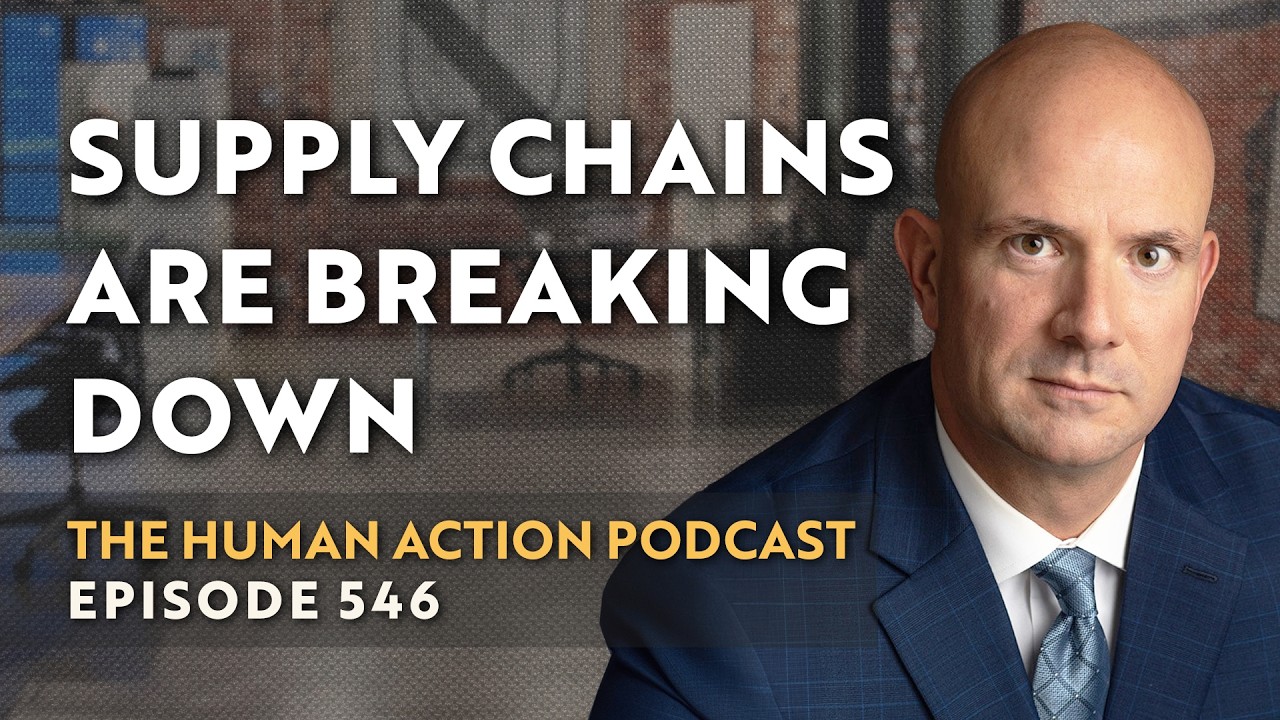
The Iran conflict has become a proxy war that is hollowing out American military power. On Breaking Points, Saagar Enjeti cited a New York Times report that the U.S. has already spent 1,100 long-range stealth cruise missiles and 1,200 Patriot interceptors, representing 40% of the national stockpile. Luke Gromen, on the Human Action Podcast, noted the absurdity: the U.S. military now needs China to produce components for missiles that might one day be aimed at Beijing.
"The U.S. has already burned through 1,100 long-range stealth cruise missiles. That represents 40% of the entire national stockpile."
- Saagar Enjeti, Breaking Points
The war is shifting Iran's internal power structure from a theocracy to a military dictatorship. According to Farnaz Fassihi's reporting for The Daily, decision-making now resembles a corporate board, with Revolutionary Guard generals holding every key lever of power. The injured Supreme Leader, Mojtaba Khamenei, communicates via handwritten letters, providing religious cover for the generals' pragmatic agenda. Their goal is a grand bargain to lift sanctions and rebuild Iran's economy, even if it means inviting American oil companies back.
Allies are abandoning the U.S.-led order to survive. The UAE announced it will leave OPEC+ on May 1st, a move that removes 10-13% of the cartel's production. As Krystal Ball explained on Breaking Points, the UAE is under massive liquidity pressure and needs to pump oil at maximum capacity, regardless of Saudi quotas or petrodollar stability. Meanwhile, countries like Japan are reportedly paying Iran tolls in yuan or cryptocurrency to get tankers through the blockaded Strait of Hormuz.
"The UAE is entering a 'pump-it-if-you-got-it' phase to salvage their economy, regardless of how it undermines the petrodollar or regional stability."
- Krystal Ball, Breaking Points
Former officials see a fundamental capture of U.S. policy. Ex-CIA officer John Kiriakou told The Tucker Carlson Show that the U.S. is now prioritizing Israel's interests over its own, ignoring its own intelligence consensus that Iran has no active nuclear weapons program. This aligns with what Jeffrey Sachs, also on Carlson's show, described as the execution of a decades-old 'Clean Break' strategy to dismantle regional rivals, with Iran as the final target. The result is a conflict with no diplomatic off-ramp, fought with a depleted arsenal, for aims that serve a foreign power's regional vision.